
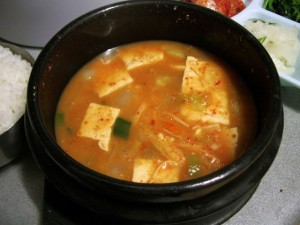
The global phenomenon of Psy’s "Gangnam Style" in 2012 introduced the world to a specific brand of satirical commentary regarding South Korean social hierarchies, yet many international listeners remained unaware of the specific cultural archetype being lampooned: the dwenjang-nyeo, or "bean paste girl." This term, which became a fixture of South Korean digital and social discourse in the mid-2000s, serves as a polarizing symbol of the nation’s rapid transition from post-war poverty to a high-consumption, hyper-modernized society. At its core, the dwenjang-nyeo represents a woman who prioritizes luxury consumption and the appearance of wealth—often through Western brands—while living a frugal, even impoverished, private life. The term is deeply rooted in the linguistic and culinary traditions of the peninsula, drawing its name from doenjang (fermented soybean paste), a staple ingredient used to make doenjang-jjigae, a humble and inexpensive stew.
The juxtaposition inherent in the term is the primary source of its derogatory power. Doenjang-jjigae is a symbol of domesticity, tradition, and financial modesty, typically costing between 3,500 and 5,000 Korean Won (approximately $3 to $4 USD) in local eateries. In contrast, the "bean paste girl" is characterized by her willingness to subsist on this cheap fare so that she can afford a 6,500 Won Starbucks Frappuccino or a designer handbag costing thousands of dollars. This social archetype is not merely a critique of spending habits but is a manifestation of deeper anxieties regarding class mobility, gender roles, and the influence of Western cultural hegemony in East Asia.
Defining the Archetype: Four Perspectives on the Dwenjang-nyeo
Sociologists and cultural critics have identified several distinct ways the term dwenjang-nyeo is applied within Korean society. While the definitions vary, they all center on a fanatical reverence for luxury goods and a perceived lack of authenticity.
The most prevalent definition describes a young woman from a middle- or lower-class background who lives with her parents to save money. By avoiding rent and eating the cheapest possible meals, she accumulates enough capital to purchase high-end "it-bags" from brands like Louis Vuitton, Chanel, or Gucci. In this view, the dwenjang-nyeo is a master of "conspicuous consumption" on a budget, sacrificing nutritional and residential quality for the sake of a public-facing image of affluence.
A second interpretation paints a more predatory picture, characterizing the dwenjang-nyeo as a "moocher" who relies on the financial resources of her parents or romantic partners to fund her lifestyle. When she is forced to spend her own money, she reverts to the cheapest possible sustenance, such as bean paste stew, because her disposable income has been entirely depleted by her obsession with aesthetics.
A third perspective focuses on the "wannabe Westerner" aspect. This definition critiques the girl as someone who is "dripping" with brand names and Western accessories but lacks the perceived "refinement" or "intellectual depth" associated with true old-money status. This critique suggests that if one were to strip away the $1,500 worth of imported clothes, the individual remains a "shallow and bucolic" person who is overcompensating for her provincial origins.
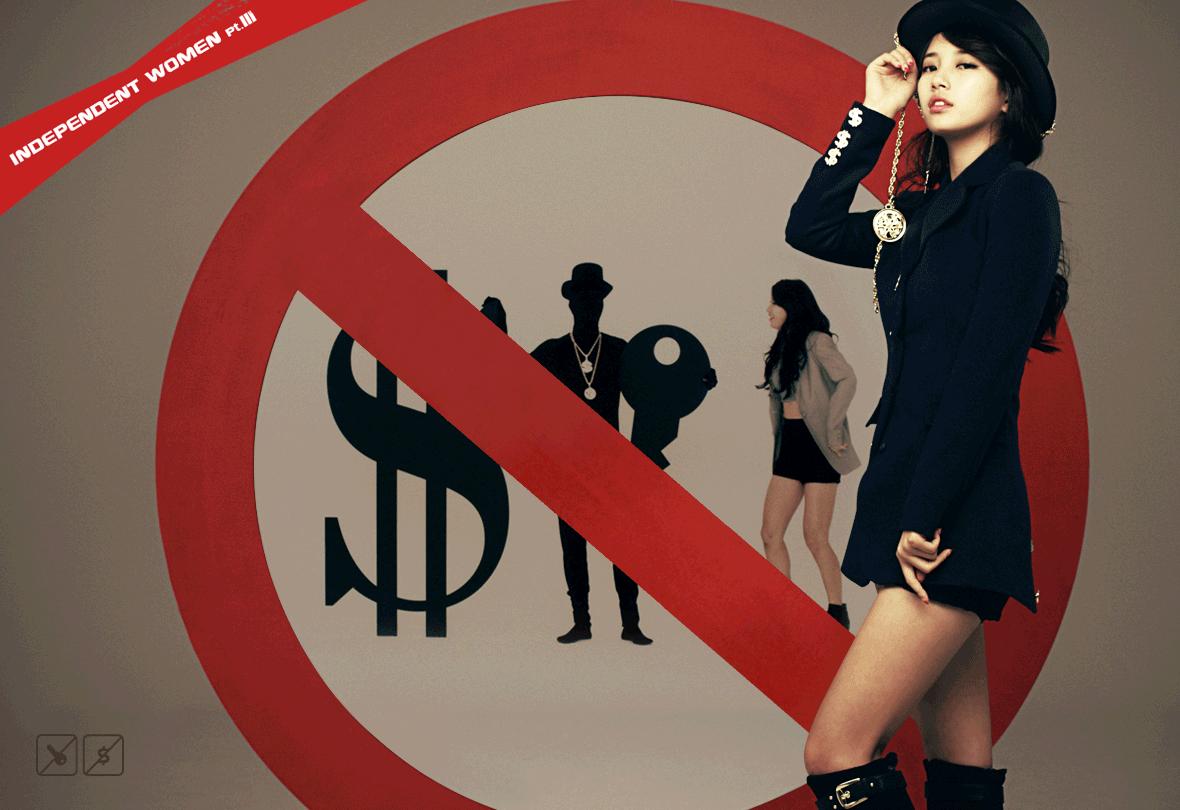
Finally, a more recent and feminist-aligned counter-narrative has emerged. Some defenders argue that the dwenjang-nyeo is a symbol of female financial independence. In this light, she is a woman who works hard and chooses to spend her own earned income on things that bring her joy, regardless of societal judgment. This "miss A" brand of feminism—referencing the K-pop group’s lyrics about independent women—posits that if a woman buys a $1,200 Chloe handbag with her own "sweat, blood, and tears," she should be celebrated rather than vilified.
Historical Context: From Frugality to Kwasobi
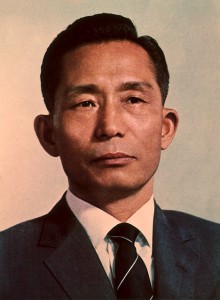
To understand why the dwenjang-nyeo became such a lightning rod for criticism, one must examine South Korea’s economic trajectory over the last sixty years. Following the devastation of the Korean War (1950–1953), South Korea was one of the poorest nations on Earth, at one point receiving financial aid from Ethiopia. Under the authoritarian leadership of President Park Chung-hee in the 1960s and 70s, the nation underwent the "Miracle on the Han River," a period of unprecedentedly rapid industrialization.
Park Chung-hee’s administration enforced a culture of extreme frugality. The government launched national campaigns against kwasobi (excessive spending), framing luxury consumption as unpatriotic and a threat to the nation’s developing economy. For decades, South Koreans were exhorted to work tirelessly and save every penny to build a domestic industrial base. In this environment, the display of wealth was often viewed with suspicion or moral disdain.
However, as South Korea entered the 1990s and became a member of the OECD, the national psyche shifted. The poverty of the past was replaced by a burgeoning middle class and an elite "Gangnam" class that embraced global fashion and luxury. The 1997 Asian Financial Crisis (the "IMF Crisis") briefly checked this growth, but it also intensified social competition. In a society where economic stability was no longer guaranteed, external markers of success—such as a specific brand of coffee or a designer logo—became essential tools for social navigation. The dwenjang-nyeo emerged in the early 2000s as the "villain" of this new consumerist era, representing the perceived excesses of a generation that had forgotten the frugal lessons of their grandparents.
Supporting Data: The Luxury Market and Gender Inequality
Data from the early 2010s highlights why the "coffee and handbag" trope became so prevalent. At the time of the dwenjang-nyeo’s peak visibility, South Korea had one of the highest densities of Starbucks locations in the world. In Seoul, the price of a Starbucks latte was often higher than in New York or London, despite the lower average per capita income. A 2012 report indicated that a Starbucks Americano in Seoul cost roughly $4.50, while a traditional meal in a neighborhood canteen could be found for $3.50. This price inversion made the act of holding a Starbucks cup a visible, albeit accessible, status symbol.

Furthermore, South Korea’s luxury market has consistently outperformed global averages. According to market research by McKinsey & Company, South Koreans have a more "favorable" view of luxury goods than many of their Western counterparts, with a high percentage of the population believing that luxury items are a necessary tool for social standing.
The gendered nature of the term also points to significant societal disparities. While men also engage in conspicuous consumption—often through cars, electronics, or expensive watches—the term "bean paste boy" (dwenjang-nam) never gained equivalent traction. This discrepancy is often attributed to South Korea’s historical gender gap. According to the World Economic Forum’s Global Gender Gap Report, South Korea has consistently ranked near the bottom among developed nations. The vilification of young women for their spending habits, while ignoring similar behaviors in men, suggests a deep-seated societal impulse to police female behavior and financial autonomy.
Societal Reactions and Cultural Impact
The reaction to the dwenjang-nyeo phenomenon has been a mix of internet vitriol, pop-culture satire, and academic study. In the mid-2000s, Korean internet forums were rife with "anti-dwenjang-nyeo" communities where users would post photos of women carrying luxury bags in public places, mocking them for their perceived vanity.
Psy’s "Gangnam Style" brought this critique to the global stage. The lyrics, "A girl who enjoys the leisure of a cup of coffee," were a direct reference to the dwenjang-nyeo. By mocking the "posers" who try to look like they belong in the wealthy Gangnam district, Psy tapped into a universal sentiment regarding the absurdity of social climbing. However, the song also highlighted the "Gangnam" lifestyle as the ultimate aspiration, further complicating the relationship between the critic and the criticized.
In academic circles, the dwenjang-nyeo is often viewed through the lens of "consumer nationalism." Laura C. Nelson, in her work Measured Excess, argues that consumption in South Korea is a site of intense negotiation over national identity. The dwenjang-nyeo is seen as a "traitor" to national modesty, yet she is also a product of a state that successfully transitioned into a global capitalist powerhouse.
Analysis of Implications: The Future of Korean Consumption
As South Korea moves further into the 21st century, the term dwenjang-nyeo has begun to fade, replaced by newer, perhaps more cynical, slang. Concepts like "Hell Joseon" (referring to the difficulty of life in a hyper-competitive society) and "Flex culture" (a more unapologetic embrace of showing off wealth) have taken center stage. The "bean paste girl" was a transitional figure—a bridge between the frugal post-war generation and the modern, "YOLO" (You Only Live Once) generation.
The legacy of the dwenjang-nyeo remains visible in the way South Korean society continues to scrutinize the intersection of gender and money. The term may have been a derogatory label, but it also forced a national conversation about the true cost of the "Korean Dream." It revealed a society that, while having achieved incredible economic success, remained deeply anxious about the social hierarchies that success created.
Ultimately, the dwenjang-nyeo phenomenon serves as a case study in how rapid economic development can outpace social evolution. As long as status remains indexed to imported logos and Western aesthetics, the tension between the "bean paste stew" of tradition and the "Starbucks latte" of modernity will continue to define the South Korean experience. Whether viewed as a victim of consumerist pressure, a shallow social climber, or a pioneer of female financial agency, the dwenjang-nyeo remains an essential figure in understanding the complex soul of contemporary Korea.