
Korean nationalism represents a powerful and complex force that defines the identity of the Korean people across the peninsula. Unlike the civic nationalism found in many Western democracies, which is often based on shared political values or geographic boundaries, Korean nationalism is rooted in the concept of danil minjok—the "single-blooded nation." This ethno-nationalist ideology posits that all Koreans descend from a common ancestral line, creating a sense of kinship that transcends political borders, even in the face of the decades-long division between the North and South. While this narrative has served as a vital tool for survival and economic mobilization, it now faces unprecedented challenges in an era of rapid globalization and demographic shifts.
The Mythic Foundations: Tan’gun and the 5,000-Year History
The cornerstone of Korean ethno-nationalism is the foundation myth of Tan’gun Wanggeom. According to traditional accounts, the Korean race began in 2333 BC with the birth of Tan’gun, the son of Hwan-ung (a heavenly prince) and Ung-nyeo (a bear who was transformed into a woman). The legend states that Hwan-ung descended to Mount Paektu, a peak on the current border between North Korea and China, seeking to live among humans. A tiger and a bear prayed to him to become human; Hwan-ung tasked them with staying in a dark cave for 100 days, consuming only garlic and mugwort. While the tiger failed, the bear persevered and was transformed into a woman. Her son, Tan’gun, is credited with founding Gojoseon, the first Korean kingdom.
While modern historians and many citizens acknowledge the mythic nature of this story, its symbolic weight remains immense. The Samguk yusa (Memorabilia of the Three Kingdoms), compiled by the monk Iryeon in the 13th century, is the primary source for this legend. The timing of its recording—centuries after the purported events—suggests it was codified during a period when Korea was resisting Mongol invasions, serving as a unifying narrative of ancient, divine lineage to bolster the spirit of resistance. In the modern era, this myth has been utilized by both North and South Korea to legitimize their respective regimes as the true heirs to the 5,000-year-old Korean bloodline.
The Pre-Modern Shift: From Confucianism to National Identity
To understand the intensity of modern Korean nationalism, it is essential to recognize that it is a relatively recent construct. During the Joseon Dynasty (1392–1910), identity was largely defined by Neo-Confucian social hierarchies, kinship ties, and loyalty to the monarch. The concept of a "nation" (minjok) in the modern sense—a collective of people sharing a destiny based on ethnic sameness—did not exist.
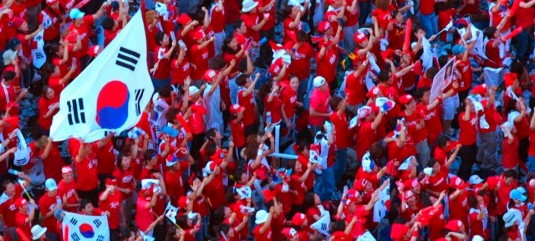
Instead, the Korean elite saw themselves as part of a broader Sinitic civilization, looking to China as the center of culture and morality. It was only in the late 19th century, as the "Hermit Kingdom" was forced open by Western and Japanese imperial interests, that intellectuals began to cultivate a distinct national consciousness. The decline of the Qing Dynasty and the rise of Japanese expansionism created an existential crisis. Korean thinkers realized that to survive in a world of competing empires, they needed a narrative that unified the entire population, regardless of class, under a single ethnic banner.
The Japanese Occupation: Nationalism as a Survival Mechanism
The pivotal turning point for Korean nationalism occurred during the Japanese colonial period (1910–1945). Following the 1905 protectorate treaty and the formal annexation in 1910, Japan attempted to systematically dismantle Korean identity. Under the policy of Naisen Ittai (Japan and Korea as One Body), the colonial administration sought to assimilate Koreans into the Japanese Empire. This included:
- Linguistic Suppression: The mandatory use of the Japanese language in schools and government, eventually leading to a ban on the Korean language in public life.
- Soshi-kaimei: A policy enacted in 1939 requiring Koreans to adopt Japanese surnames.
- Religious Imposition: Forcing Koreans to participate in State Shinto rituals.
In response, Korean nationalists like Shin Chae-ho and Bak Eun-sik worked to "rediscover" and promote Korean history. They focused on the minjok as a biological and historical entity that had remained pure despite centuries of foreign pressure. Newspapers such as The Independent (Tongnip Sinmun) and the Capital Gazette (Hwansŏng Sinmun) became vital platforms for spreading these ideas. The promotion of Hangul, the Korean alphabet invented by King Sejong the Great in the 15th century, became a revolutionary act of cultural preservation. By the time of liberation in 1945, the idea that Koreans were a unique, ancient, and "pure" race was deeply embedded in the collective psyche.
The Cold War and the Competition for Legitimacy
Following the division of the peninsula at the 38th parallel, both the Democratic People’s Republic of Korea (North) and the Republic of Korea (South) weaponized ethno-nationalism to bolster their domestic authority.
In the North, Kim Il-sung integrated the Tan’gun myth into the state’s Juche (self-reliance) ideology. In 1993, North Korean archaeologists claimed to have discovered the tomb of Tan’gun near Pyongyang. While international experts dismissed the find as a political fabrication, it allowed the North to claim that the "cradle" of the Korean race was located in its territory.

In the South, the military governments of the 1960s and 70s, particularly under Park Chung-hee, used nationalism as a catalyst for economic development. The "Miracle on the Han River" was framed not just as an economic goal, but as a national duty to restore the pride of the Korean race. Education focused heavily on the "national spirit," and the concept of danil minjok was used to justify the sacrifices required for rapid industrialization.
Historical Disputes and Regional Tensions
Korean ethno-nationalism has frequently clashed with the national narratives of neighboring powers, most notably China. The "Goguryeo Controversy" erupted in the early 2000s when China’s "Northeast Project" began framing the ancient kingdom of Goguryeo (37 BC–668 AD) as a provincial state of Chinese history. For Koreans, Goguryeo is a foundational part of their ancestral identity, known for its martial prowess and vast territory. The dispute led to massive public protests in Seoul and a diplomatic rift, highlighting how modern national identity is inextricably linked to interpretations of ancient history.
Similarly, the ongoing dispute with Japan over the Dokdo islands (known as Takeshima in Japan) is often viewed through the lens of nationalism. For many Koreans, the islands are not merely a territorial matter but a symbol of national sovereignty and a reminder of the unresolved grievances from the colonial era.
Data and Contemporary Societal Challenges
While ethno-nationalism provided a sense of unity during the 20th century, it has created friction in the 21st. South Korea is currently facing a demographic crisis, with the world’s lowest total fertility rate (dropping to approximately 0.7 in recent years). To sustain its economy, the country has become increasingly dependent on foreign labor and international marriage.
Key Statistics on South Korea’s Changing Demographics:

- Foreign Residents: As of 2024, the number of foreign residents in South Korea has surpassed 2.5 million, accounting for roughly 5% of the total population.
- Multicultural Households: Approximately 1 in 10 marriages in South Korea now involve a foreign spouse.
- Government Policy: In 2008, the government enacted the "Multicultural Family Support Act" to assist the integration of "multi-ethnic" families.
Despite these changes, societal attitudes remain conservative. In 2007, the United Nations Committee on the Elimination of Racial Discrimination (CERD) expressed concern over the continued emphasis on "pure blood" in South Korea, suggesting it could act as a barrier to the realization of human rights for migrants and biracial citizens.
Analysis of Implications and Future Outlook
The persistence of ethno-nationalism in Korea presents a paradox. On one hand, it remains the most potent argument for Korean reunification; the idea that "we are one blood" is the primary justification for ending the division of the peninsula. On the other hand, the rigidity of the danil minjok ideology makes it difficult for South Korean society to fully integrate the growing number of non-ethnic Korean residents who are becoming essential to the nation’s future.
The transition from "ethnic nationalism" to "civic nationalism" is currently a major point of debate among Korean scholars and policymakers. For South Korea to thrive as a global hub, it may need to redefine what it means to be "Korean"—moving away from biological lineage and toward a shared commitment to democratic values and civic participation.
However, the "butthurtism" or sensitivity toward international slights mentioned in contemporary discourse suggests that the defensive nationalism born under colonial rule has not yet fully dissipated. As long as regional tensions with Japan and China persist, and as long as the peninsula remains divided, the mythic and ethnic narratives of the past will likely continue to exert a powerful influence over the politics and culture of the present. The challenge for the next generation of Koreans will be to honor their ancient heritage while building a society that is inclusive enough to survive a globalized future.