
The global explosion of Psy’s Gangnam Style in 2012 did more than introduce the world to a viral dance craze; it brought international attention to a specific and polarizing figure in South Korean social discourse: the dwenjang-nyeo, or "bean paste girl." This pejorative term, which surfaced in the mid-2000s, serves as a sharp critique of young women who allegedly live beyond their means, prioritizing luxury goods and Western lifestyle symbols over financial stability. To understand the dwenjang-nyeo is to understand the rapid socioeconomic transformation of South Korea, a nation that moved from post-war poverty to high-tech affluence in a single generation, creating a complex friction between traditional frugality and modern hyper-consumerism.
The Etymology and Definition of the Bean Paste Girl
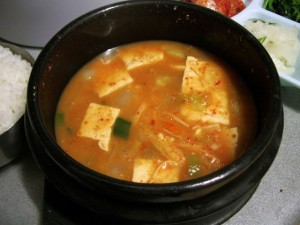
The term "bean paste girl" derives from dwenjang (fermented soybean paste), a staple of Korean cuisine. Dwenjang-jjigae, or bean paste stew, is one of the most affordable and humble meals available in South Korea, often priced between 3,500 and 5,000 KRW (approximately $3 to $4 USD). The "bean paste" label is a satirical reference to a woman’s supposed diet: it is suggested that she eats the cheapest possible meal—a bowl of bean paste stew—specifically so she can afford an expensive cup of Starbucks coffee or a designer handbag.
In the South Korean context, a Starbucks Americano or Frappuccino, which can cost upwards of 6,000 KRW, became a potent symbol of "conspicuous consumption." For critics, the dwenjang-nyeo is a woman who values the "image" of wealth over the "reality" of her economic status. She is often depicted as someone who lives with her parents to save money, avoids necessary expenses, and yet carries a Chanel or Louis Vuitton bag while frequenting trendy cafes in the affluent Gangnam District.
However, the definition is not monolithic. To some, the dwenjang-nyeo is a "wannabe Westerner" who rejects traditional Korean values in favor of a superficial, imported lifestyle. To others, she is a victim of a society that demands impossible standards of beauty and status. A smaller, more feminist-aligned segment of the population views her as a self-made consumer who spends her own hard-earned money on things that bring her joy, rejecting the patriarchal expectation that women should be frugal and self-sacrificing.
A Chronology of Korean Consumerism: From Poverty to Luxury
The emergence of the dwenjang-nyeo cannot be viewed in isolation; it is the byproduct of South Korea’s unique economic history. The timeline of this evolution reveals why spending habits have become such a contentious topic in the country.
1953–1960: Post-War Reconstruction
Following the Korean War, South Korea was one of the poorest nations on Earth. The economy was largely dependent on foreign aid, including assistance from nations like Ethiopia. During this period, consumption was limited to survival.
1961–1979: The Park Chung-hee Era and "Compressed Modernization"
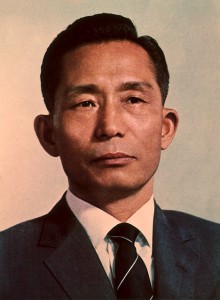
Under the authoritarian rule of Park Chung-hee, South Korea underwent the "Miracle on the Han River." Park prioritized industrialization and export-led growth. National campaigns were launched to promote frugality. Kwasobi (excessive spending) was treated as a moral failing and an unpatriotic act. South Koreans were exhorted to save every won to build the nation’s capital reserves.
1980s–1990s: The Rise of the Middle Class
As the economy boomed, a new middle class emerged. The 1988 Seoul Olympics served as a global "coming out party" for South Korea. By the early 1990s, the "Orange Tribe" (orenji-jok)—wealthy youth who drove imported cars and spent lavishly in the Apgujeong-dong neighborhood—became the first targets of public ire regarding modern consumerism.
2000s–Present: The Digital Age and the Birth of the Dwenjang-nyeo
The 1997 Asian Financial Crisis (the "IMF Crisis") temporarily halted spending, but it also led to a shift in the Korean psyche. Having seen how quickly stability could vanish, many young people shifted from long-term saving to "small luxuries" and immediate gratification. The mid-2000s saw the rise of internet culture, where the term dwenjang-nyeo was coined on popular forums like DC Inside, quickly becoming a mainstream label for any woman seen as "luxurious."
Supporting Data: The South Korean Luxury Market
The vitriol directed at the dwenjang-nyeo is underscored by the reality of South Korea’s massive luxury market. Despite its relatively small population of 51 million, South Korea has consistently ranked as one of the top ten luxury markets globally.
According to a 2022 report by Morgan Stanley, South Koreans are the world’s biggest spenders on personal luxury goods per capita, spending an average of $325 per year. This far outpaces the $280 spent by Americans and the $55 spent by Chinese consumers. Brands like Moncler, Prada, and Cartier have reported that South Korea is one of their fastest-growing and most vital markets.
Furthermore, the "Starbucks Index" in Korea is particularly telling. For years, the price of a Starbucks coffee in Seoul was among the highest in the world relative to local purchasing power. The fact that a coffee could cost more than a full meal is the statistical foundation of the dwenjang-nyeo stereotype. This economic disparity—where "status symbols" are priced at a premium—creates a environment where young people use luxury items as "social armor" to navigate a highly competitive society.
The Gendered Nature of Social Criticism
A significant point of contention in the dwenjang-nyeo discourse is its blatant gender bias. While there are men who spend exorbitant amounts on imported cars, high-end electronics, and designer watches, there is no widely used male equivalent to the bean paste girl. Terms like shinsang-nam (new-item man) exist, but they lack the derogatory, moralizing sting of dwenjang-nyeo.
Sociologists point to South Korea’s deep-seated patriarchal structures as the reason for this imbalance. Historically, women’s consumption has been more visible and thus more easily policed. A woman carrying a designer bag on the subway is an immediate target for judgment, whereas a man’s luxury spending may be hidden in hobbies or technology.

Furthermore, South Korea’s gender equality rankings remain among the lowest in the OECD. The vilification of the dwenjang-nyeo often serves as a way for men—many of whom feel emasculated by the rising economic independence of women—to exert social control. By labeling a woman a dwenjang-nyeo, the critic dismisses her financial autonomy as vanity and her personality as shallow.
Official Responses and Cultural Impact
While the South Korean government does not officially intervene in slang or social labeling, the themes of the dwenjang-nyeo phenomenon have permeated public policy discussions regarding household debt and youth unemployment. Government campaigns in the late 2000s often focused on "rational consumption," indirectly echoing the sentiments that birthed the bean paste girl term.
In popular culture, the dwenjang-nyeo has become a stock character in K-dramas. Characters are often introduced as shallow and brand-obsessed, only to undergo a "redemption arc" where they learn the value of hard work and traditional humility. Psy’s "Gangnam Style" remains the most famous cultural touchstone, with lyrics that mock the "girl who drinks a cup of coffee with more leisure than a meal." The song’s global success paradoxically turned a local pejorative into a global aesthetic, though the biting social satire was lost on many international listeners.
Broader Implications: Symbolic Capital and the Future
The dwenjang-nyeo phenomenon is ultimately a symptom of a society grappling with "symbolic capital." In a culture where social standing is paramount and upward mobility is increasingly difficult, luxury goods serve as a shorthand for success. If a young woman cannot afford an apartment in Seoul—an goal that has become nearly impossible for the average worker—she may instead choose to "invest" in a luxury bag that grants her immediate social respect in public spaces.
This shift toward "flex culture" (locally known as yolo or shibal-biyong—stress-induced spending) suggests that the dwenjang-nyeo was merely the precursor to a broader national trend. The desperation for status in a hyper-competitive environment has led to a society where looking rich is often more important than being rich.
As South Korea continues to lead global trends in fashion and entertainment, the stigma of the dwenjang-nyeo may eventually fade, replaced by a more nuanced understanding of consumer rights and individual choice. However, the term remains a powerful reminder of the tensions that exist when a traditional society meets the relentless demands of modern capitalism. Whether she is a villain of vanity or a hero of her own pocketbook, the bean paste girl is an indelible icon of South Korea’s complex journey into the 21st century.