Korean YouTuber Teaches Japanese Pedestrian A Lesson In Viral Video
Article Editorial Team
A recent incident captured on video and widely circulated online has brought renewed attention to "butsukari," a concerning social issue prevalent in Japan where individuals intentionally bump into others, often with malicious intent. This phenomenon, which has seen a rise in public discourse, particularly gained traction following an incident involving Minami, a member of the burgeoning K-pop girl group RESCENE, who reportedly suffered such an encounter during a recent filming schedule in Japan. Now, a Korean YouTuber’s direct confrontation with an alleged perpetrator in Osaka has ignited a fierce debate and garnered significant public attention, highlighting both the frustration surrounding "butsukari" and the complex ethics of online vigilantism.
The Emergence and Impact of "Butsukari" as a Social Concern
"Butsukari," literally translating to "collision" or "bumping," refers to the act of deliberately colliding with pedestrians on the street. While accidental bumps are an unavoidable part of navigating crowded urban environments, "butsukari" distinguishes itself by its intentionality and often aggressive nature. Victims frequently report feeling targeted, with perpetrators often appearing to choose their marks, sometimes based on gender or perceived vulnerability. This behavior, while not always resulting in physical injury, causes significant distress, humiliation, and a sense of insecurity among those affected.
Sociologists and urban safety experts in Japan have noted a subtle but persistent rise in such low-level street harassment. While official statistics specifically tracking "butsukari" are scarce, anecdotal evidence and increasing reports on social media suggest it is a growing concern, particularly in densely populated cities like Tokyo, Osaka, and Fukuoka. The motivations behind "butsukari" are varied and complex, ranging from passive aggression and a desire to assert dominance to more malicious forms of harassment or even a distorted sense of rebellion against societal norms. Some analysts suggest it may be a manifestation of underlying stress, anonymity in large crowds, or a lack of personal accountability. The psychological impact on victims can be profound, leading to increased anxiety in public spaces, feelings of vulnerability, and a general erosion of trust in public safety.

RESCENE’s Minami: A High-Profile Victim
The issue of "butsukari" gained significant mainstream attention in the K-pop and broader entertainment sphere when Minami, a member of the rookie girl group RESCENE, was reported to have been a victim. Details surrounding the incident remain somewhat sparse, but it occurred during a professional shoot in Japan, a common location for K-pop idols to engage in promotional activities, content creation, and fan interactions. The news of a public figure, particularly a young female idol, experiencing such an aggressive act resonated deeply with fans and the general public alike.
The involvement of an idol like Minami instantly amplified the conversation, transforming "butsukari" from a localized nuisance into a widely discussed topic across international fan communities and media outlets. Her agency, THE MUZE ENTERTAINMENT, though not issuing an explicit statement on the "butsukari" incident itself, has consistently emphasized the safety and well-being of its artists, particularly when traveling internationally. Incidents like these underscore the unique vulnerabilities faced by public figures, who, despite their celebrity status, are also ordinary individuals navigating public spaces and are sometimes perceived as easy targets due to their visibility. The incident sparked a wave of concern among RESCENE’s fanbase, known as "MINI," who voiced their outrage and called for greater public safety measures, particularly for women and foreign visitors in Japan. The collective sentiment was that if even a public figure could be subjected to such an act, ordinary citizens were undoubtedly at risk.
MadBros’ Intervention: A Chronology of Confrontation
Against this backdrop of rising public concern, the YouTube channel MadBros decided to take matters into their own hands. Known for their social experiment and confrontation-style content, MadBros has a history of addressing various social issues, often employing direct methods to expose or challenge problematic behaviors. On July 1st, they uploaded a video titled "Teacher Yuk Eun Young giving a lesson to a villain bumping shoulders in Osaka, Japan," immediately drawing a massive viewership.
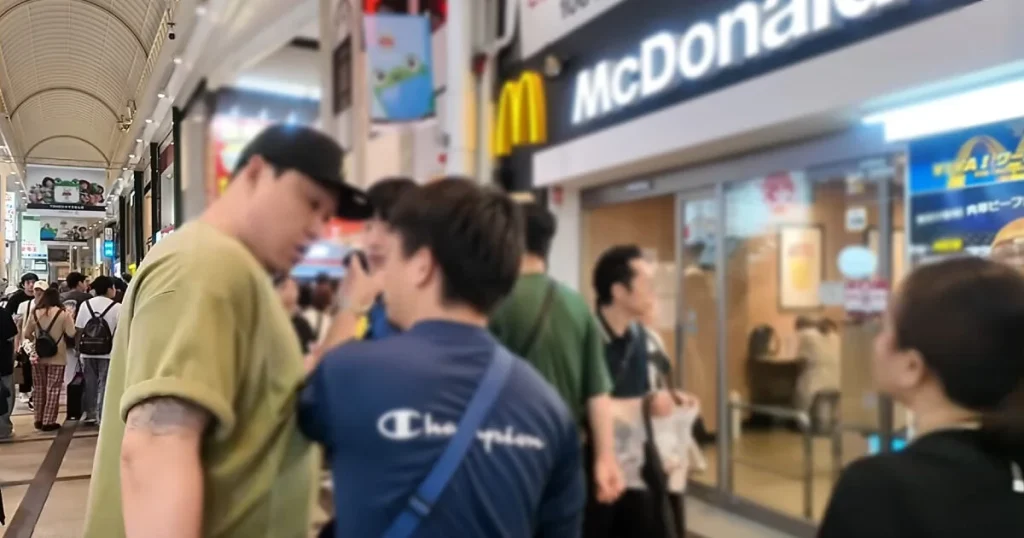
The video documents the MadBros team observing a particular individual in the bustling streets of Osaka. The alleged perpetrator, a Japanese man, was seen systematically and intentionally bumping into pedestrians, with the MadBros team noting a distinct pattern: he primarily targeted women coming from the opposite direction. This selective targeting highlighted the gendered aspect of harassment often associated with "butsukari." The MadBros team meticulously filmed these repeated incidents, establishing a clear pattern of aggressive behavior before intervening.

The turning point occurred when the man intentionally bumped into one of the YouTuber’s female companions. Seizing the opportunity, the main YouTuber, identified as part of the MadBros team, immediately confronted the man. "Why do you keep bumping shoulders like this?" the YouTuber asked directly, mimicking the man’s aggressive action by pushing him back in a similar manner. The confrontation was swift and direct, seemingly catching the perpetrator completely off guard. The man, visibly startled by the unexpected reciprocation of his aggressive act and the direct challenge, began to repeatedly apologize, uttering "sorry" multiple times before quickly retreating from the scene. The entire interaction, lasting mere seconds, was a stark display of how a perpetrator’s bravado often crumbles when faced with a direct, assertive response rather than passive acceptance.
Public Outcry and Digital Discourse
The MadBros video rapidly went viral across various social media platforms, accumulating millions of views and sparking an intense online discussion. The comments section, and broader social media conversations, reflected a complex mix of emotions and opinions.
A significant portion of netizens lauded the YouTuber’s actions, expressing a sense of catharsis and approval. Comments such as "What a great lesson, he got exactly what he deserved" and "Finally someone stood up to these bullies" were common. Many viewers praised the MadBros team for their courage and for confronting a behavior that often goes unchallenged. The direct and immediate consequence faced by the aggressor resonated with many who felt powerless against such street harassment.
However, the viral nature of the video also brought to light deeper anxieties. Numerous comments expressed fear and frustration, with users stating, "I’m scared to travel because of people like that lately" and "It makes me nervous to walk alone in crowded areas." This underscored the widespread impact of "butsukari" on public perception of safety. The selective targeting of women by the perpetrator in the video further fueled discussions about gender-based harassment and the disproportionate vulnerability of women in public spaces.

Some netizens also pointed out the perceived cowardice of the aggressor, noting, "He ran off immediately because the person was bigger than him," suggesting that the "butsukari" perpetrators often prey on those they perceive as weaker or less likely to retaliate. This observation sparked discussions about the power dynamics inherent in such acts of aggression.
Crucially, the incident involving RESCENE’s Minami was frequently referenced, with many viewers expressing gratitude to MadBros for taking action. Comments like "Thank you for taking revenge on behalf of Minami" highlighted the collective frustration and desire for justice among fans and the public who had previously felt helpless. This connection between the celebrity incident and the YouTuber’s intervention underscored how high-profile cases can galvanize public sentiment and encourage direct action.
Official Responses and Societal Implications
While no official statement from Japanese law enforcement or governmental bodies directly addressed the MadBros video, the broader issue of "butsukari" has been acknowledged. Local police departments in major cities have, on occasion, issued advisories urging citizens to report any instances of intentional physical contact, emphasizing that such acts could escalate to assault and battery, which are prosecutable offenses. However, the transient nature of "butsukari" incidents and the difficulty in gathering evidence often make prosecution challenging.
The viral video prompts several important societal implications. Firstly, it highlights the increasing role of citizen journalism and social media in exposing social problems that might otherwise remain underreported or unaddressed by traditional channels. YouTubers like MadBros leverage their platforms to bring visibility to issues, provoke public discussion, and, in some cases, effect immediate, albeit localized, justice.

Secondly, it reignites the debate surrounding vigilantism versus official channels. While many celebrate the YouTuber’s direct action, some critics argue that such confrontations, especially without proper legal authority, can be dangerous, potentially escalating violence, or leading to misidentification. Legal experts often caution against taking matters into one’s own hands, advocating for reporting incidents to authorities. However, the public’s willingness to embrace such vigilante acts often stems from a perceived lack of effective or timely official intervention.
Thirdly, the incident contributes to a broader discussion about public etiquette, respect for personal space, and the general civility in urban environments. In a society known for its politeness and adherence to social norms, "butsukari" represents a jarring deviation, challenging the expected harmony of public interactions.
The Ethics of Viral Confrontation
The MadBros video, while widely praised, also raises ethical questions inherent in viral confrontation content. On one hand, it provides a powerful deterrent, sending a clear message that such behavior will not go unchallenged. It empowers victims and encourages bystander intervention, albeit in a carefully curated and filmed context. The immediate public shaming can be a potent tool for behavior modification, as demonstrated by the perpetrator’s hasty retreat and apologies.
On the other hand, there are concerns about the potential for sensationalism, the deliberate provocation of conflict for views, and the blurring lines between exposing injustice and creating content. Critics argue that these videos can sometimes lack nuance, potentially misrepresent situations, or even put the content creators and those they confront at risk. The legal implications of initiating physical contact, even in retaliation, can also be complex.

However, proponents argue that in cases where official responses are perceived as inadequate, viral videos serve as a necessary, albeit controversial, means of holding individuals accountable and raising public awareness to a degree that traditional media might not achieve. The sheer reach of platforms like YouTube means that millions are educated about the issue of "butsukari" and its consequences almost instantaneously.
Broader Context: Street Harassment and Safety
The "butsukari" phenomenon, as highlighted by the MadBros video and Minami’s incident, is part of a larger global conversation around street harassment and public safety. While specific cultural manifestations differ, the underlying issues of personal space violation, gendered aggression, and the feeling of insecurity in public spaces are universal. Urban planners, law enforcement agencies, and community organizations worldwide grapple with finding effective strategies to combat various forms of street harassment, from verbal abuse to unwanted physical contact.
In Japan, where social harmony and respect are highly valued, the emergence of "butsukari" is particularly jarring. It challenges the country’s image of impeccable public order and safety. The incident serves as a reminder that even in societies with low crime rates, subtle forms of aggression and harassment can persist, impacting daily life and the psychological well-being of citizens and visitors alike.
The widespread attention garnered by the MadBros video signifies a growing collective intolerance for such disruptive and disrespectful behaviors. It underscores the public’s desire for safer, more respectful public spaces, and their willingness to support, even if controversially, those who take a stand against everyday forms of harassment. As digital platforms continue to empower individuals to document and share their experiences, the interplay between online activism and real-world social change will undoubtedly continue to evolve, shaping how communities address issues like "butsukari" in the future.
Related News