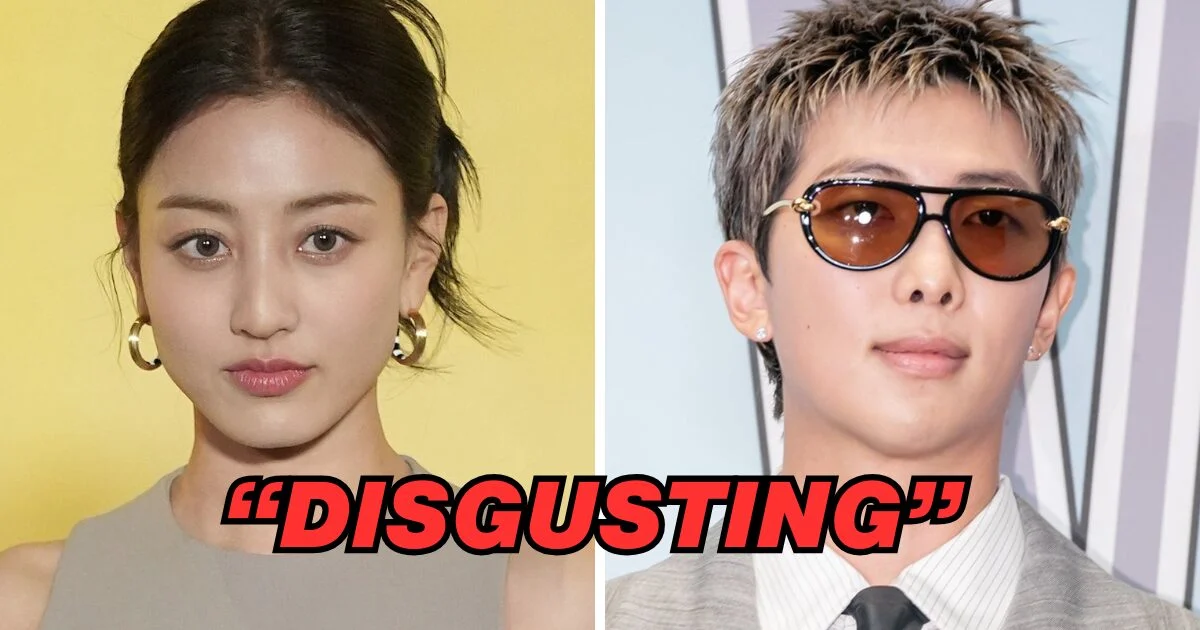
TWICE leader Jihyo is currently embroiled in significant controversy following recent comments crediting BTS and other senior groups for pioneering the global pathway for South Korean artists. The remarks, made during an interview, have ignited a fervent backlash across social media platforms, with many netizens accusing the idol of overlooking the substantial contributions of female artists to K-pop’s international ascent.
The controversy originated from an interview where Jihyo expressed gratitude towards her predecessors. According to a report by Forbes, the TWICE vocalist specifically cited BTS for "paving the way" for contemporary K-pop acts to achieve international recognition. Jihyo was quoted stating, "We’re just following in their footsteps, and I’m grateful for what they’ve done for us. We didn’t have Instagram or TikTok challenges back in the day. When I debuted, we had content channels, which became globalized and grew in number. I think that really helped K-pop artists to make their presence strong on the global stage." While seemingly intended as a gesture of humility and respect towards industry seniors, these statements quickly became the focal point of widespread criticism, particularly concerning the perceived omission of female artists’ roles in K-pop’s globalization.
The Genesis of Global K-Pop: A Historical Overview
To understand the depth of the current debate, it is crucial to contextualize the history of K-pop’s global outreach. The notion of "paving the way" is a complex and often contentious one within the K-pop industry, where generations of artists have contributed to its international expansion.
The initial waves of Hallyu, or the Korean Wave, in the late 1990s and early 2000s saw artists like BoA and Rain making significant inroads into Asian markets, particularly Japan and China. BoA, often dubbed the "Queen of K-pop," debuted in 2000 and achieved unprecedented success in Japan, releasing numerous multi-million-selling albums and breaking barriers for Korean artists. Similarly, Rain’s collaborations and tours garnered him a substantial following across Asia and even a notable presence in the Western entertainment industry with roles in Hollywood films.

The late 2000s and early 2010s marked the second generation of K-pop, which further diversified the global appeal. Groups like Wonder Girls made a direct attempt to break into the U.S. market with their English singles, touring with the Jonas Brothers. Girls’ Generation, with their iconic "Gee" and "I Got A Boy," garnered immense international attention, dominating YouTube views and proving the global potential of female idol groups. PSY’s "Gangnam Style" in 2012, while a viral phenomenon, introduced K-pop to a massive global audience previously unaware of the genre, smashing YouTube records and becoming a cultural touchstone. These acts, among many others like TVXQ, BIGBANG, 2NE1, and SISTAR, collectively laid foundational groundwork, building fanbases and exposing international audiences to the unique blend of music, performance, and fashion that defines K-pop.
BTS’s Unprecedented Global Ascent
The mid-2010s heralded the third generation of K-pop, characterized by a new level of global penetration, largely spearheaded by BTS. Debuting in 2013, BTS steadily built a massive international fanbase through authentic music, compelling narratives, and innovative use of social media. Their breakthrough moment arrived with their 2017 American Music Awards performance, followed by their consistent charting on Billboard, including multiple No. 1 albums on the Billboard 200 and No. 1 singles on the Hot 100.
BTS’s achievements extended beyond chart performance; they became the first K-pop group to address the United Nations General Assembly, were nominated for a Grammy Award, and embarked on sold-out stadium tours across continents. Their economic impact on South Korea has been estimated in the billions of dollars annually, solidifying their status as cultural ambassadors. Their meticulous fan engagement strategies, including consistent content on platforms like YouTube, Twitter, and VLive (a platform Jihyo referenced as "content channels"), were instrumental in building a dedicated global ARMY (their fandom). It is this specific and undeniable surge in global recognition and market penetration, particularly in Western markets, that many, including Jihyo, attribute to BTS’s efforts.
The Backlash: Accusations of Internalized Misogyny
However, Jihyo’s direct attribution solely to BTS and "senior groups" without explicitly mentioning female artists sparked immediate and severe criticism from a segment of K-pop fans and commentators. The core of the backlash revolved around the accusation that her comments demonstrated "internalized misogyny" and actively discredited the arduous efforts and significant achievements of numerous female K-pop artists.
Social media platforms, particularly X (formerly Twitter), became a hotbed for this debate. One user explicitly stated, "Imagine a woman crediting their success to useless men. Asslicking them the same way ur fandom does wont get u anywhere girl." Another user echoed this sentiment, writing, "Women like her who love bootlicking men and attribute all the success to them while discrediting the other women who worked stupendously hard to make it are so icky." More pointed criticisms emerged, directly accusing Jihyo of dismissing female artists’ contributions. A particularly harsh comment read, "Internalized misogyny is a bitch, ain’t it? Crediting women’s accomplishments and success to these talentless racist pieces of shit. Disgusting. They didn’t pave the way for shit. Their music is garbage and their entire aesthetic is stolen from black people. Fuck BTS." This response, while extreme in its language, highlights the deep-seated frustration felt by some regarding the perceived historical erasure of female contributions in male-dominated narratives.

The Role of Female Artists in K-Pop’s Global Expansion
Critics argue that Jihyo’s statement, by focusing exclusively on BTS and generalized "senior groups," failed to acknowledge the distinct and powerful contributions of female K-pop artists who also significantly contributed to K-pop’s global presence. Beyond the aforementioned Wonder Girls and Girls’ Generation, groups like 2NE1 broke ground with their edgy concepts and strong hip-hop influences, garnering international praise and collaborations with Western artists. BLACKPINK, a contemporary of TWICE, has achieved unprecedented global success, becoming the most-subscribed music act on YouTube, headlining major international festivals like Coachella, and collaborating with global superstars. Their immense popularity and brand power undeniably contribute to the "global stage" Jihyo mentioned.
Furthermore, solo female artists such as CL (formerly of 2NE1), Sunmi, Chungha, and Taeyeon have also cultivated strong international followings, showcasing the diversity and talent within the female artist landscape. The argument posits that while BTS’s specific trajectory and impact are undeniable, they did not operate in a vacuum, and the broader ecosystem of K-pop, including its female artists, collectively built the foundation upon which current global success stands. Dismissing or downplaying these contributions, especially from a prominent female idol like Jihyo, is seen as a betrayal of solidarity and a reinforcement of patriarchal narratives within the industry.
Nuance and Interpretation: Was Jihyo’s Comment Misunderstood?
The critical question remains whether Jihyo’s comments were genuinely dismissive or simply misinterpreted and taken out of context. Her statement explicitly mentioned "senior groups" alongside BTS, which could be interpreted as a broader acknowledgment that implicitly includes female artists. The context of her discussion about "Instagram or TikTok challenges" and "content channels" suggests she was reflecting on the evolution of digital platforms that aided K-pop’s global reach, a phenomenon that undeniably accelerated during BTS’s peak global surge.
It is plausible that Jihyo, as a leader of a highly successful third-generation group (TWICE debuted in 2015), was genuinely expressing gratitude for the increased global opportunities available to groups like hers. TWICE itself has enjoyed immense international popularity, particularly in Asia and increasingly in Western markets, with sold-out world tours and collaborations. Their ability to reach a global audience has certainly benefited from the infrastructure and awareness built by predecessors. Her focus on BTS might stem from their distinct achievement of breaking into mainstream Western music charts and media outlets, which was a significant benchmark.
However, in the highly scrutinized world of K-pop, where every word from an idol is amplified and analyzed, the specific phrasing and omissions carry significant weight. The lack of explicit mention of female pioneers resonated deeply with those who feel that women’s contributions are consistently undervalued or erased in historical narratives.

Implications and Broader Industry Discourse
This incident sheds light on several broader implications within the K-pop industry and celebrity culture:
- The "Paving the Way" Debate: The concept of "paving the way" is inherently complex. No single artist or group solely builds an entire industry. It is a cumulative effort across generations. This debate highlights the ongoing struggle to accurately attribute credit and acknowledge the diverse contributions that lead to collective success.
- Gender Representation and Recognition: The intensity of the backlash underscores the sensitivity surrounding gender equality and recognition in the entertainment industry. Many feel that female artists frequently face an uphill battle for equal recognition and often have their achievements minimized compared to their male counterparts. Jihyo’s comments, regardless of intent, inadvertently tapped into this raw nerve.
- Social Media’s Amplifying Effect: The speed and virality of the backlash demonstrate the immense power of social media to amplify opinions, both positive and negative. A single statement can quickly transform into a global controversy, forcing public figures to navigate a landscape where nuance is often lost in the pursuit of strong opinions.
- Idol Speech and Scrutiny: K-pop idols operate under intense public scrutiny. Their words are often dissected, interpreted, and reinterpreted by millions of fans and anti-fans alike. This incident serves as a stark reminder of the cautious approach idols must take when discussing industry history or inter-group dynamics.
- Fanbase Dynamics: The reactions also highlight the fervent loyalty and occasional territoriality of K-pop fandoms. While some criticisms came from a general perspective of gender equality, others likely stemmed from fans of specific female groups or those who feel that certain narratives unjustly elevate one group over others.
As of the publication of this article, neither Jihyo nor her agency, JYP Entertainment, has issued an official statement or clarification regarding the controversy. This silence is typical in such situations, as companies often opt to let the storm pass rather than fuel it further with responses that could be misconstrued. However, the online discourse continues, with debates raging about the definition of "paving the way," the historical impact of various K-pop generations, and the role of gender in attributing success within the global music landscape. This incident underscores the intricate and often contentious nature of K-pop’s history and the ongoing conversations about recognition and representation within one of the world’s most dynamic music industries.