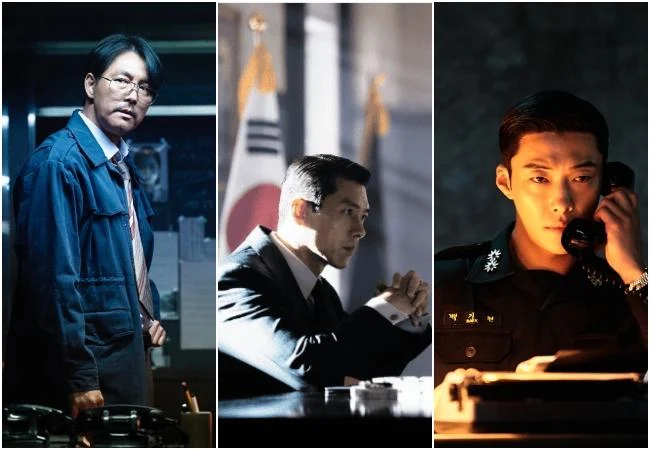
Disney+ has unveiled first-look images from the forthcoming second season of the critically acclaimed K-drama Made in Korea, signaling the highly anticipated return of its powerhouse lead trio: Hyun Bin, Jung Woo Sung, and Woo Do Hwan. The streaming giant confirmed the series is slated for a 2026 premiere, igniting fervent excitement among fans who have eagerly awaited the continuation of this gripping political thriller.
The newly released images offer a tantalizing glimpse into the escalating tensions and refined power plays that will define the upcoming season. Set nine years after the dramatic events of the first season, Made in Korea Season 2 plunges viewers back into a complex web of espionage, ambition, and retribution. The narrative arc focuses on the ascendant power of Baek Ki-tae, portrayed by Hyun Bin, who has seemingly solidified his influence even while incarcerated. Simultaneously, Jung Woo Sung’s character, imprisoned prosecutor Jang Geon-young, is depicted meticulously plotting his next strategic maneuver against Ki-tae. The visual cues from the first-look images strongly suggest an intensified confrontation, hinting at the seismic shifts in political dynamics that will undoubtedly shape the Korean landscape within the series.
This return is particularly significant given the series’ prior accolades. Made in Korea was recently recognized by TIME magazine as one of the most anticipated K-dramas of 2026, a testament to its impactful debut season and the star power of its cast. The recognition underscores the global appeal of Korean storytelling and the exceptional quality of production that Made in Korea has come to represent.
A Look Back: The Genesis and Triumph of Season 1
To fully appreciate the anticipation for Season 2, it is crucial to revisit the resounding success of its predecessor. Made in Korea Season 1 premiered in 2025 and quickly established itself as a dominant force in the streaming world. It achieved the distinction of becoming the top-viewed Korean Original premiere of the year on Disney+ across the Asia-Pacific region. This remarkable viewership underscores the narrative’s ability to captivate a diverse international audience, transcending geographical and cultural boundaries.
The first season meticulously unfolded a narrative centered on Baek Ki-tae’s precarious double life. As a covert agent for the KCIA (Korean Central Intelligence Agency), Ki-tae navigated a treacherous environment rife with corruption, internal power struggles, and the constant threat of exposure. His clandestine operations were perpetually challenged by the unwavering determination of prosecutor Jang Geon-young, who was relentlessly pursuing justice and aiming to dismantle the clandestine networks Ki-tae inhabited. The interplay between these two central figures, characterized by their opposing ideologies and strategic brilliance, formed the bedrock of the series’ compelling plot.
The creative team behind Made in Korea is a significant factor contributing to its acclaimed status. The reunion of the original creative forces for Season 2 further bolsters confidence in its impending success. This includes the celebrated screenwriter Park Eun-kyo, known for her nuanced storytelling and intricate plot development, and director Woo Min-ho, whose cinematic vision has consistently delivered visually stunning and emotionally resonant narratives. The production company, Hive Media Corp, has also played an instrumental role in bringing the series to life with high production values and meticulous attention to detail. The continuity of this core team suggests a seamless transition and a commitment to maintaining the artistic integrity and narrative depth that defined the first season.
Season 2: Escalating Stakes and Renewed Conflicts
The premise of Made in Korea Season 2 promises an amplification of the conflicts that enthralled audiences in the first installment. The nine-year leap in the timeline allows for significant character development and the evolution of the political landscape. Baek Ki-tae’s rise to prominence, even from within prison walls, suggests a masterful manipulation of power and influence, a testament to his cunning and strategic acumen. This raises intriguing questions about the nature of his imprisonment and whether it serves as a calculated facade or a genuine setback that he is adeptly overcoming.
Conversely, Jang Geon-young’s persistent pursuit of Ki-tae, now from behind bars himself, indicates a deep-seated animosity and an unyielding commitment to exposing the truth. The prospect of a prosecutor, stripped of his official capacity, orchestrating a complex plan against a seemingly untouchable figure is a compelling narrative device. It suggests a battle fought on unconventional fronts, where intellect, resourcefulness, and a network of hidden allies will likely play pivotal roles.
The series’ exploration of political tensions is expected to be a central theme. In the context of South Korean politics, such narratives often delve into the intricate interplay between intelligence agencies, the judiciary, and the executive branches of government. The potential for corruption, abuse of power, and the struggle for democratic ideals to prevail against entrenched interests provides fertile ground for dramatic storytelling. Made in Korea Season 2 is poised to dissect these themes with its characteristic depth and sophistication, offering a fictional yet plausible exploration of the machinations that occur within the corridors of power.
Supporting Data and Contextual Analysis
The success of K-dramas globally is a well-documented phenomenon. In recent years, platforms like Netflix and Disney+ have become crucial conduits for the international dissemination of Korean content. Series such as Squid Game, Crash Landing on You, and Parasite (though a film, its impact on global perception of Korean storytelling is undeniable) have garnered immense critical acclaim and commercial success, paving the way for a broader acceptance and appreciation of K-dramas. Made in Korea fits squarely within this trend, leveraging the genre’s inherent appeal for suspense, character-driven drama, and socially relevant themes.
The choice of a political thriller genre is particularly astute. Such narratives often resonate with audiences worldwide due to their exploration of universal themes like justice, corruption, and the struggle for power. The intricacies of South Korean politics, with its historical context and contemporary challenges, offer a unique backdrop that can both intrigue and inform international viewers. The series’ ability to weave these elements into a compelling narrative is a key factor in its widespread appeal.
The reported nine-year time jump between seasons is a significant narrative choice. It allows for the re-establishment of characters in new positions of power or influence, and for the consequences of past actions to fully manifest. This temporal distance can also serve to reset certain dynamics, introducing new challenges and adversaries while allowing established rivalries to evolve. For viewers, it offers a sense of progression and the expectation that characters will have undergone substantial changes, both personally and professionally.
Inferred Statements and Potential Reactions
While official statements from the cast and crew regarding Season 2 have been limited, the excitement surrounding the first-look images can be inferred. Hyun Bin, Jung Woo Sung, and Woo Do Hwan are all established stars with significant followings. Their willingness to return to the series speaks volumes about their belief in its narrative and their commitment to their characters. One can imagine their anticipation for engaging with audiences once again, stepping back into the complex roles that have garnered them widespread praise.
Park Eun-kyo, the screenwriter, likely views Season 2 as an opportunity to further explore the nuanced themes and intricate plotlines that characterized the first season. Her reputation for crafting intelligent and engaging scripts suggests a meticulous approach to developing the narrative arc for the returning characters and introducing new dramatic elements.
Director Woo Min-ho’s involvement is a strong indicator of the visual and directorial quality that can be expected. His past works have often been lauded for their atmospheric direction and ability to build suspense, which are crucial elements for a series like Made in Korea. His continued collaboration with Hive Media Corp, a company known for its high production standards, suggests that Season 2 will maintain its cinematic quality.
Broader Impact and Future Implications
The success of Made in Korea and its impending second season have broader implications for the Korean entertainment industry and the global streaming landscape. It demonstrates the viability of high-quality, genre-specific K-dramas that can compete on an international stage. The series’ focus on political intrigue and espionage also taps into a global appetite for sophisticated thrillers, proving that Korean storytelling can excel in these domains.
For Disney+, the continued investment in and success of Korean Original content like Made in Korea is a strategic move to bolster its international library and attract a diverse subscriber base. As streaming services increasingly compete for global viewership, partnerships with Korean production houses and the acquisition of compelling K-drama content are becoming essential.
The anticipation for Made in Korea Season 2 is not merely about the return of a popular show; it signifies the growing maturity and global reach of Korean storytelling. The series has the potential to once again capture the attention of audiences worldwide, solidifying its place as a benchmark for political thrillers within the K-drama sphere. As more details emerge in the coming months, the excitement is expected to build, leading to what is likely to be another impactful season. The continued availability of Season 1 on Disney+ provides an accessible entry point for new viewers and a reminder for existing fans of the captivating narrative that awaits them.