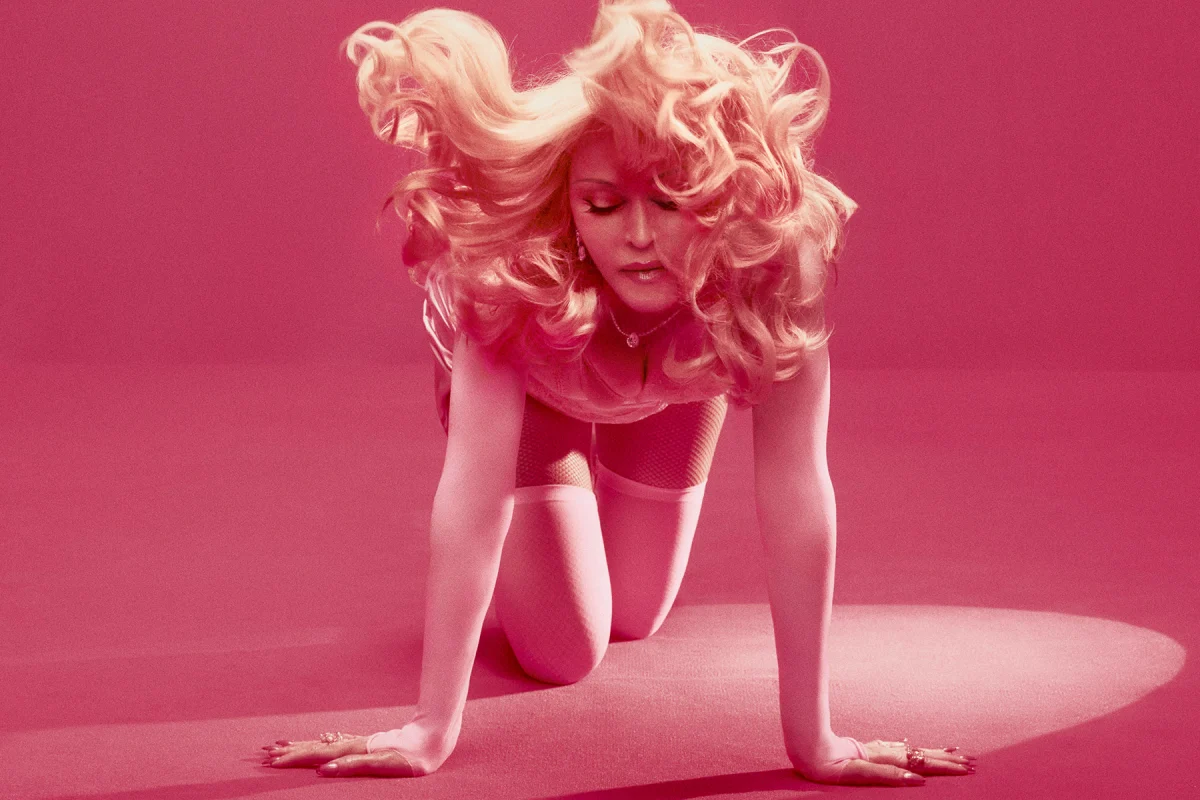
Six-and-a-half years into the 2020s, the music world has eagerly awaited a new studio album from pop icon Madonna. Her last full-length offering, Madame X, was released in 2019. On July 3rd, the Queen of Pop delivered, not only with a new album but with a highly anticipated sequel to what many consider her most beloved LP of the 21st century: Confessions II, the follow-up to 2005’s seminal Confessions on a Dance Floor. The album has since debuted at the coveted No. 1 spot on the Billboard 200 chart for the week of July 18th, marking a significant return to chart dominance for the legendary artist.
Confessions II achieved an impressive first-week performance, accumulating 134,000 equivalent album units in the United States, with 114,000 of those being pure album sales, according to Luminate. This figure represents Madonna’s strongest first-week sales since her 2012 album MDNA and includes her highest single-week streaming numbers to date. This No. 1 debut marks Madonna’s 10th career chart-topping album on the Billboard 200, placing her in an elite group of artists who have achieved double-digit No. 1 albums on both the Billboard 200 and the Billboard Hot 100.
The resurgence of Madonna at the pinnacle of the charts has prompted widespread discussion among music industry analysts and fans alike. How has an artist, deep into a legendary career spanning over four decades, managed to command such a commanding first-week performance? And what does this success portend for the potential for other iconic artists from the 2000s to revisit their past triumphs? Billboard staffers recently convened to dissect these questions and offer their insights into Madonna’s latest chart victory.
Evaluating the Impact of ‘Confessions II’s’ Chart Success
The return of Madonna to the No. 1 position on the Billboard 200 with Confessions II has been met with considerable enthusiasm and analysis. The album’s debut at the top, accompanied by robust sales and record-breaking streaming figures for the artist, has been a focal point of discussion regarding its significance within Madonna’s extensive discography and the broader music landscape.
Chris Eggertsen, a Billboard contributor, rates the significance of this achievement a 7 out of 10. He notes that while Madonna’s iconic status and legacy are already firmly established, Confessions II feels like a triumphant return to form, reminiscent of her creative peak. "After a lukewarm fan and critical reception to her last few albums," Eggertsen observes, " Confessions II already feels like her most beloved set since Confessions on a Dance Floor dropped in 2005. It’s arguably been more than 20 years since she’s delivered an album that felt this creatively cohesive, reminding us of what made her such a compelling star at her height. Its warm embrace by fans, coupled with those solid first-week numbers, would be reason to celebrate for any artist. For a legend like Madonna, it’s icing on the cake."
Lyndsey Havens, another Billboard staffer, assigns a perfect 10 to the achievement, emphasizing the palpable buzz surrounding the release. "There were, of course, myriad facts that made a No. 1 debut feel like a lock – from Madonna’s star power and icon status to the Confessions continuation – but there’s a certain buzz surrounding this release that feels a bit surprising. That, to me, is almost a bigger deal when you consider this is Madonna’s 15th album."
Joe Lynch scores the success a 9, highlighting not only the No. 1 debut but also the commanding sales and unprecedented streaming numbers. He points to data from Spotify, which indicated a 60% increase in first-time listeners during the album’s release weekend, suggesting that Confessions II has successfully attracted both long-time fans and new audiences. "It’s no secret I adored Madame X," Lynch states, "but it was a big question if Madonna would ever have another mainstream career triumph – this answered that."
Taylor Mims echoes this sentiment, also giving the success a 9. She emphasizes the importance of streaming numbers in today’s music consumption landscape, especially for reaching younger demographics. "For Madonna to see her best-ever streaming numbers more than 40 years into her musical career is an amazing feat. It not only shows that her longtime fans are showing up, but that she is likely bringing in new listeners who are playing this album on repeat."
Andrew Unterberger offers an 8, acknowledging that while the numbers may not drastically exceed all previous totals, the fact that Madonna is exceeding them so late in her career, with genuine fan and critical excitement, is a significant accomplishment. He views it as proof of her continued relevance beyond simply being a legacy act.
The Power of Legacy and Creative Reinvention
A significant factor contributing to the monumental success of Confessions II is its direct lineage to Confessions on a Dance Floor, an album widely regarded as a masterpiece and a defining moment in 21st-century dance-pop. The deliberate choice to brand the new release as a sequel immediately captured the attention of fans who cherished the original.
Chris Eggertsen initially approached the announcement with a degree of skepticism, fearing a cynical attempt to capitalize on past glories. However, his apprehension quickly turned to admiration upon listening to the album. "I was pleasantly surprised to discover that the album is actually good," he admits. "And ever since that first listen, I’ve played it all the way through multiple times. Like the original Confessions, one of its many strengths is the way it unfolds as a continuous mix, with each song bleeding seamlessly into the next. Do I think the ‘Confessions’ branding helped drum up interest? No doubt. But the album’s strength as a creative project is what kept people hitting play, and lifted it to the commercial heights it ultimately reached."
Lyndsey Havens concurs that the Confessions branding played a role but believes two other factors were more significant. "The biggest is that the music is genuinely great," she asserts. "This isn’t a nostalgia play or recycled tracks of years past; what Madonna delivered feels fresh and compelling. Then, when you consider what she’s been up to lately – whether that’s delivering a 10-minute guest set amid Sabrina Carpenter’s headlining Coachella performance or later vibing to Anyma’s desert gig like any regular raver – I think the cross-generational and even cross-genre interest in Madonna might just be at an all-time high."
Joe Lynch differentiates between "branding" and the actual substance of the album. He argues that simply attaching the "Confessions II" title to a lesser album wouldn’t have yielded the same results. "Excitement snowballed here because these marvelous songs call back to Confessions without rehashing it," he explains. "The rollout of this record was also inventive and exciting – the right mix of eyebrow-raising moments (Grindr interview), inventive surprises (Times Square pop-up) and stunning visuals (Interview mag). It proved an old-school rollout might be the hot new thing these days."
Taylor Mims views the connection to a beloved album as a positive catalyst, but emphasizes that Madonna’s approach was not merely a superficial cash-in. "Madonna waited more than 20 years to revisit the project and create something that was in conversation with that album, not just a cheap turnaround to cash in on the hype," she notes.
Andrew Unterberger agrees that the Confessions branding was a significant factor in initiating momentum. However, he believes the album’s overall success is more attributable to the high-caliber execution of both its rollout and its musical content. "It’s a hit because it’s a hit," he concludes, suggesting that the quality of the music itself ultimately drove its commercial performance.
The Resonance of a Sequel: Continuity and Evolution
The question of whether Confessions II truly lives up to its predecessor as a "proper sequel" is a crucial one, and its impact on the album’s reception is a subject of considerable debate.

Chris Eggertsen firmly believes that it does matter, stating, "If the new album had failed to share any DNA with Dance Floor, calling it Confessions II would have felt like cheap, surface-level branding. Luckily, it does feel like a proper sequel." While acknowledging sonic differences – Dance Floor being brighter and more radio-friendly, while Confessions II leans towards a more reflective, downtempo sound – he identifies a profound thematic connection. "Thematically, both posit the dance floor as an almost spiritual realm, where one can process and even exorcise the past – or at the very least, transcend it for a sweaty evening. That thematic similarity establishes a vital connective tissue between the two albums that puts them in conversation with each other, and makes the experience of listening to both of them richer."
Lyndsey Havens offers a nuanced "yes and no" perspective, suggesting that this ambiguity is precisely why the album is succeeding. "It’s not hitting listeners over the head or trying too hard to look back, but it’s not a total sonic divergence – resulting in a project that feels equally connected to its past while existing on its own in the present and staking its claim as a future Madonna fave."
Joe Lynch unequivocally answers "yes and yes," asserting that the songs genuinely evoke the mood, soundscapes, melodies, and themes of the original Confessions, largely due to Madonna’s collaboration with Stuart Price. He reiterates that the album’s success stems from its authentic continuation of the original’s narrative and sonic identity.
Taylor Mims strongly agrees that the sequel status matters. "If an artist is going to invoke a beloved album, it needs to be for a good reason," she argues. "Madonna fans are passionate and know her work through and through. She can’t call a collection a sequel and not expect her fans to have the receipts." She further elaborates that Confessions II feels like a thoughtful evolution, acknowledging that "the dance music of 2026 is not the dance music of 2005, and Madonna makes thoughtful translations in her sound for the modern listener."
Andrew Unterberger finds that the album does feel like a sequel, but in the most compelling way possible for a decade-separated follow-up. He notes that it captures the "weight of the years that have passed" while retaining the "initial vitality" of the original. He suggests that while not strictly necessary for commercial success, this authentic connection is crucial for the album to become a lasting cornerstone of Madonna’s catalog.
Chart Performance Beyond the Album: Singles and the Hot 100
While Confessions II has undeniably dominated the Billboard 200, its performance on the singles-focused Billboard Hot 100 has been more modest. The only track from the album to chart so far is "Bring Your Love," featuring Sabrina Carpenter, which debuted at No. 74 in May prior to the album’s release. Notably, no other tracks from Confessions II appeared on the Hot 100 during its debut week, though "Danceteria" has bubbled under at No. 13, and it, along with two other songs, has reached the Top 15 on the Hot Dance/Pop Songs chart.
Chris Eggertsen expresses a desire for a Hot 100 hit, particularly championing "Danceteria" as a potential song of the summer. However, he concedes that Madonna’s era of massive hit singles may be behind her, observing that hit singles are now predominantly the domain of younger artists, even as established legends like Madonna, Bruce Springsteen, and Paul McCartney continue to achieve No. 1 albums. He poses a thought-provoking question: "how great would it be for a single by a 67-year-old pop star to go top 10, or even No. 1?" He points to the ageism prevalent in the music industry, particularly against women, and suggests that a Hot 100 resurgence would serve as a powerful validation of Madonna’s enduring message of female vitality and relevance.
Lyndsey Havens finds the album’s success even more compelling precisely because it is not tied to a single massive hit. "It’s clearly not hitched to one single or viral moment or manufactured push – the entire project is winning," she observes. "And not just on the strength of Madonna’s decades-long career, but again because the project as a whole is what’s grabbing listeners."
Joe Lynch is less optimistic about a Hot 100 breakthrough and believes it’s not a critical factor for Confessions II‘s success. He speculates that a song like "Fragile" might find some traction on Adult Contemporary radio, but doesn’t foresee any tracks reaching the Top 40 of the Hot 100. He argues that Madonna is no longer operating within the traditional radio/streaming hit-making game. Instead, she commands a dedicated fanbase and has a broad appeal that tunes in for new albums that resonate with her signature sound. " Confessions II did, and that’s the victory here," he concludes.
Taylor Mims acknowledges the potential for tracks like "Danceteria," "Read My Lips," and "Love Sensation" to become standalone radio or playlist hits. However, she ultimately agrees that a Hot 100 hit is not essential for this album. " Confessions II is best consumed whole," she states. "It’s an immersive ride that propels the listener forward with tracks that flow seamlessly into one another. That doesn’t leave much room for hitting repeat on one track." She notes that with 16 tracks exceeding an hour in length, the album’s cohesive nature makes it harder for any single song to emerge as a dominant hit.
Andrew Unterberger shares the sentiment that a Hot 100 success story is unlikely, though he would have welcomed it as a fun addition to Madonna’s already impressive catalog of singles. He questions its long-term legacy impact, suggesting that "the biggest songs will still resound like hits for the folks who care the most."
The Future of Sequels: Unearthing Musical Goldmines
The resounding success of Confessions II naturally sparks curiosity about other classic 2000s albums that might be ripe for a sequel and could potentially achieve similar chart results.
Chris Eggertsen proposes a sequel to Britney Spears’ 2007 album Blackout. He argues that the album, though unfairly maligned in its time due to Spears’ personal struggles, has gained significant critical acclaim over the years for its "bleeding-edge sonic brilliance." A follow-up, reflecting on that turbulent period both personally and culturally, "would be a fascinating exercise."
Lyndsey Havens humorously suggests a sequel for Rihanna, perhaps titled Bad Girl Gone Good (Again). She believes this approach would alleviate the pressure of a full "comeback" album and allow the artist to work within a more defined narrative, given the significant time elapsed since her last release.
Joe Lynch points to Justin Timberlake, suggesting that a reunion with Timbaland for a sequel to 2006’s FutureSex/LoveSounds could be a significant career win. He stresses that while the title is important, the quality of the music would be paramount, requiring it to genuinely continue the artistic conversation initiated by the original album.
Taylor Mims nominates OutKast’s Speakerboxxx/The Love Below (2003) as a prime candidate for a sequel. She highlights its status as one of the most beloved albums of the 2000s and believes fans would eagerly embrace a part two. She also suggests that a sequel to Stankonia could yield similar impressive results, particularly if André 3000 were to incorporate his signature flute melodies.
Andrew Unterberger cheekily suggests that Usher’s 2004 album Confessions could also be a candidate for a sequel, humorously noting the potential for title-sharing with Madonna’s latest release.