
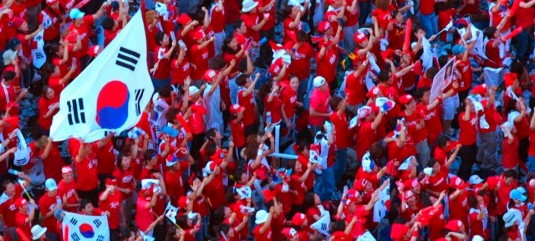
The concept of nationalism in the Korean Peninsula represents a complex intersection of ancient mythology, colonial trauma, and modern political necessity. Unlike the civic nationalism found in many Western democracies, which is often based on shared political values or residency, Korean nationalism is rooted deeply in the concept of danil minjok—the belief in a single, homogenous ethnic bloodline. This ethno-nationalist sentiment, while manifesting differently in the democratic South and the autocratic North, remains a foundational pillar of identity for people on both sides of the 38th parallel. Understanding the trajectory of this ideology requires an examination of its legendary origins, its weaponization during the Japanese occupation, and its current struggle to adapt to an increasingly globalized world.
The Mythological Foundations of the Korean Race
The bedrock of Korean ethnic identity is the legend of Tan’gun Wanggeom, the mythical founder of Gojoseon, the first Korean kingdom. According to the Samguk yusa (Memorabilia of the Three Kingdoms), a collection of legends and historical accounts compiled in the 13th century, the Korean story begins in 2333 BC. The narrative describes Hwan-ung, the son of the heavenly lord Hwan-in, descending to Mount Paektu to live among humans.
The myth takes a transformative turn when a tiger and a bear petition Hwan-ung to become human. He instructed them to stay in a dark cave for 100 days, consuming only sacred mugwort and twenty cloves of garlic. While the tiger grew impatient and fled, the bear remained, eventually transforming into a woman named Ung-nyeo. She subsequently married Hwan-ung and gave birth to Tan’gun, who is revered as the progenitor of the Korean people.
While modern historians and the general public in South Korea largely view the Tan’gun narrative as an allegory or a foundational myth rather than literal history, its psychological impact is profound. The story establishes a "divine" lineage and a sense of "uninterrupted bloodline" that has been utilized by various regimes to foster a sense of exceptionalism and unity. In North Korea, this myth has been co-opted for political legitimacy; in the 1990s, the state claimed to have discovered Tan’gun’s tomb near Pyongyang, a move widely viewed by international archaeologists as a fabrication intended to cement the North’s claim as the "true" successor of the Korean heritage.
The Shift from Neo-Confucianism to Modern Nationalism
Historically, the inhabitants of the Korean Peninsula did not always view themselves through the lens of modern nationalism. During the Joseon Dynasty (1392–1910), identity was largely defined by Neo-Confucian social hierarchies, loyalty to the monarchy, and kinship ties. The "peasantry" and the "aristocracy" (yangban) felt little sense of shared "national" struggle in the way it is understood today. Instead, Korea functioned as a "Hermit Kingdom," operating under the cultural and political shadow of China, which exercised a form of suzerainty over the peninsula.
The transition toward a modern national identity began in the late 19th century as Korea became a focal point of imperial competition between Russia, China, and Japan. Intellectuals realized that the traditional Confucian world order was insufficient to protect Korea from colonization. This era saw the rise of nationalist mouthpieces such as the Tongnip Sinmun (The Independent) and the Hwangseong Sinmun (Capital Gazette). These publications were instrumental in introducing the concept of minjok—the ethnic nation.
To distinguish Korea from its powerful neighbors, these intellectuals began to "decenter" China. They promoted the use of Hangul, the phonetic script created by King Sejong the Great in the 15th century, which had previously been dismissed by the elite in favor of Chinese characters. By elevating Tan’gun as a national father figure and emphasizing a unique language and history, these reformers sought to create a unified front against foreign encroachment.
The Crucible of Japanese Occupation (1910–1945)
The defining catalyst for modern Korean nationalism was the Japanese annexation in 1910. For 35 years, the Korean people were subjected to a policy of cultural assimilation and economic exploitation. The Japanese colonial government eventually implemented the Sōshi-kaimei policy, which pressured Koreans to adopt Japanese surnames and forbade the use of the Korean language in schools and public life.
In response, the Korean identity became a form of resistance. The more the Japanese tried to erase "Koreanness," the more the local population clung to the idea of a pure, resilient bloodline that could not be extinguished. This period solidified the danil minjok ideology. Nationalism was no longer just an intellectual exercise; it was a survival mechanism. This "defensive nationalism" explains many of the modern sensitivities regarding territorial disputes, such as the ongoing friction over the Dokdo islands, which many Koreans view as a symbol of unfinished decolonization.

Post-War Divergence and Economic Mobilization
Following the liberation in 1945 and the subsequent division of the peninsula after the Korean War (1950–1953), both North and South Korea utilized ethno-nationalism to consolidate power, though their methods differed:
- South Korea: Under the leadership of Park Chung-hee in the 1960s and 70s, nationalism was redirected toward "national reconstruction." The government fostered a sense of collective sacrifice, urging citizens to work long hours for the "glory of the nation." This ethnic solidarity was a key driver behind the "Miracle on the Han River," transforming South Korea from a war-torn agrarian society into a global industrial powerhouse.
- North Korea: The North developed the Juche ideology (self-reliance), which blended Marxism-Leninism with extreme ethnic nationalism. The Kim dynasty positioned itself as the protector of the "pure" Korean race against "imperialist contaminations." To this day, North Korean propaganda emphasizes racial purity as a source of moral superiority over the "corrupted" and "Westernized" South.
Contemporary Challenges: Globalization and Multiculturalism
In the 21st century, South Korea’s traditional ethno-nationalism is facing an existential crisis. The country is no longer an isolated ethnic enclave. As of 2023, the foreign resident population in South Korea has surpassed 2.5 million, accounting for approximately 5% of the total population.
The rise of "multiethnic families" (damunhwa)—often resulting from international marriages between Korean men and women from Southeast Asia—has challenged the danil minjok narrative. Children of mixed heritage frequently face systemic discrimination and social exclusion because they do not fit the traditional "pure blood" mold.
Furthermore, South Korea is grappling with the world’s lowest birth rate, which plummeted to 0.72 in 2023. Demographic experts argue that South Korea must embrace large-scale immigration to prevent economic collapse. However, the deeply ingrained belief in ethnic homogeneity remains a significant barrier to social integration.
Chronology of Key Nationalist Milestones
- 2333 BC (Legendary): Founding of Gojoseon by Tan’gun.
- 1281 AD: The Samguk yusa is compiled, documenting the Tan’gun myth for the first time.
- 1443 AD: King Sejong creates Hangul, providing a linguistic foundation for national identity.
- 1896 AD: Publication of the Tongnip Sinmun, the first private Korean-language newspaper.
- 1910–1945: Japanese colonial rule; nationalism becomes a tool of resistance.
- 1960s–1970s: South Korea uses nationalism to drive rapid industrialization.
- 2007 AD: The United Nations Committee on the Elimination of Racial Discrimination (CERD) officially advises South Korea to end the use of terms like "pure blood" and "mixed blood," citing them as obstacles to human rights.
Analysis of Implications
The persistence of ethno-nationalism in Korea provides both stability and volatility. On one hand, it has allowed the South to maintain a high degree of social cohesion and a shared sense of purpose during times of economic hardship. On the other hand, it fuels diplomatic friction with Japan and China and complicates the integration of North Korean defectors and foreign migrants.

For the South, the transition from "ethnic nationalism" to "civic nationalism" is the primary challenge of the coming decades. If the state continues to define "Koreanness" by bloodline, it risks alienating the very people it needs to sustain its future workforce. Conversely, if it moves too quickly toward a multicultural model, it may face a domestic backlash from conservative segments of society who view ethnic homogeneity as the core of their identity.
In conclusion, Korean nationalism is a product of both ancient myth and modern trauma. While the "bear-woman" legend of Tan’gun may be a fable, the sense of shared destiny it inspired has shaped the history of the peninsula. As South Korea navigates its role as a global cultural and economic leader, it must decide whether its 5,000-year-old "uninterrupted bloodline" is a heritage to be preserved or a barrier to be overcome.