
The term dwenjang-nyeo, literally translated as "bean paste girl," has evolved from a niche internet slang term into a significant cultural touchstone that encapsulates the complex intersection of rapid economic growth, gender dynamics, and consumer identity in contemporary South Korea. While the term gained international visibility through the global success of Psy’s 2012 hit "Gangnam Style," which satirized the lifestyles of those frequenting Seoul’s most affluent district, its roots lie deep within the country’s unique socio-historical trajectory. To understand the dwenjang-nyeo is to understand the tensions of a nation that transitioned from wartime poverty to a leading global economy in less than three generations, creating a society where status is often measured by the visibility of one’s consumption.
Defining the Dwenjang-nyeo: A Study in Contrast
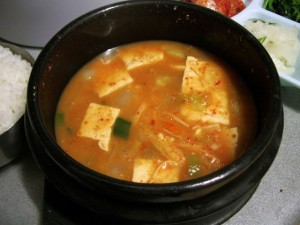
The etymology of the term is rooted in one of Korea’s most humble culinary staples: dwenjang, or fermented soybean paste. Dwenjang-jjigae (bean paste stew) is a hearty, inexpensive dish typically served in low-key traditional restaurants or prepared at home. It represents the "old" Korea—frugal, communal, and grounded. The "bean paste girl" label is applied to young women who are perceived to live a double life: they consume cheap meals like dwenjang-jjigae, often costing between 3,500 and 5,000 KRW ($3 to $4), specifically so they can afford "luxury" Western experiences, most notably a cup of coffee from a premium brand like Starbucks.
In the mid-2000s, when the term first gained traction, a Starbucks latte in Seoul often cost more than a full meal. This discrepancy became the focal point of public criticism. The dwenjang-nyeo is characterized as a woman who prioritizes the appearance of wealth over financial stability. She is often depicted carrying a designer handbag—brands like Louis Vuitton, Chanel, or Gucci are preferred—and wearing high-end cosmetics while living in a modest studio or with her parents to save every won for the next status symbol. Critics argue that her consumption is not about the quality of the product, but about the "vibe" and the social signaling associated with Western luxury.
A Chronology of Economic Transformation and Austerity
To understand why a woman’s choice of coffee became a national controversy, one must look at South Korea’s economic history. Following the devastation of the Korean War (1950-1953), South Korea was one of the poorest nations on Earth. For decades, the state, particularly under the authoritarian leadership of Park Chung-hee, enforced a culture of extreme frugality. During the "Miracle on the Han River," national campaigns were launched to discourage kwasobi (excessive spending). Spending on imported goods was framed as unpatriotic, and the populace was exhorted to save money to fuel industrial development.
By the 1990s, however, the economic landscape had shifted. The 1988 Seoul Olympics served as a coming-out party for the nation, and the subsequent liberalization of the economy meant that luxury goods and Western franchises began to flood the market. The 1997 Asian Financial Crisis (often called the "IMF Crisis" in Korea) briefly re-ignited the calls for frugality, but it also fundamentally changed the social contract. With the end of "lifetime employment," younger generations began to shift their focus from long-term saving—which no longer guaranteed home ownership or a stable retirement—to immediate gratification and "small luxuries."
Supporting Data: The Global Capital of Luxury Consumption
The "bean paste girl" phenomenon is supported by empirical data regarding South Korea’s luxury market. According to a 2022 report by Morgan Stanley, South Koreans are now the world’s biggest spenders on personal luxury goods per capita. Spending by South Koreans on luxury items rose by 24% in 2022 to $16.8 billion, which equates to about $325 per person. This far exceeds the $280 spent per capita in the United States and the $250 in China.
Furthermore, the "coffee culture" that sits at the heart of the dwenjang-nyeo critique is backed by staggering numbers. South Korea has one of the highest densities of coffee shops in the world. As of 2023, there were over 100,000 coffee shops in the country. For many young Koreans, the coffee shop is not just a place for a beverage; it is a "third space" that offers a temporary escape from cramped living quarters and high-pressure work environments. The 6,000 KRW spent on a latte is often viewed by sociologists not as financial irresponsibility, but as a "rental fee" for an hour of luxury atmosphere.
The Satire of "Gangnam Style" and Public Perception
When Psy released "Gangnam Style," the lyrics specifically targeted the performative nature of this consumption. The line "A girl who enjoys the leisure of a cup of coffee" was a direct reference to the dwenjang-nyeo trope. Psy’s video mocked the attempt to look "classy" while being in decidedly un-classy situations, such as dancing in a stable or a public bus.
The public reaction to the dwenjang-nyeo has been overwhelmingly negative, often manifesting in online vitriol and "cyber-bullying." In the mid-2000s, various internet forums were dedicated to spotting and photographing women who fit the stereotype. This backlash revealed a deep-seated resentment toward the perceived vanity of the younger female generation. However, it also sparked a counter-discourse. Feminist scholars and defenders of these women argued that the term was a tool of patriarchal control, used to shame women for their financial independence and their choice to spend their own earned income on themselves rather than on a family or a husband.
The Missing Counterpart: Why No "Bean Paste Boy"?
A notable aspect of this social phenomenon is the lack of a male equivalent. While young men in South Korea also engage in conspicuous consumption—often spending significant portions of their income on expensive cars (the "Car-Poor" phenomenon), high-end electronics, or designer streetwear—they are rarely subjected to the same level of gendered derogatory labeling.
Sociologists suggest this discrepancy is rooted in South Korea’s persistent gender inequality. According to the OECD, South Korea has the largest gender pay gap among member nations, a position it has held for decades. In a society where women face significant barriers to professional advancement and home ownership, luxury goods often serve as the only accessible markers of success. By labeling these women "bean paste girls," the critique shifts the focus from systemic economic issues to individual moral failings, specifically targeting women’s "irrational" desires.

Broader Impact and the Evolution of "Small Luxury"
The legacy of the dwenjang-nyeo has morphed into new consumer trends. In recent years, terms like "YOLO" (You Only Live Once) and "Flex" culture have replaced the bean paste label. These reflect a similar desire for high-end consumption, but they are more gender-neutral and widely accepted as a response to the "Hell Joseon" sentiment—a term used by young Koreans to describe the harsh socioeconomic conditions and lack of upward mobility in the country.
Another related concept is "Shibal Bi-yong" (stress spending), which refers to money spent on things one wouldn’t normally buy, but does so to cope with a stressful day. For many, a luxury handbag or an expensive meal is a "tangible reward" in a life where "intangible rewards" like career stability and housing are increasingly out of reach.
Conclusion: A Mirror of Societal Anxiety
The dwenjang-nyeo is more than just a caricature of a woman with a Starbucks cup and a Chanel bag; she is a mirror reflecting South Korea’s rapid journey into late-stage capitalism. The term captures the friction between traditional Korean values of modesty and the modern reality of a hyper-competitive, image-conscious society.
While the specific label may fade as new slang takes its place, the underlying tensions remain. As long as South Korea remains a society where social standing is tied to visible consumption, and as long as gendered double standards persist in the critique of that consumption, the ghost of the "bean paste girl" will continue to haunt the coffee shops and luxury boutiques of Seoul. The phenomenon serves as a cautionary tale of how economic success can lead to a "status race" where the finish line is always moving, and the cost of entry is often higher than a simple bowl of stew.