

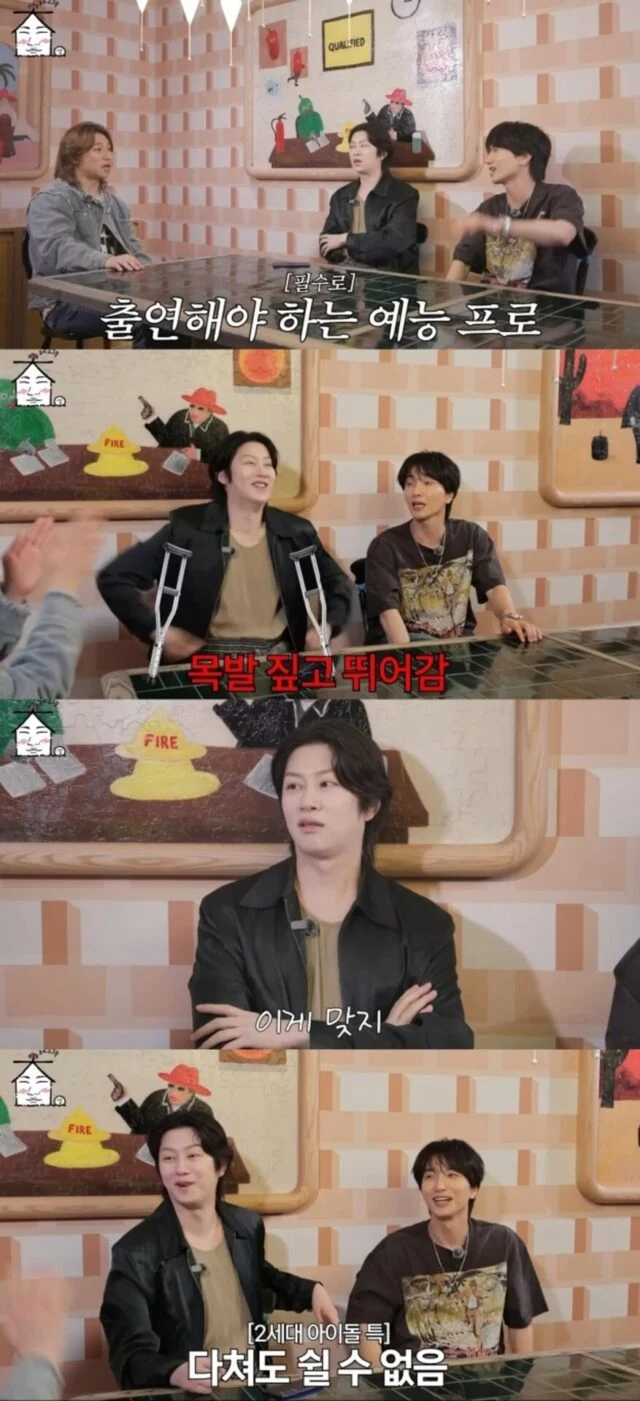
In a candid revelation shedding light on the often-glamorized world of K-Pop, three prominent second-generation idols – Super Junior’s Leeteuk and Heechul, alongside BIGBANG’s Daesung – openly discussed the intense inter-group tensions, fierce company rivalries, and demanding working conditions that characterized their heyday. Their collective insights, shared during a recent YouTube appearance, have provided a rare, unvarnished look into an era that significantly shaped the global phenomenon K-Pop is today, highlighting the hidden pressures beneath the glittering surface of idol life. The discussion has resonated deeply within the K-Pop community, prompting reflection on the industry’s evolution and the welfare of its artists.
The YouTube Revelation and Its Context
The illuminating discussion took place on July 17th, when a video featuring Super Junior’s Leeteuk and Heechul was released on the YouTube channel ZIP DAESUNG, hosted by BIGBANG’s Daesung. The trio, all iconic figures from K-Pop’s second generation (roughly 2005-2012), convened to reminisce about their formative years in the industry. This particular era is often credited with significantly expanding K-Pop’s reach beyond South Korea, laying the groundwork for the global "Hallyu" (Korean Wave) phenomenon. Groups like Super Junior and BIGBANG were at the forefront of this expansion, pioneering new markets and fan engagement strategies. Their retrospective conversation offered a stark contrast to the often carefully curated public image of idol groups, providing a raw and honest account of the behind-the-scenes realities. The format of a casual YouTube chat allowed for a level of transparency rarely seen in formal media appearances, giving fans and industry observers alike an invaluable glimpse into the past.
The Era of Fierce Competition: A Duopoly’s Grip
Leeteuk initiated the discussion by recalling the prevailing atmosphere of the music industry during their active years. "Back then, the power of the companies was really strong," he asserted, immediately pointing to a significant structural aspect of the industry. He elaborated, "Effectively, it was a duopoly between SM and YG." This observation underscores a crucial period in K-Pop history where two entertainment powerhouses, SM Entertainment and YG Entertainment, exerted dominant influence over the industry’s landscape. SM Entertainment, established in 1995, had already cemented its status with first-generation groups like H.O.T. and S.E.S., and by the second generation, continued its reign with groups like TVXQ, Super Junior, Girls’ Generation, and SHINee. YG Entertainment, founded in 1996, rose to prominence with artists like Se7en and later solidified its position with BIGBANG and 2NE1, known for their distinct hip-hop and R&B influences.
This "duopoly" was not merely about market share; it dictated much of the industry’s dynamics, from talent scouting and training to music production, promotion, and media relations. Leeteuk further described the environment as one of "intense power struggle," where "During promotions, all agencies except SM were seen as competitors." This statement reveals a strategic internal competition even within SM Entertainment’s roster, but a unified front against external rivals. Daesung, from YG Entertainment, readily agreed, confirming, "Back then, that kind of mindset was instilled," emphasizing the pervasive nature of this competitive ideology. He empathized with the fierce rivalry between agencies, noting its intensity compared to the more collaborative or at least less overtly hostile environment often perceived in the contemporary K-Pop scene. The financial stakes were immense, with successful groups generating substantial revenue through album sales, digital streams, concerts, merchandise, and endorsements. Companies invested heavily in their idols, and a return on investment often necessitated aggressive promotion and strategic positioning against competitors.
The Battle for the Spotlight: Music Show Ending Stages
A particularly vivid anecdote illustrating this intense corporate rivalry involved the coveted ending stages of music programs. Music shows like Inkigayo, Music Bank, and M Countdown are crucial platforms for K-Pop idols, offering significant exposure and serving as a weekly battleground for chart performance and fan engagement. The final segment, featuring the winning artist or a collaborative performance by top groups, is highly prized for its visibility and symbolic prestige.
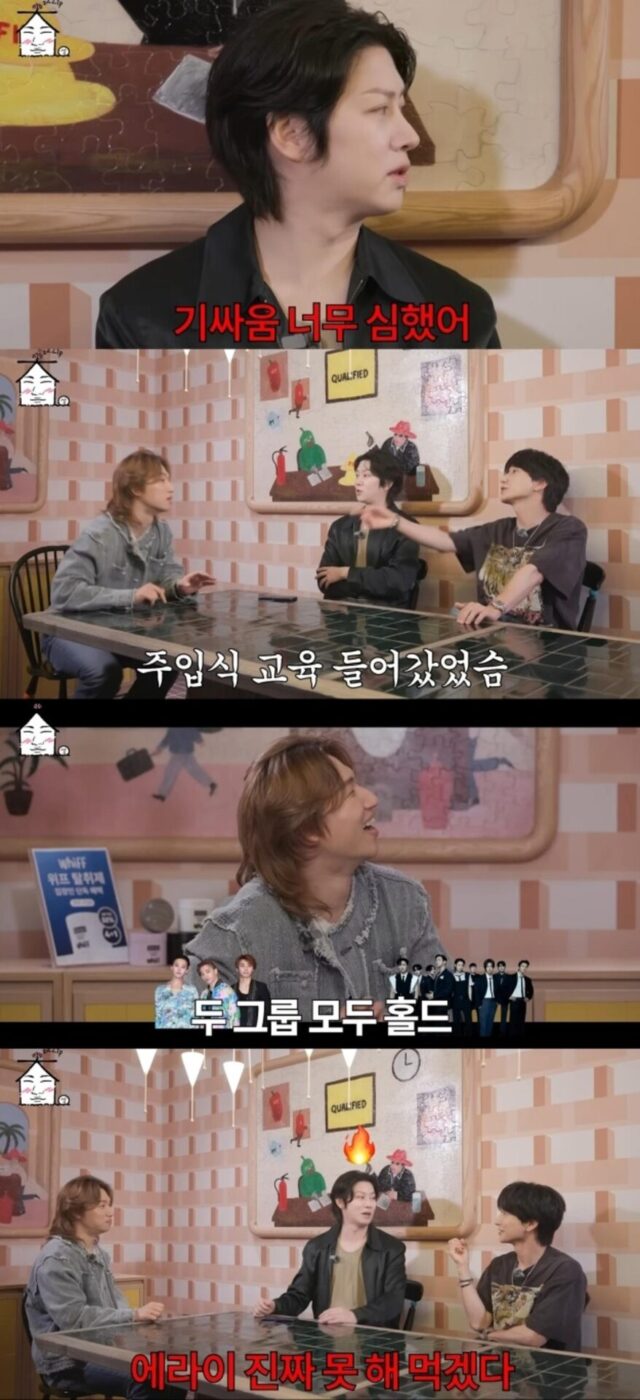
Heechul recounted the pressures surrounding these ending stages, stating, "When we were busy, we just wanted to do the opening and go home quickly, but the companies insisted we wait around to go on for the ending stage." This highlights a significant divergence between the idols’ personal desires for rest and their agencies’ strategic objectives. He specifically recalled a standoff involving two of the era’s biggest groups: "BIGBANG and Super Junior were both waiting to go on the last stage." This scenario perfectly encapsulates the company-driven rivalry, where an agency’s perceived strength and influence were often demonstrated by securing such prime slots for their artists, regardless of the idols’ exhaustion.
Heechul, known for his outspoken personality, revealed his frustration with the situation. "I wanted to go home early, but both groups kept telling each other not to go up," he shared, describing a tense, unspoken battle of wills between the two rival camps. His ultimate response was an act of defiance: "I got angry and just went home," a revelation that genuinely surprised Daesung, while Leeteuk, familiar with his bandmate’s temperament, simply laughed and affirmed, "He really went home," eliciting further amusement. Heechul further reflected on the incident, thinking, "This is really unbearable," and criticizing the underlying system: "We were all singers, but the companies kept pushing us to fight each other." Daesung echoed this sentiment, providing a crucial perspective from an idol on the receiving end of such pressure: "That’s right. The singers themselves didn’t care much; it was the companies that created this rivalry." This insight suggests that much of the animosity perceived between groups by fans was, in fact, a manufactured construct of corporate strategy rather than genuine personal animosity between artists.
The Unseen Labor: Mandatory Variety Appearances
Beyond the music show rivalries, the idols also delved into another demanding aspect of their promotional cycles: the mandatory variety show circuit. Leeteuk explained, "It’s not like this now, but back then, you had to appear on certain shows to get on music programs." Daesung corroborated this, stating, "You had to be on flagship variety shows to perform on music shows." This reveals a symbiotic, yet often coercive, relationship between broadcasting stations and entertainment agencies. To gain precious airtime on music programs, which were essential for promoting new songs and albums, idols were often compelled to appear on various entertainment programs produced by the same broadcasting networks.
The shows they referenced included Open Concert, Star Golden Bell, Challenge 1000 Songs, and Law of the Jungle. While some of these, like Star Golden Bell, were popular and offered idols a chance to showcase their personalities, others might have been less aligned with their primary musical objectives or personal preferences. Law of the Jungle, for instance, is a physically demanding reality show that requires participants to survive in remote, challenging environments. The expectation for idols, regardless of their health or interest, to participate in such a wide array of programs was an unspoken prerequisite for their core music promotions. This system effectively leveraged idols’ popularity and their agencies’ desire for music program slots to fill variety show schedules, placing additional burdens on the artists’ already packed schedules and contributing to mental and physical exhaustion.
The Toll on Idols: Injuries and Relentless Schedules
Perhaps the most poignant revelations concerned the physical and mental toll of such relentless schedules and the perceived inability to rest, even when injured. Kim Heechul, who has openly discussed his past health struggles and a serious car accident in 2006 that left him with lasting leg injuries, shared a particularly stark example: "Even while on crutches, if someone said, ‘Heechul must not like our broadcasting station,’ I had to run over." This statement dramatically illustrates the immense pressure on idols to maintain a facade of tireless dedication and gratitude towards broadcasters, even at the expense of their physical well-being. The fear of being blacklisted or negatively perceived by powerful media entities forced idols to push past their physical limits.
Heechul contrasted this harsh reality with the current generation of idols: "Looking at younger idols now, they rest when they’re sick. That’s probably the right way." This observation points to a gradual, albeit slow, shift in industry practices and an increasing awareness of idol welfare. Modern K-Pop agencies and fans alike are beginning to advocate for and accept periods of rest or hiatus for idols recovering from illness or injury, a stark departure from the previous expectation of constant presence.
Leeteuk, known for his leadership and long career, humorously added to the sentiment, "If it were now, I wouldn’t have shown up today either," before sharing a personal anecdote: "I was in a car accident yesterday after driving 700 kilometers," bringing laughter but also underscoring the ongoing demands on even veteran idols. Kim Heechul succinctly summarized the shared experience, stating, "The hallmark of second-generation idols was that there was no time to rest." This line encapsulates the demanding, high-pressure environment in which these artists not only survived but thrived, ultimately paving the way for K-Pop’s global dominance.
Broader Industry Context: The Second Generation’s Legacy
The second generation of K-Pop idols, spanning roughly from 2005 to 2012, played a pivotal role in expanding the Hallyu wave. Groups like TVXQ, Super Junior, Girls’ Generation, Wonder Girls, KARA, BIGBANG, 2NE1, SHINee, and 4minute were instrumental in breaking into new markets across Asia and even making initial inroads into Western territories. This period saw a significant professionalization and globalization of the K-Pop system. While the first generation established the blueprint, the second generation refined it, introducing more elaborate concepts, sophisticated music production, and aggressive international marketing. The high stakes of this expansion contributed to the intense pressures described by Leeteuk, Heechul, and Daesung. Companies were vying not just for domestic dominance but for international recognition, making every promotional opportunity and every public appearance critical. The "duopoly" of SM and YG reflected this concentration of power and resources, as these companies had the financial backing and strategic vision to push their artists to the forefront of the burgeoning global market. The artists themselves, despite being the face of this global movement, were often subjected to conditions that prioritized corporate gain over individual well-being.
Evolution of Idol Welfare and Industry Practices
The revelations from these seasoned idols underscore the significant progress, yet also persistent challenges, within the K-Pop industry regarding artist welfare. In recent years, there has been a growing discourse around mental health, demanding schedules, and fair contracts for idols. The rise of new agencies and the diversification of K-Pop’s global appeal have somewhat diluted the absolute power once held by a few major players. Public and fan pressure, amplified by social media, has also played a role in advocating for better conditions. Contemporary agencies are increasingly expected to provide mental health support, allow for breaks during injury or illness, and offer more transparent contractual terms. However, the core competitive nature of the industry remains. The pursuit of global chart success, intense training periods, and the constant pressure to produce new content mean that idols, particularly those at the peak of their careers, continue to face demanding schedules. The conversation initiated by Leeteuk, Heechul, and Daesung serves as a potent reminder of the foundations upon which the current industry was built and the sacrifices made by previous generations.
Implications for Future Generations
The candid admissions from Leeteuk, Heechul, and Daesung carry significant implications for the future of the K-Pop industry. Their stories offer invaluable lessons about the importance of artist well-being, the ethical responsibilities of entertainment agencies, and the often-hidden costs of global fame. For current and aspiring idols, these accounts serve as a sobering reminder that the path to stardom is arduous and fraught with challenges that extend beyond artistic talent. For fans, it cultivates a deeper understanding and empathy for the artists they admire, encouraging a more critical perspective on industry practices. For the industry itself, these reflections from veterans should reinforce the ongoing need for systemic reforms that prioritize the health and longevity of artists, fostering a more sustainable and humane environment. The goal should be to create an industry where idols can pursue their dreams without sacrificing their physical and mental health, and where competition is driven by artistic merit rather than coercive corporate strategies. The legacy of the second generation, marked by both groundbreaking success and immense personal sacrifice, continues to inform the evolving narrative of K-Pop.



Leave a Reply