Korean Action Thriller Sparks Controversy For Its Dialogues
Article Editorial Team
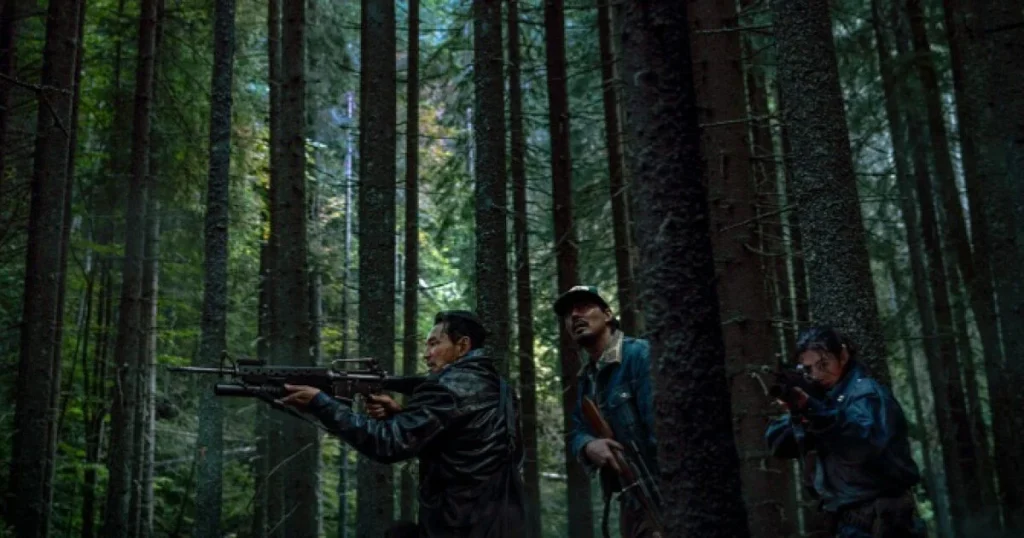
A new Korean cinematic release, the action thriller Hope, has rapidly ascended to the pinnacle of the domestic box office, attracting over 1.2 million cumulative viewers within an impressive three days of its premiere. This significant commercial success, however, has been accompanied by a burgeoning controversy surrounding the pervasive use of strong language within the film’s dialogue. The dual narrative of commercial triumph and artistic contention has ignited widespread discussion across South Korea, placing the film at the center of a debate concerning artistic realism, linguistic authenticity, and public sensibilities.
Box Office Triumph and Immediate Impact
Released amidst high anticipation, Hope quickly established its dominance in the South Korean film market. According to data compiled by the Korean Film Council (KOFIC)’s integrated ticketing system, the film captivated an astonishing 594,811 viewers on July 17th alone. This single-day performance propelled its total audience count to a remarkable 1,220,519 by July 18th, solidifying its position as the undisputed box office leader. Such a rapid accumulation of viewership places Hope in an elite category of films that achieve blockbuster status almost instantaneously, underscoring its broad appeal and strong initial word-of-mouth. For comparison, achieving over one million viewers in the first three days is a benchmark typically reserved for major tentpole releases, often signaling a trajectory towards multi-million viewer totals over its full run. The success is particularly notable in a highly competitive market, indicating effective marketing, strong audience engagement, and perhaps a hunger for high-octane thrillers.
Synopsis and the Gritty World of Hope
Hope plunges audiences into a taut, visceral narrative set against the desolate and tension-filled backdrop of the Demilitarized Zone (DMZ), a region synonymous with political sensitivity and isolation. The film centers on Beom Seok, portrayed by the acclaimed actor Hwang Jung Min, who serves as the head of a local office in the fictional Hopohang, a remote area bordering the DMZ. The story unfurls when Beom Seok receives alarming reports from local youths about the sighting of a tiger – an animal steeped in Korean folklore and symbolism, but one whose presence in the DMZ would signify a profound and unsettling disruption. This seemingly straightforward premise quickly spirals into a confrontation with a reality far more complex and dangerous than anyone could have anticipated, blending elements of survival, mystery, and intense action. The DMZ setting itself is a powerful narrative device, emphasizing isolation, constant threat, and a breakdown of conventional societal norms, providing a fertile ground for heightened emotions and raw human reactions.
The Genesis of Controversy: "Shibal" and Public Reaction
As Hope garnered critical praise for its immersive storytelling and compelling performances, an unexpected controversy began to simmer, quickly escalating into a heated public debate. The focal point of this contention is the film’s pervasive and explicit use of the Korean curse word "shibal," which is widely considered an equivalent to the English expletive "f*ck." Viewers, both online and in post-screening discussions, began to express discomfort and, in some cases, outright offense at what they perceived as an excessive and gratuitous deployment of the word.
One particular netizen’s analysis, widely circulated across social media platforms and online communities, meticulously claimed that the term "shibal" appears an astonishing 137 times throughout the film. This detailed count served to quantify the perceived omnipresence of the expletive, providing tangible evidence for those who felt the dialogue crossed a line into unnecessary vulgarity. The public reaction has been bifurcated: while some viewers argue that the language is an integral part of the film’s gritty realism and character development, others contend that it detracts from the cinematic experience, rendering the dialogue crude and repetitive. This schism highlights a perennial tension in art: where does the boundary lie between authentic representation and audience comfort?
Director Na Hong Jin’s Artistic Defense and Philosophy
In response to the mounting criticism, director Na Hong Jin, a filmmaker renowned for his dark, intense, and often brutal portrayals of human nature in films such as The Chaser (2008), The Yellow Sea (2010), and The Wailing (2016), offered a detailed and philosophical defense of his creative choices. During a special Q&A session that notably featured fellow acclaimed director Bong Joon Ho (Parasite, Snowpiercer), Na Hong Jin shed light on the production process and the artistic intent behind the controversial dialogue.
Na revealed that the extensive use of "shibal" was a blend of both spontaneous creativity and deliberate scripting. "Half of the curse words were ad-libs by the actors, and the other half were scripted," he explained. This insight underscores the collaborative nature of filmmaking and the organic evolution of dialogue on set, particularly with actors of Hwang Jung Min’s caliber who are known for their immersive method acting. More surprisingly, Na Hong Jin disclosed the extent of post-production editing related to the profanity: "Even though about 200 instances were removed during post-production, there are still over a hundred left." This statement indicates that the original script and initial takes contained an even higher frequency of the expletive, suggesting a conscious effort to moderate its use, even if the final count remains high.
Beyond the technicalities, Na Hong Jin delved into the artistic rationale, positing a reinterpretation of the word’s function. "I believe the dictionary meaning of this word needs to change at this point," he asserted, provocatively challenging conventional linguistic definitions. He elaborated, "The swearing in the film serves as a kind of exclamation that expresses various emotional depths as accents." This explanation positions "shibal" not merely as an offensive curse, but as a versatile linguistic tool, akin to an interjection or an emotional punctuation mark, capable of conveying a spectrum of feelings from frustration and anger to surprise, despair, or even a desperate kind of resolve in the face of insurmountable odds. In Na’s view, the word transcends its vulgar connotation to become a raw, unfiltered expression of the characters’ intense psychological states, reflective of the extreme circumstances they face in the DMZ.
The Role of Ad-Libs and Post-Production Edits
The director’s comments regarding the split between scripted and ad-libbed profanity offer valuable insight into the dynamic environment of a film set, particularly for a gritty action thriller. Ad-libbing, or improvisation, is a common technique used by actors to enhance realism and spontaneity, allowing them to fully inhabit their characters’ emotional landscapes. For an actor like Hwang Jung Min, known for his intense and visceral performances, it is plausible that expletives would naturally flow from a character under immense pressure and stress, particularly in the isolated and dangerous environment depicted in Hope. This improvisational aspect suggests an organic evolution of the dialogue, where the raw emotions of the characters dictate their language rather than strict adherence to a pre-written script.
The revelation that approximately 200 instances of the word were removed during post-production is equally significant. It indicates that the filmmakers were aware of the potential for audience backlash and made efforts to temper the language, even if the final count still proved controversial. This editing process involves careful consideration of pacing, impact, and audience reception, suggesting a deliberate artistic choice to maintain a certain level of raw dialogue deemed essential for the film’s authenticity, while simultaneously attempting to mitigate outright offense. It highlights the fine line filmmakers often walk between artistic integrity and commercial viability, especially when pushing linguistic boundaries.
Cultural Context of Profanity in Korean Media
The controversy surrounding Hope‘s dialogue is not an isolated incident but rather fits within a broader, ongoing discussion about language and censorship in Korean media. While South Korea has seen a significant liberalization of its media landscape since the strict censorship days of previous decades, public and regulatory bodies like the Korea Media Rating Board (KMRB) still monitor content, including language, violence, and sexual themes. The word "shibal" itself, while certainly a strong expletive, is also colloquially used in varying degrees of intensity, sometimes as a mere exclamation of frustration rather than a direct insult, depending on context and speaker. However, its pervasive use, especially in a widely accessible film, can still shock and offend a significant portion of the audience, particularly older generations or those unaccustomed to such raw language in mainstream cinema.

Korean cinema, much like global cinema, has often explored the boundaries of language to achieve realism. Directors frequently employ dialect, slang, and profanity to portray characters authentically, especially in genres like crime thrillers, dramas about working-class life, or war films where the environment inherently fosters harsh communication. Past films have also faced similar debates, demonstrating a consistent tension between artistic freedom to reflect reality and societal expectations for decorum. The Hope controversy thus serves as another chapter in this evolving dialogue, prompting reflection on how contemporary Korean society perceives and reacts to its own language when depicted on screen.
Filmmaking Realism vs. Public Sensibility: A Broader Debate
The discussion ignited by Hope transcends a mere linguistic critique; it delves into the fundamental tension between artistic realism and public sensibility. Filmmakers like Na Hong Jin often strive for authenticity, believing that unvarnished portrayals of human experience, including raw emotions and uncensored language, are crucial for a truthful narrative. In the context of Hope‘s DMZ setting and the high-stakes confrontation with a perceived threat, the characters’ language might be seen as a natural byproduct of their extreme circumstances – a visceral reaction to fear, danger, and desperation. From this perspective, sanitizing the dialogue would undermine the film’s gritty realism and dilute its emotional impact.
However, many viewers argue that artistic freedom should not come at the expense of audience comfort or societal norms. Excessive profanity, they contend, can be perceived as lazy writing, a shock tactic, or simply off-putting, distracting from the narrative rather than enhancing it. This camp often advocates for a more nuanced approach, where language is used judiciously and purposefully, rather than saturating the script. The debate highlights the subjective nature of "realism" and "artistic merit," where what one person perceives as authentic, another might find gratuitous.
Industry Perspectives and Future Outlook
The commercial success of Hope, despite the ongoing dialogue controversy, presents an interesting case study for the Korean film industry. It suggests that compelling storytelling and strong performances can, to some extent, overshadow or coexist with contentious elements. This might embolden other filmmakers to explore more daring linguistic choices, confident that a strong narrative foundation can sustain potential backlash. Conversely, it might also lead to increased scrutiny from rating boards or distributors, urging greater caution in future productions to avoid alienating segments of the audience.
Film critics, while acknowledging the linguistic debate, have largely focused on the film’s overall artistic merits, its directorial vision, and the performances of its cast. Many have praised Na Hong Jin’s signature style, which often blends genre conventions with profound psychological depth, and Hwang Jung Min’s powerful portrayal. Their analyses frequently contextualize the language within the film’s specific thematic and atmospheric framework, often defending it as an integral part of the narrative’s raw power.
Ultimately, Hope‘s journey from box office triumph to cultural flashpoint underscores the dynamic relationship between art and society. It forces a conversation about the evolving standards of language in media, the boundaries of artistic expression, and the enduring quest for cinematic authenticity. As the film continues its run, its impact will likely extend beyond mere ticket sales, contributing to the broader discourse on how contemporary Korean cinema reflects and challenges its audience.
Related News