
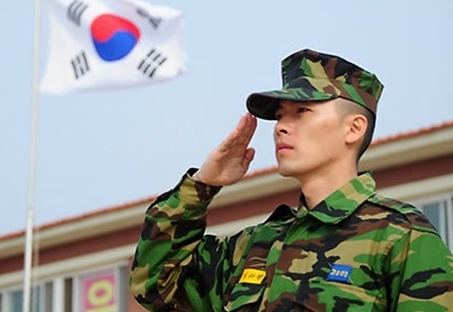
In the Republic of Korea, military service is far more than a legal obligation; it is a fundamental rite of passage that defines a man’s standing in society and his perceived commitment to the collective safety of the nation. Since the 1953 Armistice Agreement halted active hostilities on the Korean Peninsula, the two Koreas have remained technically at war, separated by the heavily fortified De-Militarized Zone (DMZ). This enduring state of tension necessitates a robust defense strategy, central to which is the mandatory conscription of all able-bodied men between the ages of 18 and 28. For approximately 21 months, these young men are removed from their civilian lives, their educations, and their burgeoning careers to serve in the armed forces. While the policy is universal, the recent conduct of high-profile "celebrity recruits" has ignited a national firestorm, calling into question the fairness of the system and the ethics of the Defense Media Agency.
The Cultural and Political Weight of Conscription
To understand the severity of the backlash against celebrity soldiers, one must first grasp the socio-political landscape of South Korean conscription. The military is viewed as the ultimate leveler—a shared hardship that theoretically places the son of a billionaire on the same footing as a rural laborer. Exemptions are notoriously difficult to obtain, granted only for severe medical conditions, specific physical disabilities, or extraordinary contributions to national prestige, such as winning an Olympic medal or a gold medal at the Asian Games. Even those with extensive tattoos were traditionally viewed with suspicion, as such markings were once associated with gang activity and could lead to exemption or assignment to public service duties.
For the average South Korean male, the 21-month service period is characterized by isolation and physical rigor. Stationed in remote mountainous regions or along the volatile border, soldiers face extreme weather, limited communication with the outside world, and a strict hierarchical culture. Access to mobile phones, the internet, and personal leisure is severely restricted. In this environment, the "celebrity recruit" system—formally known as the Public Relations (PR) Unit under the Defense Media Agency—was designed to utilize the talents of entertainers to boost troop morale and promote the military’s image. However, what was intended as a morale-boosting initiative has increasingly been viewed as a loophole for the elite to escape the hardships of standard service.
Chronology of a Scandal: The June 2013 Incident
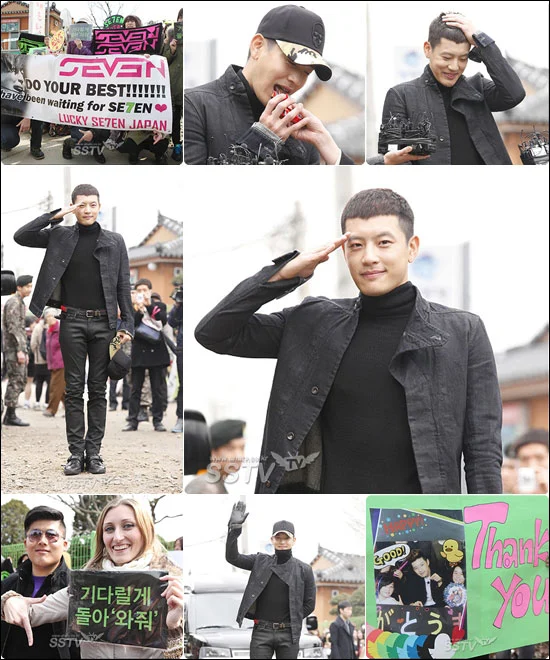
The simmering resentment toward the celebrity recruit system reached a boiling point in June 2013. The controversy centered on Choi Dong-wook, known professionally as the R&B singer Se7en, and Lee Sang-chul, better known as Sangchu of the hip-hop duo Mighty Mouth. Both were serving as PR recruits when they were caught on camera by the SBS investigative program "On Site 21."
The timeline of the event reveals a systemic disregard for military protocol:
- Performance and Curfew Violation: On June 21, 2013, several celebrity recruits, including Se7en and Sangchu, traveled to Chuncheon for a military-sponsored concert. Following the event, instead of remaining in their assigned quarters, the soldiers transitioned into civilian clothing and exited their motel.
- Alcohol and Prohibited Tech: Reporters observed the recruits consuming alcohol and using personal cell phones—both of which are strictly prohibited for active-duty soldiers during such assignments.
- The Massage Parlor Visit: At approximately 3:30 AM, Se7en and Sangchu were filmed entering a massage parlor known for providing "adult services." They remained inside for nearly half an hour.
- The Altercation: Upon exiting the establishment, the two recruits were confronted by SBS journalists. Rather than complying with the inquiry, the soldiers engaged in a physical scuffle with the camera crew, attempting to seize microphones and cameras to prevent the footage from being aired.
The subsequent broadcast of this footage sent shockwaves through South Korean society. The defense offered by the Ministry of National Defense (MND) only served to exacerbate public anger. Officials initially claimed the soldiers visited the parlor for "knee therapy," a justification that was widely ridiculed by the public and compared to previous high-profile celebrity excuses for misconduct.
Data and Disparity: The Perk Gap
The "On Site 21" investigation did more than just catch two individuals in an act of indiscretion; it pulled back the curtain on the "luxuries" afforded to the PR unit. Comparative data between regular soldiers and celebrity recruits highlighted a stark disparity in treatment.

According to reports released during the subsequent military audit, celebrity recruits were found to have significantly more "reward vacation" days than the average soldier. While a typical conscript might receive 45 to 60 days of leave over their entire service period, some celebrity recruits were documented taking over 150 days of leave and overnight stays.
Furthermore, the SBS report revealed that the Defense Media Agency’s facilities included amenities unheard of in standard barracks:
- Private Accommodations: Frequent stays in motels and hotels during "promotional tours" without adequate supervision.
- Civilian Integration: Access to civilian clothing, personal grooming products, and internet-connected devices.
- Leisure Equipment: Private gyms, video game consoles (PlayStation), and catered snacks.
The testimony of an anonymous recruit, referred to as "A," who complained that performing twenty times a month was "taxing," fell on deaf ears. For the millions of South Korean men who have spent winters patrolling the DMZ in sub-zero temperatures, the idea that a pop star’s "hardship" consisted of singing on a stage was an insult to the uniform.
A Pattern of Misconduct: From Rain to Se7en
The 2013 scandal did not occur in a vacuum. It followed a series of incidents that suggested celebrity soldiers felt they were above the law. In early 2013, the world-renowned star Rain (Jung Ji-hoon) faced disciplinary action after he was photographed meeting his girlfriend, actress Kim Tae-hee, while on official duty. Rain was found to have worn his military cap improperly and engaged in personal meetings during a period meant for official business.

The punishment for Rain was a mere seven days of confinement—a "slap on the wrist" that signaled to the public that the Ministry of National Defense was unwilling to hold its stars accountable. This perceived leniency created a sense of "celebrity exceptionalism" that undermined the military’s core value of discipline. Historical context also includes the case of Psy (Park Jae-sang), who was forced to re-enlist and serve a second term after it was discovered he had neglected his duties during his first stint as a technical service recruit. These recurring issues pointed to a systemic failure in how the military managed high-profile conscripts.
Official Response and the Abolition of the PR Unit
In the wake of the Se7en and Sangchu incident, the Ministry of National Defense could no longer ignore the outcry. A special audit was launched into the Defense Media Agency, covering the activities of all 15 celebrity recruits serving at the time.
The investigation’s findings were damning, confirming widespread "sloppy management" and "lack of oversight." In July 2013, the Ministry made a landmark decision: the total abolition of the celebrity recruit system. After 16 years of operation, the PR unit was disbanded, and the remaining celebrity soldiers were reassigned to field units—many of them to frontline infantry divisions—to serve out the remainder of their terms as regular soldiers.
Se7en and Sangchu were sentenced to 10 days in military jail for their violations. While the legal punishment was relatively brief, the professional and social consequences were severe. Se7en, who had once been a leading figure in the Hallyu (Korean Wave) movement, saw his public image decimated. His long-term relationship with actress Park Han-byul eventually ended, and his return to the entertainment industry was met with significant coldness from a public that values "integrity in service" above all else.

Broader Implications: The Future of Hallyu and the Military
The dissolution of the PR unit marked a turning point in how South Korea manages its stars. The argument Se7en made prior to his enlistment—that Hallyu stars contribute as much to national prestige as Olympic athletes and thus deserve exemptions—has largely been rejected by the mainstream. The consensus is that while K-pop and K-dramas are vital cultural exports, the market is saturated enough that the temporary absence of one star will not hinder the nation’s soft power.
Furthermore, the scandal reinforced the idea that for a celebrity, military service is a "make or break" period for their career. Stars who serve quietly and diligently, such as Hyun Bin or Lee Seung-gi, often experience a surge in popularity and "national brother" status upon their discharge. Conversely, those who attempt to circumvent the rules find that the South Korean public is unforgiving.
The 2013 scandal served as a necessary correction. It reminded the Defense Media Agency that the military’s primary purpose is national security, not talent management. As the Ministry of Defense moved toward a more equitable system, it sent a clear message: in the eyes of the law and the defense of the fatherland, there are no stars—only soldiers. The legacy of the celebrity recruit system remains a cautionary tale of how perceived inequality can erode the social contract in a conscription-based society. For South Korea, the lesson was clear: fairness is the bedrock of national morale, and no amount of public relations can replace the value of a duty performed with humility and equality.