

The South Korean government has officially implemented a revised version of the Minor Offenses Act, a legislative move that has triggered significant debate both domestically and internationally regarding civil liberties and the limits of state intervention in personal expression. Effective as of late March 2013, the law includes a provision targeting "overexposure" in public spaces, stipulating a fine of 50,000 South Korean Won (approximately $45 to $48 USD) for violators. While the legislation was framed by the administration of President Park Geun-hye as a measure to standardize penalties for public indecency, it has faced a wave of scrutiny fueled by historical trauma, political opposition, and sensationalized reporting in global media outlets.
Legislative Background and the Minor Offenses Act
The revision to the Minor Offenses Act was approved during a cabinet meeting chaired by President Park Geun-hye shortly after her inauguration. The act serves as a comprehensive legal framework for penalizing low-level disturbances, ranging from littering and public urination to persistent harassment and the making of prank emergency calls. Under the previous version of the law, many of these offenses carried inconsistent penalties or required court appearances. The 2013 revision sought to streamline the legal process by assigning fixed fines to 28 specific minor offenses.
The specific clause causing controversy pertains to "indecent exposure." According to the National Police Agency (NPA), the law targets individuals who "cause discomfort or shame to others by excessively exposing parts of the body that should be covered in public." Government officials have clarified that the intent is to provide a legal basis for fining individuals engaged in public nudity or "streaking," rather than regulating the fashion choices of the general public.

Historical Context: The Shadow of the Yusin Era
The public outcry in South Korea cannot be understood without referencing the country’s authoritarian past. President Park Geun-hye is the daughter of the late Park Chung-hee, a military dictator who ruled South Korea from 1961 to 1979. During the 1970s, under the Yusin Constitution, the elder Park implemented a series of strict "social purification" measures. These included the "Minor Offenses Act of 1973," which empowered police to physically measure the length of women’s skirts. If a skirt ended more than 20 centimeters above the knee, the wearer could face a fine or detention. Similarly, men were prohibited from growing their hair beyond a certain length, and police were known to carry shears to perform forced haircuts on the street.
Because of this historical baggage, the introduction of an "overexposure" law by the daughter of the man who pioneered dress-code policing was met with immediate suspicion. Opposition politicians and civil rights activists were quick to draw parallels between the new administration and the Yusin era, suggesting that the law was a precursor to a more restrictive social environment. This domestic political tension served as the primary catalyst for the narrative that South Korea was returning to a period of state-mandated modesty.
Chronology of the 2013 Controversy
The timeline of the controversy illustrates how a routine legislative update escalated into a global news story:
- February 25, 2013: Park Geun-hye is inaugurated as the first female president of South Korea.
- March 11, 2013: The Cabinet approves the revision of the Minor Offenses Act, including the 50,000 KRW fine for indecent exposure.
- March 15–20, 2013: Domestic criticism begins to mount. Opposition members of the Democratic United Party (DUP) issue statements condemning the law as "anachronistic."
- March 21, 2013: High-profile celebrities, most notably K-pop icon Lee Hyori, post reactions on social media. Lee tweeted, "Is the overexposure fine for real? I’m dead," reflecting the widespread belief that the law would affect stage costumes.
- March 22, 2013: The law officially goes into effect. Simultaneously, major international news organizations begin reporting on a "ban on miniskirts" in South Korea.
- Late March 2013: The National Police Agency issues multiple press releases clarifying that the law does not apply to miniskirts or regular fashion, but rather to public nudity and lewd behavior.
Data and Enforcement Metrics
To provide perspective on the law’s application, it is necessary to examine the broader context of minor offense enforcement in South Korea. In the years preceding the 2013 revision, public indecency was often prosecuted under more vague statutes or ignored unless it involved criminal sexual intent.
- Standardized Fines: The 50,000 KRW fine for overexposure is consistent with other minor violations. For instance, throwing a cigarette butt in public or spitting carries a similar penalty.
- Enforcement Scope: The NPA reported that the "indecent exposure" clause was actually a modification of an existing law that had been on the books since 1988. The 2013 update actually narrowed the scope of the law to prevent police from having too much discretionary power, though the public perception was the opposite.
- Public Urination: One of the most frequently cited reasons for the law’s necessity was the prevalence of public urination and "indecent exposure" by intoxicated individuals in nightlife districts. Police data suggested that standardized fines would be a more effective deterrent than the previous system, which often required a summary trial.
Official Responses and Clarifications
As the "miniskirt ban" narrative gained momentum, government officials and police representatives moved to de-escalate the situation. Inspector Ko Jun-ho of the National Police Agency stated in a public broadcast that the concerns were based on a misunderstanding of the legal language. "The revision is aimed at providing a clear legal standard for behaviors that were already technically illegal," Ko explained. "It has nothing to do with the length of a skirt or the fashion of the youth."
The Blue House (the presidential residence) also issued a statement expressing regret over the spread of "misinformation." Government spokespeople emphasized that in a modern, democratic South Korea, the state has no authority—nor the desire—to regulate the personal attire of its citizens. They argued that the law was intended to protect the public’s right to a comfortable environment, free from aggressive or lewd public displays.
Media Analysis: The Role of Sensationalism
The role of the international press in amplifying the controversy remains a point of critical analysis. Outlets such as The Daily Mail, CNN, and The Huffington Post ran headlines that suggested a direct ban on miniskirts. This framing ignored the nuances of South Korean legal language and the specific "lewdness" requirements for an offense to occur.
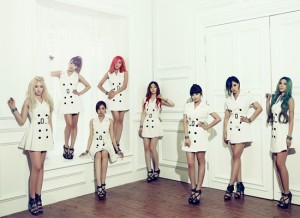
The global fascination with K-pop—a genre defined by its high-fashion, often provocative stage outfits—contributed to the virality of the story. Because groups like Girls’ Generation, T-ara, and f(x) are central to South Korea’s cultural exports, the idea that the government would jeopardize the "Hallyu" (Korean Wave) by banning short skirts seemed both absurd and newsworthy. However, the disconnect between the legal reality and the media narrative highlighted a trend in "clickbait" journalism where complex foreign legislative updates are reduced to simplified, controversial tropes.

Broader Impact and Implications for Civil Liberties
While the "miniskirt ban" was proven to be a myth, the debate raised valid questions about the role of the state in defining "decency." Critics argue that the term "causing discomfort to others" is inherently subjective. What one person finds "indecent," another might find perfectly acceptable. This subjectivity, activists argue, gives the police a degree of discretionary power that could be misused, even if the intention is not to return to 1970s-style policing.
Furthermore, the controversy served as a litmus test for the Park Geun-hye administration’s relationship with the public. It demonstrated that the South Korean populace remains highly vigilant regarding any perceived infringement on the democratic freedoms won during the 1980s. The immediate and vocal pushback against the law showed that the "Yusin-style" governance would not be tolerated in a contemporary context.
In terms of the fashion industry and the K-pop phenomenon, the law has had zero measurable impact. K-pop idols continue to wear miniskirts and "hot pants" in performances and music videos, and the streets of Seoul remain a global hub for avant-garde and revealing fashion. The "overexposure law" has settled into its intended role: a minor administrative tool used primarily to handle public disturbances in nightlife districts and parks, rather than a tool for social engineering.
Conclusion
The 2013 overexposure law in South Korea serves as a case study in how historical trauma, political rivalry, and digital-era sensationalism can transform a routine legislative update into an international scandal. While the law remains in effect, it functions as a standard public order regulation similar to "indecent exposure" laws in Western democracies. The episode underscores the importance of contextual reporting and the need for the public to distinguish between administrative law and the broader cultural shifts of a nation. Ultimately, South Korea’s vibrant fashion scene and its commitment to personal expression have remained untouched by the 50,000 KRW fine, proving that the "sea of fire" feared by critics was, in this instance, a mere flicker of misunderstanding.