Girl’s Day and the Socio-Political Intersection of K-pop and South Korea’s First Female Presidency
Article Editorial Team
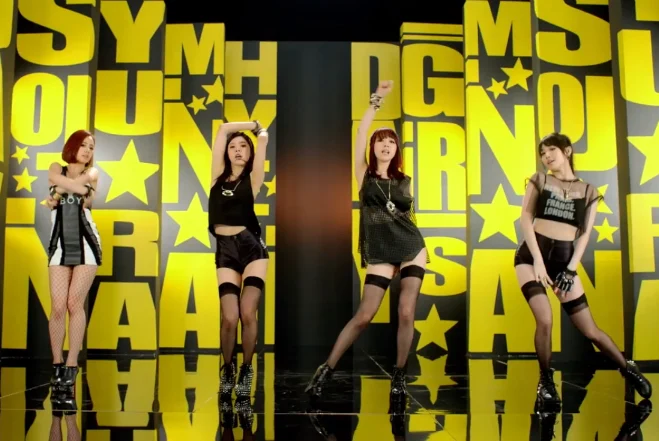
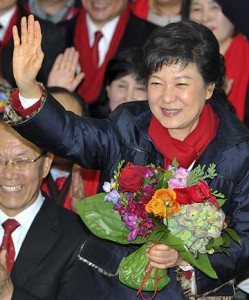
The years 2012 and 2013 represented a transformative era for the Republic of Korea, marked by a historic shift in the nation’s executive leadership and a corresponding evolution in its cultural exports. In December 2012, Park Geun-hye, a veteran representative of the conservative New Frontier Party (Saenuri Party), secured victory in the national presidential election. This narrow triumph made her the first female head of state in South Korea’s history, a milestone that many observers anticipated would signal a new chapter for gender equality in a country traditionally defined by patriarchal social structures. As Park assumed office in early 2013, the cultural sphere, specifically the global phenomenon of K-pop, sought to reflect this political shift. The girl group Girl’s Day released their single "Female President" in June 2013, a track ostensibly designed to celebrate female empowerment. However, the intersection of this political milestone and its pop-culture representation has since become a subject of intense analysis regarding the depth of social progress and the commodification of feminist themes in the Korean media.
The Political Context of the Park Geun-hye Administration
Park Geun-hye’s ascension to the Blue House (CheongWaDae) was a polarizing event rooted in South Korea’s complex 20th-century history. As the daughter of Park Chung-hee—the military leader who ruled South Korea from 1961 to 1979—her candidacy was inextricably linked to her father’s legacy. While her supporters credited her father with the "Miracle on the Han River" and the nation’s rapid industrialization, critics pointed to his record of authoritarianism and human rights abuses.
During the 2012 campaign, the opposition Democratic United Party (Minju Party) frequently argued that Park’s political rise was a byproduct of her inherited status rather than a grassroots movement for gender representation. Despite these critiques, her inauguration in February 2013 was internationally recognized as a "watershed moment." For a nation that consistently ranked near the bottom of the Organization for Economic Co-operation and Development (OECD) indices for gender equality, the presence of a woman in the highest office suggested a potential realignment of national priorities concerning women’s rights, labor participation, and social welfare.
Chronology of the Cultural Response: Girl’s Day and the 2013 Comeback
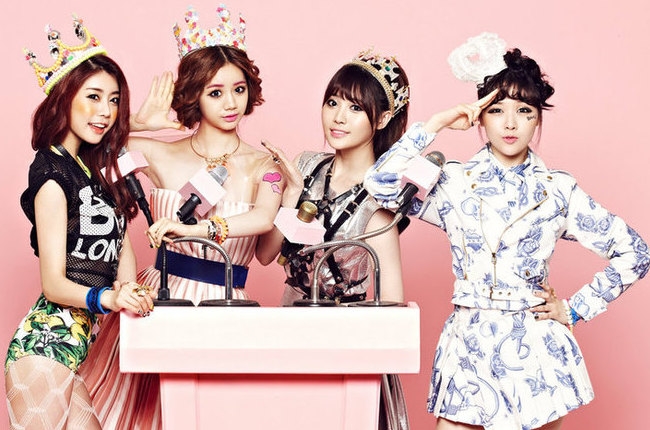
As the Park administration began its first year, the K-pop industry moved to capitalize on the "female president" zeitgeist. Girl’s Day, a group that had debuted in 2010 and seen various lineup changes, was at a critical juncture in its career. By 2013, the group consisted of four members: Sojin, Yura, Minah, and Hyeri. They had recently transitioned from a "cute" concept to a more mature, "sexy" image with their previous hit "Expectation."
The timeline of their 2013 activities highlights the strategic alignment with current events:
- December 2012: Park Geun-hye wins the presidential election.
- February 2013: Park is officially inaugurated as President of South Korea.
- April 2013: Member Hyeri’s relationship with veteran idol Tony Ahn (of H.O.T.) becomes public, significantly increasing the group’s media profile.
- June 24, 2013: Girl’s Day releases the repackaged album and title track "Female President."
- June 2013: The group holds a high-profile "pool party" showcase to promote the single, emphasizing a bold and liberated image.
The song’s title directly referenced the national political climate, leading many to expect a social anthem. However, the lyrical content and visual presentation of the music video sparked a debate over whether the group was promoting genuine empowerment or merely using a political buzzword to frame a traditional romantic narrative.
Socio-Economic Data: The Reality of Gender Inequality in 2013
To understand the critique of "Female President," one must examine the socio-economic landscape for South Korean women during the time of the song’s release. Despite having a female president, the structural barriers facing women remained significant.
- The Gender Wage Gap: In 2013, South Korea maintained the highest gender wage gap among OECD nations, with women earning approximately 36% to 39% less than their male counterparts. This gap was nearly double the OECD average.
- Labor Force Participation: While South Korean women were among the most highly educated in the world, their participation in the labor market followed an "M-curve." This trend showed a sharp decline in employment for women in their late 20s and 30s due to the lack of childcare support and the social pressure to resign upon marriage or childbirth.
- Corporate Representation: In 2013, women held fewer than 2% of board seats in South Korea’s top 100 companies, reflecting a "glass ceiling" that remained largely impenetrable despite the change in executive leadership at the national level.
- Reproductive Rights: At the time, abortion remained illegal in South Korea except in cases of rape, incest, or severe health risks to the mother, a law that activists argued limited women’s bodily autonomy.
Given this context, the decision by Girl’s Day and their management, Dream T Entertainment, to frame "female empowerment" through the lens of dating etiquette was viewed by some social critics as a missed opportunity or a trivialization of serious issues.
Analysis of "Female President" Lyrical and Visual Themes
The primary message of "Female President" is summarized in its hook, which asks why it is considered socially unacceptable for a woman to initiate a kiss or express her feelings first. The lyrics state: "Our country’s president is now a woman / So what’s the big deal? Why can’t a girl do it? / Why do you keep hesitating? / Should I be the first to do it?"
While the song encourages women to take initiative in their personal lives, critics noted that this form of "empowerment" was still entirely centered on the pursuit of male attention. The music video featured the members in highly stylized, provocative outfits, including a controversial skin-toned bodysuit that created an illusion of nudity. This led to accusations that the "empowerment" was being marketed primarily to satisfy the "male gaze," a common critique of the K-pop industry’s "sexy concepts."
Furthermore, the music video included a sequence where member Minah portrayed a feminine role while Hyeri dressed in androgynous, masculine attire. The two nearly shared a kiss, a scene that was interpreted as a bold move in the context of South Korea’s conservative media standards. However, the subsequent scenes depicted the characters engaging in traditional "aegyo" (acting cute) and being fed cupcakes, which some analysts argued undermined the "strong woman" persona the song attempted to build.
Official Responses and Public Reception
The public reception to "Female President" was largely positive in terms of commercial success. The song reached the top ten on the Gaon Digital Chart and solidified Girl’s Day’s position as a top-tier girl group. However, the discourse surrounding the song was divided.
- Industry Analysts: Many K-pop commentators praised the group for their "boldness" and the catchy nature of the track. They viewed the use of the "President" theme as a clever marketing tactic that helped the group stand out in a crowded market.
- Social Critics: Feminists and social observers expressed disappointment that the song did not address more substantive issues. Some argued that by equating the presidency with the "right to kiss a man first," the song reinforced the idea that a woman’s ultimate goal is romantic validation, regardless of her professional or political status.
- Government Stance: The Park administration did not issue an official statement regarding the song. However, President Park’s "Creative Economy" initiative encouraged the growth of the cultural industry, and K-pop was frequently utilized as a tool for "Soft Power" to enhance South Korea’s global image.
Broader Impact and Implications for K-pop
The "Female President" era of Girl’s Day remains a significant case study in how the K-pop industry interacts with national identity and social change. It demonstrated the industry’s ability to pivot toward topical themes, even if the execution remained within the safe confines of commercial pop music.
In the years following the release, the conversation around feminism in South Korea intensified. The "Escape the Corset" movement and the rise of the #MeToo movement in Korea led to a shift in how girl groups approached empowerment. Groups like MAMAMOO, (G)I-DLE, and BLACKPINK began to adopt concepts that focused more on self-reliance, sisterhood, and career success, moving away from the "initiating the first kiss" narrative seen in 2013.
Ultimately, "Female President" served as a mirror to the contradictions of its time. It celebrated a historic political achievement while simultaneously highlighting the cultural gap between having a female leader and achieving systemic gender parity. While the song may not have triggered a legislative revolution, it remains a notable artifact of a period when South Korea was grappling with its identity as a modern, global power led, for the first time, by a woman. The legacy of both the song and the presidency continues to be analyzed as South Korea moves toward a more complex and vocal era of gender discourse.
Related News