The Economic Architect and the Cultural Icon Understanding the Legacy and Controversy of South Koreas Chaebols
Article Editorial Team

In the landscape of South Korean television dramas, few characters are as recognizable as the "chaebol heir." He is typically depicted as an impeccably dressed, often arrogant young man who navigates the corridors of power in a multi-billion-dollar conglomerate. He is the son of a stern, domineering chairman, and his narrative arc usually involves a clash between corporate duty and a romantic pursuit of a woman from a humble background. This trope, seen in hit series such as Secret Garden, Chungdamdong Alice, What Happened in Bali, and Scent of a Woman, has served as the primary window through which international audiences view the South Korean elite. However, the reality of the chaebol—the massive, family-controlled conglomerates that dominate the South Korean economy—is far more complex, politically charged, and economically significant than the polished veneer of K-dramas suggests.
The term chaebol (재벌), translating literally to "wealth faction" or "rich clan," refers to a specific model of business organization that emerged in the mid-20th century. Unlike Western conglomerates that are often owned by a diverse pool of shareholders and managed by professional executives, chaebols are characterized by centralized ownership. A single family typically maintains control through a complex web of cross-shareholdings, allowing the founding patriarch and his descendants to exercise absolute authority over dozens of subsidiary companies spanning vastly different industries. This structure has made the chaebol the primary engine of South Korea’s rapid industrialization, but it has also made them a lightning rod for controversy regarding economic inequality and political corruption.
The Developmental State: Post-War Reconstruction and the Rise of the Giants
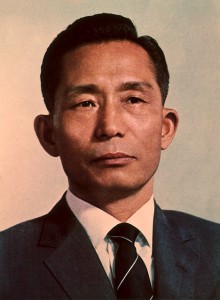
The genesis of the chaebol is inextricably linked to the military administration of Park Chung-hee, who seized power in a 1961 coup. Following the 1953 armistice that halted the Korean War, South Korea was one of the poorest nations on earth, with a GDP per capita lower than that of many sub-Saharan African countries. Park recognized that for the nation to survive and maintain sovereignty, it required a radical economic transformation.

The government’s strategy was "export-led industrialization." Rather than relying on a broad base of small and medium-sized enterprises (SMEs), the Park administration hand-picked a select group of loyal companies to become national champions. These firms were granted preferential access to low-interest loans, subsidized utilities, and protection from foreign competition through high tariffs. In exchange, these companies were required to meet strict export quotas set by the state.
This symbiotic relationship between the "Blue House" (the South Korean presidential residence) and corporate leaders birthed the giants known today. Hyundai, originally a construction firm, was pushed into shipbuilding and automobile manufacturing. Samsung, which began as a trading company dealing in dried fish and noodles, was encouraged to pivot into electronics and heavy industry. By concentrating resources into these few entities, South Korea achieved what economists call the "Miracle on the Han River," transitioning from an agrarian society to a global industrial powerhouse in less than three generations.
A Chronology of Chaebol Evolution and Economic Dominance
To understand the current standing of chaebols, one must examine the timeline of their expansion and the pivotal moments that shaped their trajectory:
- 1960s – 1970s: The Foundation. Under Park Chung-hee’s Five-Year Plans, the government directed chaebols into heavy and chemical industries. Firms like POSCO (steel) and Hyundai (construction/heavy industry) became the backbone of the economy.
- 1980s: Global Outreach. As the domestic market saturated, chaebols began aggressive international expansion. Samsung and LG (then Lucky-Goldstar) started competing in the global consumer electronics market, while Hyundai began exporting the Pony, Korea’s first mass-produced car, to North America.
- 1997: The Asian Financial Crisis. This was a moment of reckoning. The chaebols had grown through excessive debt, with debt-to-equity ratios often exceeding 400%. When the crisis hit, several major groups, most notably Daewoo, collapsed under the weight of their liabilities. The International Monetary Fund (IMF) mandated structural reforms, forcing chaebols to increase transparency and reduce debt.
- 2000s – Present: The Tech Hegemony. Post-crisis, the surviving chaebols streamlined their operations. Samsung Electronics emerged as a global leader in semiconductors and smartphones, while Hyundai-Kia became a top-five global automaker. Today, the top ten chaebols are estimated to account for roughly 80% of South Korea’s total GDP, though they employ only a small fraction of the total workforce.
The Mechanics of Power: Cross-Shareholding and Family Control
The defining characteristic of a chaebol is the "circular shareholding" system. In this model, Company A owns a stake in Company B, which owns a stake in Company C, which in turn owns a stake in Company A. This allows the founding family to maintain "de facto" control over the entire group while owning only a small percentage of the actual total shares.

This concentration of power has led to significant corporate governance issues. Decisions are often made to benefit the founding family rather than the minority shareholders. For example, lucrative contracts are frequently awarded to subsidiaries owned by the chairman’s children, a practice known as "tunneling," which serves to transfer wealth across generations without incurring South Korea’s notoriously high inheritance taxes (which can reach up to 50% or 60% for controlling stakes).
The cultural fascination with chaebol heirs in K-dramas reflects this reality. While the dramas focus on romance, the underlying subtext is always the succession struggle. In real life, these successions are often fraught with legal battles and public outcry. The 2017 conviction of Samsung’s Lee Jae-yong in a bribery scandal involving former President Park Geun-hye (the daughter of Park Chung-hee) underscored the persistent and often illicit ties between the upper echelons of business and politics.
Supporting Data: The Economic Weight of the Giants
The scale of chaebol dominance is difficult to overstate. According to data from the Korea Fair Trade Commission and various economic research institutes:
- GDP Contribution: The combined revenue of the top five chaebols (Samsung, Hyundai Motor, SK, LG, and Lotte) often equals more than half of the nation’s annual GDP. Samsung Group’s revenue alone has, in recent years, hovered around 20% of the national total.
- Market Capitalization: On the Korea Composite Stock Price Index (KOSPI), chaebol subsidiaries represent the vast majority of market value. If a major chaebol experiences a downturn, it can destabilize the entire national stock market.
- R&D Investment: Chaebols account for the lion’s share of private-sector research and development. This has allowed South Korea to lead the world in Bloomberg’s Innovation Index multiple times. However, critics argue this concentration of R&D prevents a healthy "startup ecosystem" from flourishing, as the best talent is consistently vacuumed up by the giants.
Official Responses and the Call for Reform
The debate over "Economic Democratization" has been a central pillar of South Korean politics for the last decade. Progressive leaders, such as former President Moon Jae-in, campaigned on the promise of curbing chaebol power to provide more breathing room for small and medium-sized enterprises (SMEs).

Robert Kelly, a professor of political science at Pusan National University, has famously characterized the chaebols as "rapacious, politics-corrupting, consumer-punishing, reverse-engineering oligopolists." This sentiment is echoed by many young South Koreans who feel that the "Chaebol Republic" has created a glass ceiling. While the chaebols provide prestigious, high-paying jobs, the competition for these roles is so fierce that it has contributed to a national crisis of stress, late-age marriage, and the world’s lowest birth rate.
In response to public pressure, the South Korean government has implemented several measures:
- Fair Trade Act Amendments: Aimed at limiting circular shareholding and preventing unfair intra-group trading.
- Stewardship Codes: Encouraging institutional investors, such as the National Pension Service, to exercise their voting rights more actively against controversial family decisions.
- Legal Scrutiny: Increased prosecution of corporate leaders for embezzlement and breach of trust, though presidential pardons for "economic reasons" remain common.
Broader Impact and Future Implications
The chaebol system is a paradox. On one hand, it provided the discipline and scale necessary to lift a nation out of poverty and turn it into a global cultural and technological leader. The efficiency of the chaebol model allowed South Korea to dominate industries that require massive, long-term capital investment, such as semiconductors and green energy technology.
On the other hand, the model is increasingly viewed as anachronistic in the age of the "Fourth Industrial Revolution." The rigid, top-down hierarchy of the chaebol can stifle the creative, agile thinking required for the software and service-driven economies of the future. Furthermore, the extreme economic inequality exacerbated by the chaebol structure is creating social fissures that threaten long-term stability.
As South Korea looks toward the future, the question is not whether the chaebols will exist, but how they must evolve. The transition from family-led management to professional, transparent governance is ongoing but slow. For the fans of K-dramas, the "chaebol heir" will likely remain a staple of romantic fiction. But for the citizens of South Korea, the chaebol remains a much more serious reality: a powerful legacy of a miraculous past and a complicated hurdle for a more equitable future.
Related News