South Korea Clarifies Overexposure Law Amid Public Concerns and Media Misinterpretation
Article Editorial Team

The South Korean government, under the administration of President Park Geun-hye, implemented a revised Minor Offenses Act in late March 2013, sparking a significant domestic and international debate regarding civil liberties and the limits of state regulation on personal appearance. While initial reports from various international media outlets suggested a return to the authoritarian dress codes of the 1970s, specifically targeting the miniskirts popularized by the K-pop industry, official government statements and a closer examination of the legal text reveal a focus on public indecency rather than fashion regulation. The law, which imposes a fine of 50,000 Korean Won (approximately $45 to $48 USD), was designed to consolidate and update existing regulations regarding public conduct, yet it inadvertently touched a sensitive nerve in a country with a complex history of state-mandated morality.
Legislative Context and the Minor Offenses Act
The controversy centers on an amendment to the Minor Offenses Act that was approved during a cabinet meeting on March 11, 2013, and officially took effect on March 22. The primary objective of the revision was to allow police to issue on-the-spot fines for a variety of low-level offenses, such as public smoking in restricted areas, littering, and persistent harassment (stalking). Among these provisions was the "overexposure" clause, which sought to penalize individuals who "cause discomfort to others by exposing excessively bare parts of the body or showing parts of the body that should be covered in public places."
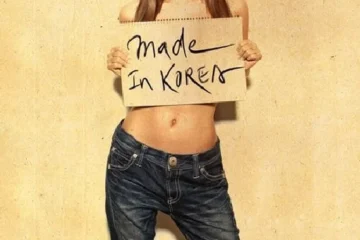
Government officials maintained that the law was not a new restriction but rather a procedural update. Prior to the amendment, individuals caught in acts of extreme public indecency—such as streaking or lewd exposure—had to go through a more formal and time-consuming summary trial process. The 2013 revision allowed for a simplified notification of a fine, intended to streamline law enforcement efforts. However, the vague wording of the clause led to immediate concern that "overexposure" could be interpreted subjectively by law enforcement officers to target popular fashion trends, specifically the short skirts and "hot pants" synonymous with South Korean youth culture and the global Hallyu (Korean Wave) phenomenon.

Historical Precedents and the Shadow of Authoritarianism
To understand the intensity of the public reaction, it is necessary to examine South Korea’s sociopolitical history. The backlash was deeply rooted in memories of the 1970s under the presidency of Park Chung-hee, the father of President Park Geun-hye. During the elder Park’s 18-year rule, the "Yusin Constitution" era was characterized by strict social control. This included the "Minor Offense Law" of 1973, which empowered police to measure the length of women’s skirts and forcibly cut the hair of men if it was deemed too long.
Under the 1970s regulations, women could be detained if their skirts ended more than 20 centimeters above the knee. This period is remembered by many South Koreans as an era of stifled personal freedom and state paternalism. When the younger Park Geun-hye assumed the presidency in February 2013, critics and opposition politicians were quick to draw parallels. The introduction of an "overexposure" law within her first month in office provided a symbolic flashpoint for those wary of a potential return to conservative, top-down social engineering.
Chronology of the Controversy
The timeline of the 2013 controversy highlights how a domestic legal update transformed into a global viral news story:
- March 11, 2013: The Cabinet, led by President Park, approves the revised Minor Offenses Act.
- March 20–21, 2013: Rumors begin to circulate on South Korean social media platforms, including KakaoTalk and Twitter, suggesting that the government is planning to ban miniskirts. High-profile celebrities, including pop icon Lee Hyori, express concern online.
- March 22, 2013: The law officially goes into effect. Major international news outlets, including the UK’s Daily Mail and CNN, publish headlines suggesting South Korea is cracking down on miniskirts and K-pop fashion.
- March 25, 2013: The National Police Agency issues a formal clarification to the press, stating that the law is intended for public nudity and "indecent exposure" (such as streaking) and will not be used to regulate everyday fashion or the attire of performers.
Domestic Reactions and Political Pushback
The domestic reaction was a mixture of anxiety, satire, and political maneuvering. Members of the opposition Democratic United Party (DUP) used the legislation to criticize the Park administration’s perceived lack of communication with the public. Ki-sik Kim, a representative of the DUP, questioned why the government was "reviving the ghost of the Yusin era" by intervening in how citizens dress.
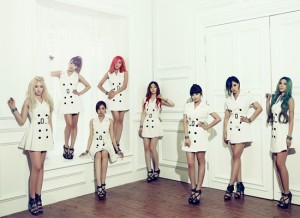
The cultural impact was equally significant. Lee Hyori, one of the most influential figures in South Korean entertainment, tweeted to her millions of followers, "Is the overexposure fine for real? I’m so dead." Her comment reflected a broader concern within the entertainment industry, where "sexy" concepts and revealing costumes are a staple of the K-pop marketing machine. The industry, which contributes billions of dollars to the South Korean economy, viewed any potential dress code as a threat to its creative and commercial viability.
Analysis of Media Misinterpretation
The international coverage of the "miniskirt ban" serves as a case study in the challenges of cross-cultural journalism and the speed at which misinformation can travel in the digital age. Several factors contributed to the distorted narrative:
- Language Barriers: The original Korean term for "overexposure" (gwadohan nochul) is broad. Without proper context from legal experts, it was easily translated by foreign outlets as a ban on specific garments like miniskirts.
- Sensationalism: Headlines linking the law to the globally popular K-pop industry ensured high click-through rates. By framing the story as "K-pop vs. The Government," media outlets turned a mundane administrative update into a dramatic cultural conflict.
- Historical Narrative: The "like father, like daughter" narrative was an attractive angle for journalists looking to add political depth to the story, even if the legal reality of the 2013 law bore little resemblance to the 1973 regulations.
In reality, the law was aimed at behaviors that are penalized in many Western democracies under "indecent exposure" or "disorderly conduct" statutes. In the United States and the United Kingdom, public nudity and lewd behavior are routinely subject to fines or arrest. The South Korean law was an attempt to modernize the penalty system for such acts, but the administration failed to anticipate how the historical context of the President’s lineage would color the public’s perception of the act.
Official Clarifications and Law Enforcement Guidelines
Following the public outcry, the National Police Agency (NPA) took steps to reassure the public. Inspector Ko Jun-ho of the NPA stated in several interviews that the law was never intended to target fashion. "The revision is about public nudity and lewd acts in public that cause offense to others," Ko explained. "It has nothing to do with what people wear in their daily lives, including miniskirts."
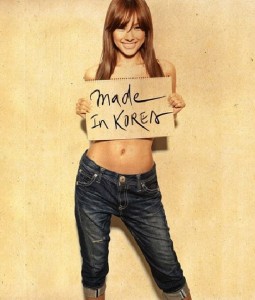
To prevent police overreach, the NPA issued specific guidelines to local precincts. These guidelines clarified that "overexposure" should only be cited in cases of near-total nudity or acts that are clearly sexual in nature. The police emphasized that the 50,000 KRW fine was actually a reduction in severity for some offenses that previously carried more significant legal consequences.
Societal Implications and the Modern South Korean Identity
The "overexposure" controversy underscores the ongoing tension in South Korean society between traditional Confucian values and a rapidly modernizing, liberalized culture. While South Korea has become a global leader in technology and pop culture, it remains a relatively conservative society in many respects. The government frequently finds itself navigating the middle ground between older generations who favor public order and decorum, and younger generations who prioritize individual expression.
Furthermore, the incident highlighted the power of social media in South Korean politics. The speed at which the "miniskirt ban" rumor spread forced the government and the police into a defensive posture, demonstrating that in the modern era, the perception of a law can be just as impactful as the law itself.
Conclusion
The 2013 overexposure law in South Korea was ultimately an administrative update to the Minor Offenses Act, misconstrued by a combination of historical sensitivity and sensationalist media reporting. While the law remains on the books, it has not resulted in a crackdown on the fashion industry or the K-pop stars who continue to define South Korean aesthetics globally. The event serves as a reminder of the importance of historical context in political analysis and the need for rigorous fact-checking in an era of instantaneous global news. South Korea remains a vibrant democracy where the right to wear a miniskirt—or any other fashion choice—is firmly protected by the same democratic institutions that the public defended during the controversy.
Related News