
A significant debate has ignited within the K-Pop dance community following choreographer Renan’s public assertion that her extensive contributions to aespa’s hit song “Whiplash” went largely unrecognized, particularly at the 2025 KOREA Awards. The controversy, brought to light during a recent broadcast of Mnet’s new reality competition, Street World Fighter: Directors’ War, underscores the often-complex and sometimes contentious landscape of credit and recognition in the highly collaborative K-Pop industry. Renan, a popular figure in K-Pop choreography, claimed that despite creating approximately 80% of the intricate dance for “Whiplash,” the prestigious Daesang for “Choreography of the Year” was awarded to Lachica, a renowned dance crew, for their comparatively smaller, yet impactful, contribution to the song’s overall performance.
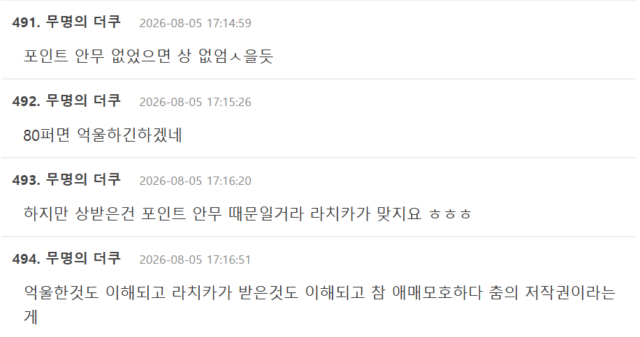
The public discussion surrounding “Whiplash” choreography has drawn sharp contrasts between the sheer volume of work and the perceived impact of specific dance elements. While Renan detailed her comprehensive involvement, members of Lachica, including choreographer Simeez and fellow industry peer Bada, countered by emphasizing the crucial role of the chorus’s “highlight” choreography—specifically, a distinctive neck movement—in capturing public attention and defining the song’s visual identity. This dispute highlights a recurring tension in creative fields: whether credit should be allocated based on the quantitative proportion of work or the qualitative influence of key, memorable elements.

The Heart of the Dispute: Unpacking the "Whiplash" Choreography
The core of the conflict centers on the distribution of creative credit for aespa’s "Whiplash." Renan’s account, shared during an emotional segment of Street World Fighter: Directors’ War, painted a picture of extensive, hands-on involvement throughout the entire choreography development process.
Renan’s Claims and Contributions
Renan explicitly stated that she was responsible for crafting around 80% of the choreography for “Whiplash.” This substantial figure implies a foundational role in shaping the dance routines that aespa ultimately performed. Her contributions, as she elaborated, extended far beyond initial concept development. Renan claimed to have personally provided dance lessons to the aespa members, ensuring they mastered the intricate movements she designed. Furthermore, she was present on the set during the music video filming, actively directing and refining the dance performances for the camera. Her involvement also included directing the dance practice video, a crucial piece of content for K-Pop groups that often serves to showcase the full choreography in detail to fans.

Renan conveyed a profound sense of "injustice" regarding the award outcome. She confessed to feeling deeply hurt and crying after the 2025 KOREA Awards ceremony, where Lachica received the Daesang for "Choreography of the Year." Her emotional testimony underscored the personal investment and passion choreographers pour into their work, and the acute disappointment when that effort, in their view, goes unacknowledged on such a grand stage. Even Simeez, a member of Lachica and a direct counterparty in this debate, acknowledged the significant amount of work Renan had put into the song, suggesting that the effort itself was not disputed, but rather its ultimate recognition.
Lachica’s Defense and the "Highlight" Argument
In response to Renan’s claims, Simeez of Lachica presented a different perspective, focusing on the strategic importance of certain dance elements. Simeez argued that if Renan had been able to develop a more impactful “highlight” choreography for the chorus, she might have been the one to receive the award. This argument implies that while a large portion of the choreography might be technically sound and well-executed, it is often a single, memorable, and widely recognized move or sequence that captures public imagination and critically influences award decisions.

Choreographer Bada, who also participated in the discussion, echoed Simeez’s sentiment, reinforcing the idea that public perception often prioritizes iconic moments over the cumulative body of work. Bada specifically pointed out that despite Renan’s 80% contribution, it was Lachica’s distinctive neck movement during the chorus that resonated most strongly with the general public and became synonymous with the "Whiplash" choreography. This "killer part" or "point dance" is a well-established concept in K-Pop, where a unique, easily replicable, and visually striking move often becomes a viral sensation, driving a song’s popularity and brand recognition.
The argument from Lachica and Bada suggests that in the highly competitive K-Pop landscape, awards for choreography may not solely be about the quantity of original moves, but also about the quality and memorability of the most impactful segments. This perspective implicitly values innovation and public appeal in key moments over comprehensive design.

A Deeper Look into K-Pop Choreography Production
The "Whiplash" controversy serves as a microcosm of the broader challenges and nuances inherent in K-Pop choreography production, an industry often characterized by intense collaboration and fierce competition.
Collaborative Nature of K-Pop Dance
K-Pop choreography is rarely the product of a single individual. Instead, it is typically a highly collaborative effort involving multiple choreographers, dance teams, and the idols themselves. Agencies often commission several choreographers or teams to submit proposals for a single song. These proposals might then be combined, refined, or adapted to create the final routine. This process can involve lead choreographers, assistant choreographers, and even "point dance" specialists. The final product is often a blend of various creative inputs, making the allocation of definitive percentages or sole credit incredibly complex.

For a group like aespa, under a major label like SM Entertainment, the choreography process would likely involve multiple layers of approval and refinement. Concepts might be developed internally by the agency’s performance directors, then outsourced to external choreographers like Renan and Lachica. This collaborative ecosystem, while enriching the final artistic output, also creates fertile ground for disputes over intellectual property and recognition when awards or public acclaim enter the picture.
The Significance of "Killer Parts"
The concept of a "killer part" or "point choreography" is central to understanding the K-Pop industry’s approach to dance. These are specific, often short, sequences within a song’s choreography designed to be instantly recognizable, visually striking, and easily mimicked by the public. They are strategically crafted to go viral on social media platforms, enhancing a song’s visibility and fan engagement. Examples abound in K-Pop history, from Girls’ Generation’s "Gee" crab dance to Super Junior’s "Sorry, Sorry" hand rub.

In many cases, the "killer part" becomes the defining element of a song’s choreography in the public consciousness, sometimes overshadowing the rest of the routine. Award committees, when evaluating choreography, are often influenced by this public reception and the cultural impact of such memorable moves. Lachica’s argument regarding the "Whiplash" neck movement taps directly into this phenomenon, suggesting that their contribution, though perhaps numerically smaller, held a disproportionately high impact on the song’s overall success and recognition.
The Stage for Conflict: "Street World Fighter: Directors’ War"
The platform for this public dispute was Mnet’s new reality show, Street World Fighter: Directors’ War. This show appears to be a spin-off or successor to the highly popular Street Woman Fighter series, which successfully brought the world of professional Korean street dancers and choreographers into the mainstream spotlight.

Mnet’s Role and Reality TV Dynamics
Mnet, known for its competitive reality programs, has a track record of generating drama and compelling narratives to attract viewers. Shows like Street Woman Fighter and its male counterpart, Street Man Fighter, thrived on showcasing the intense rivalries, personal stories, and undeniable talent of choreographers. It is reasonable to infer that Street World Fighter: Directors’ War is designed to follow a similar format, featuring choreographers competing or discussing their work in a high-stakes environment.
The dispute between Renan and Lachica, aired in a preview, fits perfectly into Mnet’s established formula for driving ratings. By presenting a contentious issue involving well-known figures and a popular K-Pop song, Mnet effectively creates buzz and anticipation for the show. The public nature of the conflict, coupled with the emotional testimonies, serves to draw viewers into the personal and professional stakes involved. However, this also raises questions about the authenticity of such disputes, with some netizens expressing skepticism and suggesting the entire incident might be "scripted by Mnet to simply drive up ratings." While direct evidence of scripting is rarely available, the strategic timing and dramatic presentation are characteristic of reality television production.

Industry Reactions and Broader Implications
The public unfolding of this choreography credit dispute has elicited a range of reactions and highlighted several enduring issues within the K-Pop industry.
Netizen Engagement and Skepticism
Netizen reactions to Renan’s complaints were notably mixed. While some sympathized with her feeling of injustice, a significant portion reportedly reacted "coldly." This cold reception could stem from several factors. Some fans might prioritize the final artistic product and its impact over the intricate details of its creation, viewing such disputes as internal industry matters. Others might implicitly agree with Lachica’s argument, believing that the "highlight" part, irrespective of its percentage, is what truly defines a choreography’s success and cultural imprint.

The skepticism regarding Mnet’s role is also noteworthy. K-Pop fans are highly astute consumers of media, often quick to identify potential manipulation or dramatization in reality television. The accusation that the dispute was "scripted" reflects a broader distrust of Mnet’s production methods and a concern that genuine creative struggles might be exploited for entertainment value. This skepticism, while not necessarily discrediting Renan’s feelings, casts a shadow over the perceived authenticity of the televised confrontation.
The Unseen Labor of Choreographers
Beyond the immediate dispute, this incident casts a spotlight on the often-unseen labor and undervalued contributions of choreographers in the K-Pop machine. While idols receive immense fame and recognition, the choreographers who craft their iconic moves frequently remain in the background. Their work is instrumental in defining a group’s image and a song’s popularity, yet credit, fair compensation, and intellectual property rights are ongoing points of contention.

The "Whiplash" controversy vividly illustrates how a choreographer can invest significant time, creative energy, and effort—from initial design to on-set direction—only to feel marginalized when it comes to formal recognition like awards. This situation is not unique to K-Pop but is a persistent challenge across creative industries where "ghost" creators or collaborative works make clear-cut credit assignments difficult. The emotional toll on choreographers, as expressed by Renan, is a testament to the personal stakes involved in an industry that can be both exhilarating and exploitative.
Towards Fairer Recognition and Credit
The aespa "Whiplash" dispute reignites a crucial conversation about establishing clearer guidelines and industry standards for choreography credit and intellectual property. As K-Pop continues its global expansion, the need for transparent contracts, defined credit allocation systems, and fair compensation for choreographers becomes increasingly urgent. This includes not just financial remuneration but also formal recognition in official credits, award nominations, and public discourse.
One potential implication is that agencies and choreographers might begin to formalize their agreements more rigorously, perhaps even outlining how credit will be shared in the event of awards or public recognition. The industry might also move towards a more nuanced understanding of choreography, where both extensive foundational work and impactful "point dances" are equally valued and acknowledged. This could involve multi-tiered awards or clearer definitions of what constitutes a "choreographer of the year" contribution in a collaborative context.
Ultimately, this public debate serves as a powerful reminder of the intricate web of creative talent that underpins K-Pop’s global appeal. While the immediate focus is on Renan’s perceived injustice and Lachica’s award, the broader implication is a call for greater transparency, respect, and equitable recognition for all artists involved in crafting the dazzling performances that captivate millions worldwide. The outcome of this specific dispute, and the discussions it has sparked, could potentially influence future practices in an industry constantly evolving and striving for both artistic excellence and ethical recognition.