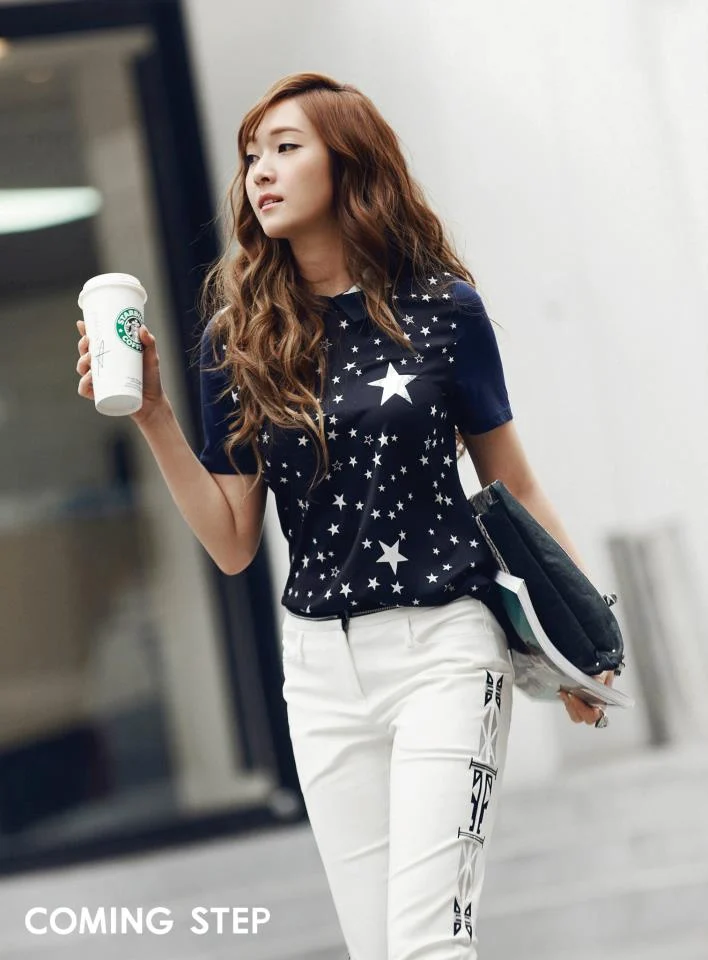
The vibrant and visually arresting world of K-pop has long captivated global audiences, extending far beyond its infectious music and dynamic performances. A significant component of this appeal lies in the meticulously crafted image of K-pop idols, where fashion plays a pivotal role. From the elaborate choreography honed through countless hours of practice to the strategic choices of stylists in hair, makeup, and attire, every appearance is a carefully curated spectacle. This dedication to aesthetics inevitably inspires fans worldwide, who often seek to emulate their idols’ looks. While learning intricate dance routines or mastering vocal techniques can be challenging, fashion offers a more accessible avenue for fan engagement. The universal act of wearing clothes, whether for daily routines or special occasions, makes K-pop-inspired fashion a readily adaptable trend.
Historically, fashion media has offered various guides and compilations aimed at helping consumers identify and acquire the pieces worn by their favorite K-pop stars. These resources often highlight specific items, such as a particular handbag carried by Girls’ Generation’s Jessica or a distinctive hat donned by BIGBANG’s G-Dragon at an airport. However, the original article posits a crucial distinction: simply purchasing these individual items does not guarantee the successful replication of an idol’s style. The core argument presented is that K-pop idols’ fashion choices are often context-specific, serving as integral components of stage costumes designed for performance environments. Attempting to combine multiple such "stage costume" elements into an everyday outfit can result in a look that appears theatrical or costume-like, deviating from the desired outcome of appearing stylish and contemporary in a regular setting.
The Nuance of K-Pop Style: Beyond the Trend
The article emphasizes that the key to successfully integrating K-pop fashion into one’s personal wardrobe lies not in wholesale imitation but in selective incorporation. This approach requires a degree of self-awareness regarding one’s own established style. By understanding personal aesthetic preferences, individuals can more effectively identify which K-pop trends genuinely align with their existing look. The process is framed as an ongoing exploration, encouraging experimentation while maintaining a focus on authenticity. The goal is not to become a carbon copy of idols like B.A.P’s Zelo or Girl’s Day’s Minah, but rather to leverage K-pop trends as inspiration to enhance one’s unique identity.
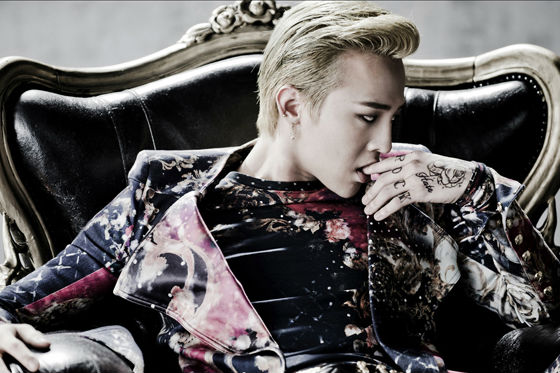
This exploration involves introspection about individual style inclinations. Do you gravitate towards a minimalist aesthetic with clean lines and a structured silhouette? Perhaps your preference leans towards a more relaxed, sporty vibe? Or maybe your inspiration draws from menswear, favoring tailored pieces in understated tones? Posing these questions, according to the article, is fundamental to discovering and refining one’s personal style. This journey of self-discovery is presented as a progressive one, acknowledging that personal style is not static but evolves over time. The article cautions against drastic and potentially costly overhauls of one’s wardrobe based solely on fleeting K-pop trends. Instead, it advocates for a gradual approach, suggesting small-scale experimentation to ascertain what truly resonates before making significant investments.
Integrating K-Pop Trends Authentically
Once a clearer understanding of personal style emerges, the next step involves discerning whether specific K-pop-inspired pieces, like the patterned pants worn by miss A’s Fei in a music video or a particular jacket sported by Super Junior’s Eunhyuk at a concert, genuinely suit an individual’s aesthetic. The article advocates for a thoughtful consideration of how these items would integrate with existing wardrobe staples rather than being paired with other trendy pieces. This strategy serves a dual purpose: it fosters a more authentic incorporation of trends, moving beyond mere imitation, and it offers a practical financial benefit by leveraging what is already owned.
The ultimate success in adopting K-pop-inspired fashion, the article concludes, hinges on confidence. The ability to wear chosen items with conviction, irrespective of whether a professional stylist is involved, is presented as the crucial finishing touch. The process is framed as a continuous experiment, acknowledging that not every fashion endeavor will be a resounding success. However, by approaching the integration of trends with thoughtfulness and a commitment to making them one’s own, individuals can develop the confidence to curate diverse outfits without feeling like they are participating in a costume or impersonating a K-pop idol. This mindful approach empowers individuals to cultivate a personal style that is both inspired by and distinct from the dynamic world of K-pop.
The Evolving Landscape of K-Pop Fashion Influence
The pervasive influence of K-pop fashion on global style trends is a phenomenon that has evolved significantly since the early days of the industry. Initially, K-pop’s visual impact was primarily contained within South Korea and its immediate regional markets. However, with the advent of digital platforms and the exponential growth of the "Hallyu" wave, K-pop’s aesthetic reach has become truly international. This has led to a greater demand for information and access to the styles that define these global music sensations. The article, published in April 2012, reflects an earlier stage of this evolution, where the focus was on understanding the basic principles of translating idol fashion into everyday wear.

Supporting Data and Industry Trends:
Industry reports from various market research firms have consistently highlighted the significant economic impact of the K-pop industry, often attributing a portion of its success to its visual appeal and merchandising capabilities. Fashion collaborations between K-pop groups and major global brands have become increasingly common, further solidifying the link between idol culture and mainstream fashion. For instance, groups like BTS have partnered with brands such as Louis Vuitton, while BLACKPINK has secured ambassadorships with luxury houses like Chanel and Dior. These high-profile collaborations underscore the commercial viability and global recognition of K-pop’s fashion influence.
Furthermore, the rise of social media platforms like Instagram and TikTok has democratized fashion influence. Fans can now easily share their own interpretations of K-pop styles, creating user-generated content that further amplifies these trends. This digital ecosystem allows for rapid dissemination of fashion ideas and encourages a participatory approach to style, where fans actively engage in recreating and adapting idol looks. The original article’s emphasis on personal style and experimentation resonates strongly with this contemporary landscape, where authenticity and individual expression are highly valued.
Timeline of K-Pop Fashion Evolution:
- Early 2000s (First Generation K-Pop): Fashion trends were often influenced by hip-hop and R&B, with baggy clothing, bold colors, and statement accessories being prevalent. Visuals were important, but the global reach was limited.
- Mid-2000s to Early 2010s (Second Generation K-Pop): This era saw the rise of more diverse and experimental fashion. Idols began showcasing a wider range of styles, from cute and preppy to edgy and sophisticated. The global spread of K-pop through platforms like YouTube began to accelerate, increasing international interest in idol fashion. This is the period from which the original article’s insights largely stem.
- Mid-2010s to Present (Third and Fourth Generation K-Pop): K-pop fashion has become a significant force in the global fashion industry. Idols are now seen as major trendsetters, influencing high fashion, streetwear, and fast fashion alike. Luxury brand collaborations and ambassadorships are commonplace. The emphasis on individuality and self-expression within the framework of idol aesthetics has become even more pronounced.
Analysis of Implications:
The sustained global interest in K-pop fashion has significant economic and cultural implications. For the fashion industry, it represents a powerful new avenue for marketing and brand engagement. Collaborations and endorsements by K-pop idols can translate into substantial sales boosts and increased brand visibility, particularly among younger demographics. Culturally, the influence of K-pop fashion contributes to a broader appreciation of Korean culture and aesthetics worldwide. It fosters a sense of global interconnectedness, allowing fans from diverse backgrounds to connect through shared interests in music and style.

However, the article’s cautionary note about avoiding the "costume" effect remains pertinent. As K-pop fashion becomes more mainstream, the risk of superficial adoption without genuine understanding can lead to trends that are quickly adopted and discarded. The original article’s advice to ground K-pop inspiration in personal style and thoughtful integration is thus a valuable framework for navigating this evolving landscape. It encourages a more sustainable and authentic engagement with fashion trends, promoting self-expression over mere imitation. The enduring appeal of K-pop fashion, therefore, lies not just in its visual splendor but in its ability to inspire individuals to explore and define their own unique style within a globally connected fashion discourse.