The global expansion of the South Korean music industry, commonly known as K-pop, has brought to the forefront a complex dialogue regarding the roots of its aesthetic and musical compositions. As the genre continues to integrate elements of Hip Hop, R&B, and soul—genres historically rooted in the African American experience—the relationship between K-pop creators and Black culture has become a focal point of sociological and critical scrutiny. While the industry frequently cites these influences as "appreciation," a growing segment of the international fandom, particularly Black fans, has raised significant concerns regarding cultural appropriation, racial stereotyping, and a lack of historical context within the Hallyu wave.
The Foundations of the Modern K-pop Sound
The architecture of modern K-pop is inextricably linked to African American musical traditions. Since the early 1990s, with the emergence of Seo Taiji and Boys, the industry has pivoted away from traditional trot music toward a fusion of rap, New Jack Swing, and urban pop. This evolution was not accidental but a deliberate adoption of Western "cool," which was largely defined by Black artists. By the mid-2010s, this trend accelerated, with groups like BTS, Block B, and 4Minute centering their entire identities around Hip Hop aesthetics.
The influence extends beyond rhythm and blues into the very performance style of idols. Figures such as Michael Jackson are frequently cited as the blueprint for the "total package" idol—combining precision choreography with vocal prowess and visual storytelling. Contemporary idols like Taemin and Niel have released solo works that serve as direct homages to Jackson’s "Danger" and "Thriller" eras. However, as Black fans and critics observe, there is a distinct difference between paying homage to a global icon and the wholesale adoption of Black cultural signifiers without acknowledging their socio-political origins.

Chronology of Cultural Friction and Misunderstanding
The mid-2010s marked a significant era of friction as K-pop labels sought deeper penetration into the North American market. This period saw several high-profile incidents that highlighted a disconnect between South Korean production houses and global racial sensitivities.
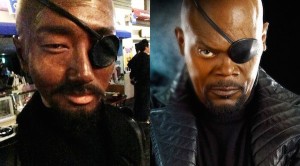
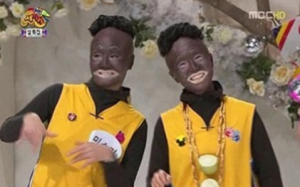
In 2013 and 2014, several incidents of "blackface"—the practice of using makeup to darken one’s skin for comedic or performative effect—occurred on South Korean variety shows and in music videos. Notably, Yesung of Super Junior faced criticism for an image perceived as a caricature, while members of Block B were frequently scrutinized for their "impressions" of Black vernacular and style.

In early 2015, the release of 4Minute’s "Crazy" and Keith Ape’s "It G Ma" sparked intense debate. While "Crazy" was lauded for its high-energy production, its visual use of cornrows and specific "street" aesthetics was criticized as a costume-like appropriation. Simultaneously, Keith Ape’s "It G Ma" was viewed by some as an imitation of the "trap" subgenre that bordered on parody, leading to discussions about whether Asian rappers were contributing to the culture or merely consuming its most marketable elements.
Another recurring point of contention has been the use of the Confederate flag in K-pop fashion. Instances involving groups like Infinite H led to defensive arguments from fans who pointed to American rapper Kanye West’s use of the imagery as a justification. However, critics argue that West’s use of the flag was a subversive attempt to "reclaim" a symbol of oppression, a nuance that is entirely lost when used as a "trendy" accessory in a South Korean music video.

Defining the Boundary: Appropriation vs. Appreciation
The distinction between appropriation and appreciation remains the most contentious aspect of the K-pop discourse. Appreciation is generally defined as an earnest engagement with a culture, characterized by research, credit, and respect for the originators. Appropriation, conversely, involves the adoption of elements of a marginalized culture by a dominant or outside group in a way that is exploitative or reduces the culture to a "concept."
In the 2015 roundtable discussions among Black fans Camiele, Cjontai, and Taylore, the consensus was that many K-pop idols operate within a "hip hop concept" that is discarded once it is no longer trendy. This "flavor of the month" approach to Black culture is particularly jarring to fans who live the reality of that culture every day.
However, there are outliers who have demonstrated a deeper commitment. Rap Monster (now RM) of BTS has been noted for recommending tracks by artists like D’Angelo and India Arie, suggesting a genuine interest in the R&B canon. Similarly, the participation of legends like Warren G in the reality show "American Hustle Life" provided a rare moment where K-pop idols were forced to confront the history and hardship associated with the birth of Hip Hop in the United States.
Industry Responses and Fan Advocacy
The response from South Korean entertainment agencies has historically been varied, often ranging from silence to defensive explanations of "cultural ignorance." However, the influence of international "Big Black Communities" (BBCs) and other Black fan collectives has forced a slow shift in corporate accountability.

Seven Seasons, the agency representing Block B, is one of the few companies that has historically responded to fan outreach. When fans contacted the label regarding Zico’s use of racial slurs or problematic imagery, the agency showed a willingness to listen and educate their artists. This proactive engagement is often cited as a model for how the industry can bridge the gap between its domestic origins and its global audience.
Despite these small victories, a significant portion of the non-Black K-pop fandom continues to dismiss these concerns. The "let it slide" mentality suggests that idols should be excused from racial insensitivity because of South Korea’s relative ethnic homogeneity. Critics argue this excuse is no longer valid in the digital age, especially for companies that actively market their products to a diverse global demographic.

The Psychological Impact on the Black Fandom
Being a Black fan in the K-pop space often involves a state of "double consciousness." Fans may deeply enjoy the music and the talent of the idols while simultaneously feeling alienated by the industry’s occasional mockery of their identity. This alienation extends to fan-produced content, such as fan fiction or "reader-insert" stories, which often assume a white or East Asian physical profile, leaving Black fans to feel invisible within the community they help support.
Furthermore, the issue of colorism remains a pervasive problem. The idol industry’s emphasis on "milk-white" skin often leads to the "whitewashing" of idols in photos and the disparagement of idols with naturally tanner complexions. For Black fans, this reinforces a global hierarchy of beauty that marginalizes dark skin, making their engagement with the fandom a complex emotional exercise.
Broader Implications and the Path Forward
The dialogue surrounding Black culture in K-pop is not merely about music; it is a reflection of how globalization handles the intellectual and cultural property of marginalized groups. As South Korea continues to position itself as a global cultural superpower, its responsibility to practice ethical cultural exchange increases.
The implications of this discourse are two-fold:

- Corporate Responsibility: Labels must move beyond "concepts" and invest in cultural competency training for their artists and creative directors. If an agency intends to profit from a "hip hop aesthetic," it has a moral and professional obligation to understand the history of that aesthetic.
- Global Representation: The K-pop industry’s success has highlighted the lack of Asian representation in Western media. However, the industry cannot seek to dismantle one form of marginalization (anti-Asian sentiment) while perpetuating another (anti-Blackness or cultural erasure).
The future of K-pop as a truly global genre depends on its ability to foster mutual respect. As noted by industry observers, music is a "kaleidoscope of colors," and its beauty is derived from the diverse voices that contribute to its evolution. For Black fans, the message to the industry is clear: they are not just consumers of the product, but stakeholders in the culture that made the product possible. Respecting the roots of K-pop is not an act of "bullying" idols, but an act of preserving the integrity of the music itself.