
The concept of Korean nationalism represents a unique and potent brand of ethno-nationalist sentiment that serves as a foundational pillar for identity on the Korean Peninsula. While North and South Korea remain ideologically and politically polarized, they share a deeply rooted belief in a singular, homogenous ethnic lineage known as danil minjok (one-race people). This ideology, while providing a sense of unity and resilience throughout a turbulent history, has also become a focal point for contemporary debates regarding social exclusion, international diplomacy, and the challenges of a rapidly globalizing society. Understanding the origins of this sentiment requires a comprehensive look at Korea’s mythological foundations, its 19th-century political awakening, and the traumatic era of Japanese colonization.
The Mythological Foundation: The Legend of Tan’gun
At the heart of Korean ethno-nationalism lies the foundational myth of Tan’gun Wanggeom, the legendary forefather of the Korean people. According to traditional accounts, the Korean race traces its history back to 2333 BC. The narrative, first recorded in the Samguk yusa (Memorabilia of the Three Kingdoms) by the monk Iryeon in the 13th century, describes the descent of Hwan-ung, the son of the heavenly king Hwan-in, to Mount Paektu.
The myth details a test of endurance involving a tiger and a bear who wished to become human. While the tiger failed, the bear remained in a dark cave for 100 days, consuming only mugwort and garlic, and was transformed into a woman named Ung-nyeo. She subsequently wed Hwan-ung and gave birth to Tan’gun, who established the kingdom of Gojoseon.
While modern historians and the South Korean public generally view this story as a foundational allegory rather than a literal biological record, its cultural impact is immeasurable. The narrative establishes a "sacred" bloodline that ties all Koreans to a divine origin and a specific geography, most notably Mount Paektu. In North Korea, this myth has been politicized to an even greater extent; in 1993, the Pyongyang government claimed to have discovered the physical tomb of Tan’gun, a move widely viewed by international archaeologists as a fabrication intended to bolster the regime’s historical legitimacy.
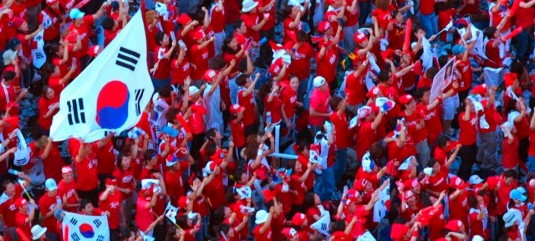
The Shift from Neo-Confucianism to Modern Nationalism
Contrary to the modern perception that Korean nationalism has existed "since time immemorial," historical analysis suggests that the concept of a unified "ethnic nation" is a relatively modern construct. Throughout the Joseon Dynasty (1392–1910), Korean identity was defined not by ethnicity, but by neo-Confucian values, loyalty to the monarchy, and class distinctions. The peninsula operated under a system of sadae (serving the great), acknowledging China as the center of the civilized world.
The transition toward a nation-centric identity began in the late 19th century as the "Hermit Kingdom" was forcibly opened to international trade and diplomacy. The arrival of Western powers and the rising sun of Imperial Japan created an existential crisis for the Korean intellectual elite. Between 1876 and 1905, as Russia, China, and Japan vied for control over the peninsula, Korean reformers realized that traditional dynastic loyalty was insufficient to protect sovereignty.
During this period, newspapers such as Tongnip Sinmun (The Independent) and Hwansŏng Sinmun (Capital Gazette) began to pivot away from Chinese-centric worldviews. They promoted the use of Hangul, the Korean alphabet, over Chinese characters and popularized the term minjok to describe a distinct Korean race. This was a deliberate effort to decouple Korea’s destiny from China’s and to create a unified front against encroaching imperialism.
The Colonial Catalyst and the Codification of Identity
The defining moment for Korean ethno-nationalism was the Japanese occupation (1910–1945). Following the 1905 Protectorate Treaty and the subsequent 1910 Annexation, Japan implemented policies aimed at the systematic erasure of Korean culture. This included the mandatory use of the Japanese language, the forced adoption of Japanese surnames (Sōshi-kaimei), and the suppression of Korean history in schools.
In response, Korean historians like Shin Chae-ho sought to provide a psychological "armor" for the population. Shin’s writings emphasized the minjok as a biological and spiritual entity that could never be extinguished by foreign rule. By elevating Tan’gun from a folk figure to a national patriarch, these intellectuals provided a narrative of 5,000 years of uninterrupted history. This "bloodline nationalism" became a survival mechanism, allowing Koreans to maintain a sense of self-worth and unity during decades of colonial subjugation.

Post-War Divergence: Two States, One Narrative
Following the liberation in 1945 and the subsequent division of the peninsula, both the Republic of Korea (South) and the Democratic People’s Republic of Korea (North) utilized ethno-nationalism to consolidate power.
In the South, President Park Chung-hee (1961–1979) harnessed nationalist fervor to drive the "Miracle on the Han River." By framing economic development as a national duty to the minjok, the state successfully mobilized the workforce for rapid industrialization. Nationalism served as the social glue that allowed the country to endure the hardships of the 1970s and 80s.
In the North, the Kim Il-sung regime integrated ethno-nationalism with the Juche ideology of self-reliance. By claiming to be the "truest" defenders of the Korean race against foreign "contamination" (specifically American influence), the North Korean leadership has maintained a hermetically sealed society based on perceived racial purity.
Modern Implications and the Challenge of Globalization
In the 21st century, South Korea’s adherence to danil minjok has faced significant scrutiny. As the country emerged as a global economic powerhouse and a cultural exporter via the "Hallyu" wave, its demographics began to shift.
Supporting Data and Demographic Trends
According to data from the South Korean Ministry of Justice and the Ministry of Interior and Safety:

- Foreign Residents: As of 2023, the number of foreign residents in South Korea exceeded 2.5 million, accounting for approximately 4.9% of the total population.
- Multicultural Households: The number of children born to multicultural families has seen a steady increase, with the government projecting that by 2030, a significant portion of the youth population will be of mixed ethnic descent.
- Labor Shortages: Due to a record-low fertility rate (0.72 in 2023), South Korea is increasingly reliant on migrant labor to sustain its manufacturing, agriculture, and caregiving sectors.
These statistics highlight a growing friction between the traditional "pure blood" ideology and the practical realities of a shrinking domestic workforce. The United Nations Committee on the Elimination of Racial Discrimination (CERD) has repeatedly urged South Korea to end the promotion of the "pure-bloodedness" theory, arguing that it fosters discrimination against biracial citizens and immigrants.
Analysis: Pride, Prejudice, and the Path Forward
The persistence of Korean nationalism manifests in contemporary geopolitical tensions. Disputes over the Dokdo islets with Japan and historical disagreements with China over the ancient kingdom of Koguryo are often viewed through the lens of protecting the "national soul." In domestic social spheres, this can lead to what some scholars describe as "national sensitivity," where international criticisms of Korean culture are met with disproportionate public outcry.
However, the narrative is beginning to evolve. The South Korean government has introduced the "First Basic Plan for Support of Multicultural Families," and public discourse is slowly shifting toward a "civic nationalism" based on shared values and residency rather than strictly on bloodline.
The central challenge for 21st-century Korea lies in reconciling its proud history of ethnic unity—which served as a bulwark against colonial erasure—with the necessity of becoming an inclusive, multi-ethnic democracy. While the myth of Tan’gun and the concept of the minjok remain vital to the Korean psyche, the definition of what it means to be "Korean" is undergoing its most significant transformation since the late 19th century. Whether the nation can transition from a "blood-based" identity to a "value-based" identity will determine its social stability and global influence in the decades to come.