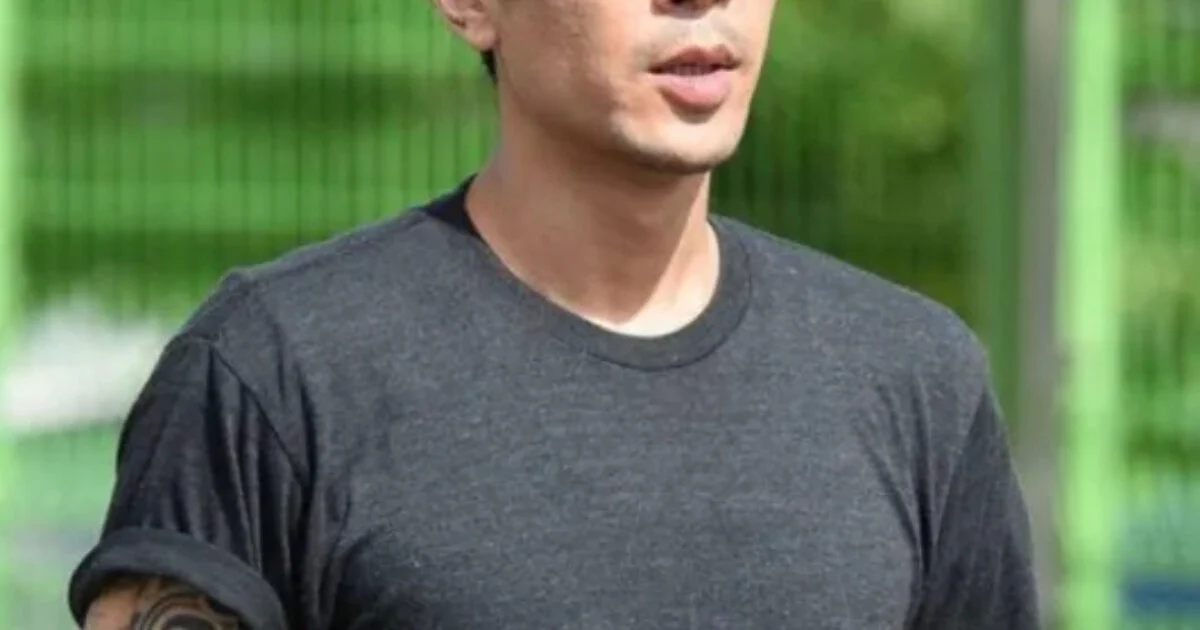
In a development that has reignited public discourse surrounding celebrity accountability and potential for rehabilitation in South Korea, Go Young Wook, a former prominent figure in the entertainment industry convicted of sexual offenses against minors, has publicly addressed his prospects for a return to broadcasting and responded to recent criticisms regarding his social media activities. On August 25th, the former Roo’ra member took to his personal social media account to issue a statement, acknowledging the near impossibility of a public comeback while simultaneously urging critics to cease what he described as "attacking and fussing."
"It is an unchanging fact that, as far as public knowledge goes, my return to broadcasting is impossible unless there is a surprising change," Go Young Wook stated, a concession that underscores the enduring public and industry stance against his re-entry into mainstream media. He further reflected on his past success, admitting, "I have already enjoyed more public love and popularity than I deserved for my abilities in the past. Of course, I have some personal regrets, but I accept them and live with them." In an attempt to portray a normalized existence, he added, "I am just an ordinary citizen who goes grocery shopping and cleans up after my dogs at home." He concluded his posts by stating, "I am just posting my thoughts," and implored the public to "Stop attacking and fussing over me arbitrarily and focus on your own daily lives." This plea comes amidst mounting criticism directed at Go Young Wook for a series of recent social media posts that have been widely interpreted as baseless attacks on prominent celebrities, including Yoo Jae Suk, Lee Sang Min, Lee Ji Hye, and Park Ha Sun, fueling speculation that these actions are calculated attempts to garner public attention, however negative.
A Star’s Ascent: The Roo’ra Era and Early Career
Go Young Wook’s journey in the South Korean entertainment industry began in 1994, a period often remembered as the golden age of K-Pop’s first generation. He debuted as a member of the co-ed hip-hop and dance group Roo’ra (룰라), a quartet that quickly rose to national fame alongside contemporaries like Seo Taiji and Boys and Deux. Roo’ra was renowned for its energetic performances, catchy tunes, and trend-setting fashion, securing multiple chart-topping hits such as "Angel Without Wings" (날개 잃은 천사) and "3!4!" Their debut album, ‘Roots of Reggae,’ was a commercial success, and their subsequent releases solidified their status as one of the most popular groups of the mid-1990s. Go Young Wook, known for his charismatic stage presence and distinctive vocal contributions, was an integral part of this success.
Following the group’s initial disbandment and subsequent reformations, Go Young Wook transitioned successfully into a career as a television personality and variety show regular. His quick wit, comedic timing, and affable persona made him a sought-after guest and cast member on numerous popular programs. He cultivated an image as a friendly, somewhat mischievous figure, earning him a broad fanbase across different demographics. This period saw him enjoy significant public affection and professional opportunities, cementing his status as a beloved celebrity who had seamlessly moved from music idol to mainstream entertainer. This extensive period of public adoration and professional engagement created a stark contrast with the dramatic downfall that would follow, making his eventual conviction all the more shocking to the public.
The Downfall: Conviction for Sexual Offenses Against Minors
The trajectory of Go Young Wook’s career took a catastrophic turn between 2010 and 2012, when he faced multiple allegations of sexual assault and molestation involving minors. The initial charges sent shockwaves through the South Korean entertainment industry and society at large, given his previously wholesome public image. Investigations led to his indictment, and the subsequent legal proceedings garnered intense media scrutiny and public outrage. The cases involved multiple victims, all of whom were underage at the time of the incidents, escalating the severity of the charges and the public’s condemnation.
The legal process was protracted and highly publicized. Go Young Wook denied some of the allegations initially, but overwhelming evidence and victim testimonies eventually led to his conviction. In 2013, the Supreme Court of South Korea upheld the lower court’s ruling, confirming a sentence of two years and six months in prison. In addition to the custodial sentence, he was also mandated to wear an electronic monitoring device (an ankle monitor) for three years following his release and was subject to a five-year restriction from working with children or adolescents, along with being registered on the national sex offender registry. This registration meant his personal information, including his photograph and address, could be accessed by residents within a certain radius, a measure designed to enhance public safety and awareness. The severity of the sentence and the ancillary penalties underscored the gravity with which South Korean law treats sexual offenses, particularly those involving minors. The confirmation of his guilt by the highest court irrevocably shattered his public image and effectively ended his career in the mainstream entertainment industry.
Life After Prison: Challenges of Reintegration and Societal Stigma
Go Young Wook was released from prison in July 2015, having served his full sentence. His release, however, did not mark an end to his legal and societal repercussions. The imposition of the electronic monitoring device for three years and his inclusion on the national sex offender registry meant that his reintegration into society was under constant public and official scrutiny. The stigma associated with sex offenses, especially those against minors, is profoundly entrenched in South Korean society, making any form of public life or even private anonymity exceptionally challenging.
For individuals on the sex offender registry, the barriers to employment, housing, and social acceptance are immense. While the legal system aims for rehabilitation, societal reactions often prioritize punitive measures and ostracization, particularly for public figures whose crimes are seen as a profound betrayal of trust. Go Young Wook’s attempts to navigate post-incarceration life have been punctuated by public awareness of his past. Media reports and online discussions frequently resurface his history whenever he makes a public appearance or comment, highlighting the indelible mark of his conviction on his public identity. This persistent societal stigma contrasts sharply with the paths of some other celebrities who have faced controversies such as drug use, gambling, or drunk driving, and have, over time, managed to stage partial or full comebacks. For sex offenders, particularly those involving minors, the path to redemption in the public eye remains virtually impassable in South Korea.
Recent Social Media Controversy and Public Backlash
In the period leading up to his August 25th statement, Go Young Wook had become the subject of renewed public criticism due to a series of posts on his personal social media account. These posts were not merely personal updates but contained what many perceived as unwarranted and baseless attacks on several highly respected and beloved Korean celebrities. Among those mentioned were national MC Yoo Jae Suk, entertainer Lee Sang Min (a former bandmate from Roo’ra), singer and television personality Lee Ji Hye, and actress Park Ha Sun. The content of these "attacking posts" varied but generally involved critical or speculative remarks that lacked clear factual basis and appeared to be designed to provoke a reaction.
The public reaction was swift and overwhelmingly negative. Netizens widely condemned Go Young Wook’s actions, interpreting them as desperate attempts to regain public attention, even if that attention was fueled by controversy and negativity. Critics argued that such behavior was not only disrespectful to the mentioned celebrities but also indicative of a lack of genuine remorse or understanding of the gravity of his past actions and their impact on his public standing. The common sentiment expressed across online platforms was that these posts demonstrated a failure to accept his current status as a private citizen and an inability to move past his disgraced public persona. This behavior further solidified the public’s resolve against any potential comeback, reinforcing the perception that he remains an unsuitable figure for public life.
The Unlikelihood of a Comeback: Industry and Public Stance
Go Young Wook’s own admission regarding the impossibility of his return to broadcasting is a realistic assessment of the entertainment industry’s landscape in South Korea. The industry, heavily influenced by public sentiment and corporate image, has a strong, albeit often unwritten, policy against individuals convicted of severe moral crimes, especially sex offenses involving minors. While other scandals like drug use or gambling might occasionally lead to a path of rehabilitation and eventual return for some celebrities, sex offenders are almost universally blacklisted.

Broadcasting networks, production companies, and advertisers are acutely aware of the potential for public backlash and reputational damage associated with engaging such controversial figures. Hiring Go Young Wook, or any celebrity with a similar conviction, would risk alienating viewers, sponsors, and even other talent. This de facto ban is not merely punitive but reflects a societal consensus that certain offenses are unforgivable within the public sphere. The moral standards expected of celebrities in South Korea are exceptionally high, and a fall from grace due to sexual misconduct, particularly against vulnerable individuals, is often considered irredeemable. Public opinion polls consistently show overwhelming opposition to the return of celebrities convicted of serious crimes, with sex offenses topping the list of unforgivable transgressions. This collective societal rejection creates an insurmountable barrier for any individual hoping to rebuild a career that relies on public acceptance and positive image.
Social Media as a Double-Edged Sword
Go Young Wook’s recent social media activity highlights the double-edged nature of these platforms for disgraced public figures. While social media offers a direct channel for communication, bypassing traditional media gatekeepers, it also exposes individuals directly to unfiltered public scrutiny and immediate backlash. For Go Young Wook, his social media account has become a platform where he attempts to express his thoughts and possibly reassert some form of public presence. However, his choice of content – particularly the "attacking posts" – has proven counterproductive.
Instead of fostering understanding or demonstrating personal growth, these posts have amplified negative perceptions. Social media algorithms and the nature of online discourse often reward controversy, but for figures like Go Young Wook, this only serves to reinforce his negative public image. The rapid dissemination of his controversial statements across various online communities and news outlets ensures that his actions are widely seen and judged, leading to cycles of renewed condemnation rather than rehabilitation. This dynamic underscores the challenge for individuals seeking to re-enter public life after severe transgressions; every public action, no matter how small, is scrutinized through the lens of their past, making genuine redemption or even quiet reintegration an arduous task.
Broader Implications for Celebrity Accountability and Public Morality
The ongoing saga surrounding Go Young Wook and his attempts to navigate his post-conviction life carries broader implications for celebrity accountability and the evolving standards of public morality in South Korea. His situation serves as a stark reminder that public trust, once shattered by severe ethical breaches, is exceedingly difficult, if not impossible, to restore. It reinforces the notion that the entertainment industry, despite its often-glamorous facade, operates within a framework dictated by public sentiment and a stringent code of conduct, especially concerning offenses that violate fundamental societal norms.
The public’s unwavering stance against Go Young Wook’s comeback also reflects a growing demand for higher ethical standards from public figures. In an era where social media amplifies both fame and infamy, the line between personal misconduct and professional consequence has become increasingly blurred. The sustained outrage against his actions, even years after his release, indicates a collective societal judgment that some crimes transcend the possibility of forgiveness for those who once held positions of public adoration. This robust public morality shapes not only the careers of individual celebrities but also the future direction of the entertainment industry, pushing it towards greater scrutiny and accountability for those who seek to entertain and influence the public. The case of Go Young Wook remains a touchstone for discussions on crime, punishment, and the elusive concept of redemption in the unforgiving spotlight of celebrity culture.