
In March 2013, the South Korean government, under the newly inaugurated administration of President Park Geun-hye, implemented a revised ordinance known as the "overexposure law," sparking a nationwide debate and significant international media attention. The law, part of an amendment to the Punishment of Minor Offenses Act, was designed to curb public indecency by imposing a fine of 50,000 Korean Won (approximately $45 to $48 USD) on individuals who "cause discomfort to others by excessively exposing their bodies or revealing parts of the body that should remain covered" in public spaces. While the South Korean National Police Agency maintained that the law was a modernization of existing statutes intended to target public nudity and lewd behavior, the timing and phrasing of the legislation triggered deep-seated cultural anxieties and led to widespread rumors that the government was planning a return to the authoritarian dress codes of the 1970s.
The Legislative Framework and Implementation
The overexposure law was officially approved during a cabinet meeting presided over by President Park Geun-hye on March 11, 2013, and went into effect on March 22. The amendment was part of a broader package of revisions to minor offense regulations, which included updated penalties for stalking, persistent harassment, and making prank calls to emergency services. According to government officials, the primary objective of the overexposure clause was to provide a clearer legal basis for police to intervene in cases of public indecency, such as streaking or extreme exposure in parks and residential areas, which had previously been governed by more vague legal language.
Despite the government’s assertions that the law was a routine administrative update, the public reaction was immediate and polarized. Critics argued that the term "overexposure" was dangerously subjective, leaving too much room for individual police officers to exercise personal bias. This ambiguity led many to believe that the law was specifically targeting the fashion choices of young women, particularly the miniskirts and short shorts that have become a staple of South Korean street style and K-pop performance attire.
Historical Context: The Shadow of the Yusin Era
To understand the intensity of the backlash against the 2013 overexposure law, one must look back to the 1970s, during the rule of President Park Chung-hee, the father of Park Geun-hye. During the Yusin Constitution era, the South Korean government exercised strict control over personal expression as part of a broader effort to maintain social order and traditional Confucian values.

Under the Minor Offense Law of 1973, police officers were famously equipped with bamboo rulers to measure the length of women’s skirts. Any skirt that ended more than 20 centimeters (approximately 7.8 inches) above the knee was considered a violation of public decency, and offenders could be fined or detained. Similarly, men were prohibited from having long hair; police conducted "free" haircuts on the spot for those whose hair covered their ears or touched their collars. These measures were symbols of a repressive military regime that viewed Western-influenced fashion and "decadent" youth culture as a threat to national security and morality.
When Park Geun-hye, the nation’s first female president, introduced a law that used similar terminology regarding "exposure," many South Koreans viewed it as a regressive step. Political opponents were quick to draw parallels, using the phrase "Like father, like daughter" to suggest that the new administration intended to revive the social policing of the past.
The Role of Social Media and Celebrity Influence
The controversy was further amplified by high-profile figures in the South Korean entertainment industry. K-pop icon Lee Hyori, known for her trendsetting fashion and confident image, took to Twitter to express her concerns shortly after the law was announced. "Is the overexposure fine for real? I’m totally dead," she posted, a comment that quickly went viral and was interpreted by many as a confirmation that the law would impact the entertainment industry.
Opposition politicians also seized the moment to criticize the administration’s priorities. Members of the Democratic United Party argued that at a time when North Korea was escalating its nuclear rhetoric and the domestic economy was facing challenges, the government’s focus on "regulating hemlines" was misplaced. These public statements created a feedback loop of concern that transcended the actual text of the law, leading the public to believe that a literal "miniskirt ban" was imminent.
International Media Misinterpretation
As the story broke in the West, several major news outlets, including CNN, The Daily Mail, and various fashion publications, published headlines that leaned into the sensationalist aspects of the controversy. Some reports suggested that South Korea had officially banned miniskirts, failing to distinguish between the legal definition of public indecency and everyday fashion choices.
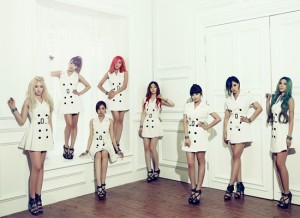
This global coverage painted a picture of a South Korea that was retreating into social conservatism, which stood in stark contrast to the country’s global image as a high-tech, culturally vibrant "soft power" leader. The misinformation fueled a wave of international criticism, with social media users expressing disbelief that the home of "Gangnam Style" and global fashion trends would implement such restrictive measures.
In response to the mounting confusion, the South Korean National Police Agency issued several clarifications. Inspector Ko Jun-ho of the agency’s Life and Safety Bureau stated in a public address that the law had "nothing to do with miniskirts or the hair length of men." He clarified that the revision actually narrowed the scope of what could be punished, moving away from the more nebulous "indecent acts" language of the previous version to focus specifically on exposure that causes public offense.
Chronology of Events
The development and reaction to the law followed a rapid timeline:
- February 25, 2013: Park Geun-hye is inaugurated as the 11th President of South Korea.
- March 11, 2013: The Cabinet approves the amendment to the Punishment of Minor Offenses Act.
- March 12–20, 2013: News of the "overexposure" clause spreads on social media. Lee Hyori and other celebrities voice concerns. The "miniskirt ban" rumor gains traction.
- March 21, 2013: International media outlets begin reporting on the law, often framing it as a crackdown on K-pop fashion.
- March 22, 2013: The law officially goes into effect.
- Late March 2013: The National Police Agency launches a PR campaign to clarify that the law targets public nudity (streaking) and lewd behavior, not fashion.
Socio-Political Implications and Analysis
The overexposure law controversy serves as a case study in the power of historical memory in South Korean politics. Even if the law was intended as a harmless administrative update, the identity of the proponent—the daughter of a former dictator—ensured that it would be viewed through a suspicious lens. For many, the law was not about the 50,000 Won fine, but about the principle of state interference in private life.
From a legal perspective, the controversy highlighted the challenges of drafting "public morality" laws in a modern, democratic society. Laws that rely on subjective terms like "discomfort" or "excessive" are inherently difficult to enforce fairly. In the years following the 2013 implementation, there have been no documented cases of police officers using the law to fine women for wearing miniskirts. Instead, the law has been applied as intended: to address individuals engaging in actual public nudity or exhibitionism.

Furthermore, the incident demonstrated the disconnect between the South Korean government’s legislative processes and the speed of the digital information cycle. By the time the police had issued their clarifications, the "miniskirt ban" narrative had already been solidified in the minds of millions of people both domestically and abroad.
Impact on the K-Pop Industry and Fashion
Despite the initial fears, the K-pop industry remained largely unaffected by the law. The 2010s saw a continued trend toward more daring and "sexy" concepts for both girl groups and boy groups. Agencies continued to push the boundaries of stage outfits, and the South Korean fashion industry remained one of the most robust and innovative in Asia.
However, the event did prompt a larger conversation about the sexualization of minors in the entertainment industry. While the overexposure law was not the tool used to address this, the Korea Communications Standards Commission (KCSC) eventually implemented stricter guidelines for television broadcasts, focusing on "suggestive" choreography and costumes for underage performers. These regulations were distinct from the overexposure law, focusing on broadcasting standards rather than criminal minor offenses.
Conclusion
The 2013 overexposure law in South Korea was ultimately a victim of its own phrasing and the historical baggage of the administration that passed it. While it was never the "miniskirt ban" that the headlines claimed, the controversy underscored the vigilance of the South Korean public in protecting the personal freedoms gained since the democratization of the late 1980s.
Today, the law remains on the books, serving its narrow purpose of regulating public indecency without infringing upon the fashion choices of the citizenry. The episode remains a significant footnote in President Park Geun-hye’s early term, illustrating the complex intersection of law, memory, and the globalized nature of modern news. It serves as a reminder that in a digital age, the perception of a law can often be more influential—and more controversial—than the law itself.