
The global explosion of Psy’s "Gangnam Style" in 2012 introduced international audiences to a vibrant, neon-lit version of Seoul’s wealthiest district. However, beneath the infectious beat and the "horse dance" lay a sharp layer of social commentary that many Western listeners initially overlooked. Central to this satire is the concept of the dwenjang-nyeo, or "bean paste girl." This pejorative term has become a fixture in contemporary South Korean discourse, serving as a lightning rod for debates regarding consumerism, gender roles, and the psychological scars left by the nation’s rapid economic transformation. To understand the "bean paste girl" is to understand the complex intersection of tradition and hyper-capitalism in 21st-century East Asia.
Etymology and the Paradox of Consumption
The term dwenjang-nyeo derives its name from dwenjang, a fermented soybean paste that serves as the foundation for dwenjang jjigae (bean paste stew). In the Korean culinary hierarchy, this stew represents the antithesis of luxury. It is humble, pungent, and remarkably inexpensive, often priced between 3,500 and 5,000 Korean Won (approximately $3 to $4 USD). It is the quintessential "soul food" of the working class and the domestic sphere, frequently prepared at home or served in low-key, traditional restaurants alongside rice and banchan (side dishes).
The "bean paste girl" label is applied to women who are perceived to live a double life of fiscal contradiction. The stereotypical dwenjang-nyeo is accused of eating the cheapest possible meals—specifically bean paste stew—in order to save enough money to afford luxury goods that are far beyond her economic station. The most common visual signifier of this archetype is a woman carrying a designer handbag, such as those from Louis Vuitton or Chanel, while holding a Starbucks coffee cup. In South Korea, where a specialty latte can cost upwards of 6,500 KRW, the act of spending more on a beverage than on a nutritious meal is viewed by critics as a sign of shallow vanity and "wannabe" Westernization.
Historical Context: From Poverty to the Miracle on the Han River
To understand why a cup of coffee and a handbag can trigger such visceral societal anger, one must examine South Korea’s unique economic trajectory. Following the devastation of the Korean War (1950–1953), South Korea was one of the poorest nations on Earth. In the early 1960s, its GDP per capita was lower than that of many sub-Saharan African nations, including Ethiopia. The subsequent decades saw a period of "compressed modernization" often referred to as the "Miracle on the Han River."
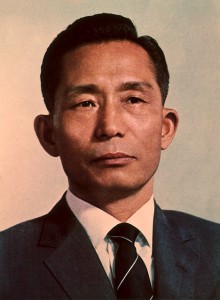
Under the authoritarian leadership of President Park Chung-hee, the state enforced a culture of extreme frugality. National campaigns targeted kwasobi (excessive spending), framing luxury consumption as not only foolish but unpatriotic. For a generation that survived through sheer austerity and tireless labor, the accumulation of wealth was intended for national reinvestment and family security, not individual display.
By the 1990s, however, South Korea had emerged as a global economic powerhouse and a member of the OECD. The generation that followed the "economic warriors" grew up in an era of relative plenty. The 1988 Seoul Olympics and the subsequent liberalization of overseas travel and trade flooded the domestic market with Western luxury brands. This created a generational friction: an older generation that views frugality as a moral virtue versus a younger generation that views consumption as a primary means of self-expression and social signaling.
Socio-Economic Data and the Status Symbol Economy
The "bean paste girl" phenomenon is fueled by the reality of South Korea’s status-driven society. According to market research data from firms like Morgan Stanley, South Koreans have become the world’s biggest spenders on personal luxury goods per capita. In 2022, South Korean spending on luxury brands grew 24% year-on-year to $16.8 billion, or about $325 per person. This is significantly higher than the $280 and $55 spent per capita by Americans and Chinese citizens, respectively.
The obsession with "brand-name finery" is not merely about aesthetics; it is an entry requirement for social mobility in a hyper-competitive environment. In a society where educational background, family lineage, and physical appearance are scrutinized, luxury goods serve as "portable status." For many young women entering a precarious job market with a significant gender wage gap—South Korea consistently ranks at the bottom of the OECD in this metric—a designer bag is one of the few attainable symbols of success, even if it requires significant financial sacrifice in other areas of life.

The Gendered Critique: Why No "Bean Paste Boy"?
A critical analysis of the dwenjang-nyeo term reveals a stark gender bias. While men in South Korea also engage in conspicuous consumption—spending heavily on imported cars, electronics, and high-end watches—there is no equivalent pejorative that carries the same social weight as "bean paste girl." While some have attempted to coin terms like ganjang-nam (soy sauce man) to describe frugal men who spend on specific hobbies, the term has never gained mainstream traction.
Sociologists argue that the vilification of the "bean paste girl" is rooted in deeply ingrained patriarchal anxieties. By labeling women as "shallow," "consumption-obsessed," or "moochers" (those who supposedly use their boyfriends or parents to fund their lifestyles), the term serves to police female behavior. It suggests that women’s financial independence is either fraudulent or mismanaged.
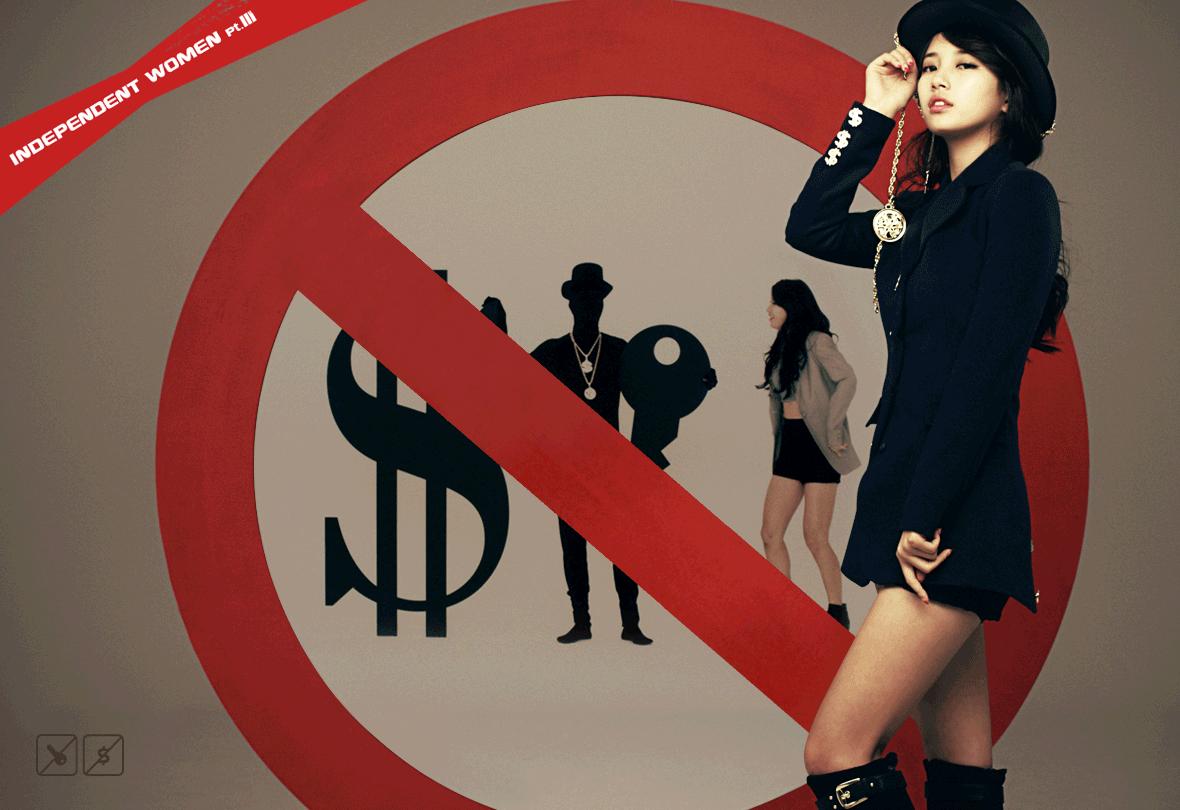
However, a counter-narrative has emerged from feminist circles. Some defenders of the so-called "bean paste girls" argue that these women are actually exercising financial agency. If a woman earns her own salary and chooses to prioritize a high-end fashion item over an expensive meal, she is making a rational choice in a consumer-driven economy. This "Miss A" style of feminism—referencing the K-pop group’s lyrics about being independent women—posits that the critique is less about the spending itself and more about the discomfort society feels when women claim the right to luxury.
Timeline of the Phenomenon and Cultural Milestones
- 1960s–1970s: State-led austerity. Kwasobi (excessive spending) is socially stigmatized and occasionally legally penalized.
- 1990s: Market liberalization. Introduction of high-end department stores and Western coffee chains.
- 2000s: The term dwenjang-nyeo emerges on internet forums (notably DC Inside) as a way to mock women perceived as imitating "Sex and the City" lifestyles without the requisite income.
- 2006: The "Bean Paste Girl" debate reaches a fever pitch in national media, leading to televised debates and sociological studies.
- 2012: Psy’s "Gangnam Style" goes viral. The lyrics "A girl who looks even more lovely when she drinks a cup of coffee" and "A girl whose heart gets hotter when night comes" are widely interpreted as a direct satire of the dwenjang-nyeo and the superficiality of the Gangnam district.
- Present Day: The term has evolved but remains a part of the cultural lexicon, often appearing in K-dramas to characterize social-climbing or materialistic characters.
Analysis of Implications: A Society in Transition
The "bean paste girl" is a symptom of a society in the throes of a profound identity crisis. South Korea has transitioned from a traditional agrarian society to a digital, high-tech metropole in less than two lifetimes. This transition has left a vacuum in terms of social markers. When traditional class structures are eroded, consumption fills the void.
The derogatory nature of the term also reflects the "misery index" of South Korean youth. In a climate of high housing prices and intense job competition, the ability to buy a home or start a family feels increasingly out of reach for many. In response, "small luxuries" (like a $6 coffee or a $1,500 bag) become a form of "revenge consumption." By attacking the dwenjang-nyeo, critics are often expressing a broader frustration with an economic system that prioritizes the appearance of wealth over actual financial security.
Ultimately, the dwenjang-nyeo is a caricature that obscures the reality of modern Korean womanhood. While the term is used to dismiss women as shallow, it ignores the structural pressures that make "looking the part" a necessity for professional and social survival in Seoul. As long as South Korea remains a society where "Gangnam Style" is the aspirational gold standard, the tension between the humble bean paste stew and the designer handbag will continue to define the cultural landscape. Whether she is a victim of hyper-capitalism or a savvy navigator of it, the "bean paste girl" remains one of the most significant—and misunderstood—figures in modern Korean sociology.