
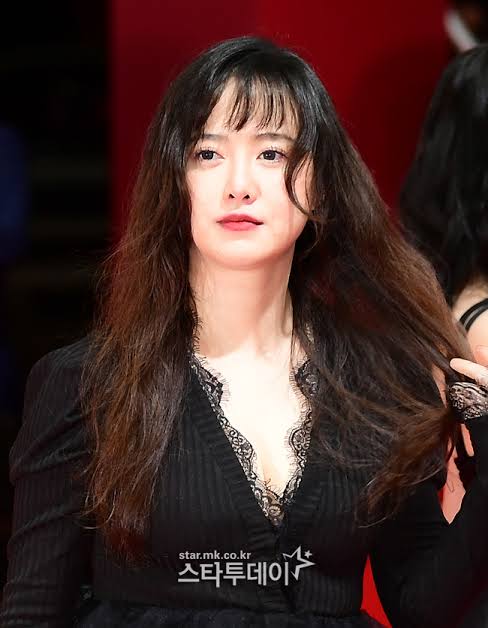
South Korean actress Goo Hye Sun, widely recognized for her iconic role in the legendary drama Boys Over Flowers, has once again surprised the public by unveiling a long-standing secondary career that had remained largely under the radar. In a recent video published on her personal YouTube channel, the multi-hyphenate star revealed her extensive history as a music composer, a role she has quietly cultivated for two decades. This revelation adds another layer to an already complex professional portfolio that spans acting, directing, writing, visual arts, and, most recently, academic engineering.
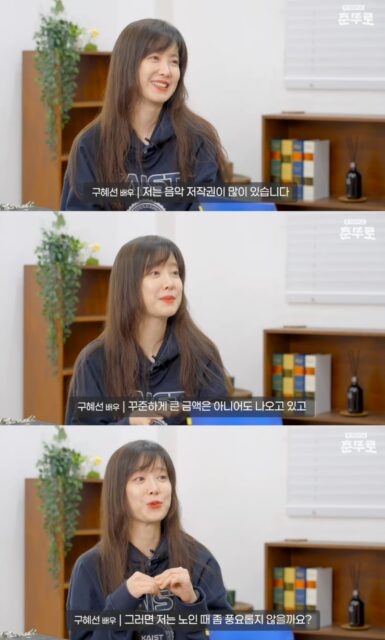
During the video, Goo Hye Sun detailed her journey as a songwriter, specifically within the New Age genre. She disclosed that she currently holds the copyrights to approximately 58 musical compositions registered with the Korea Music Copyright Association (KOMCA). While these tracks may not have reached the heights of mainstream pop charts, they have found a steady and functional home within the South Korean media landscape, serving as background music (BGM) for various television variety shows, documentaries, and commercial spaces.
The Invisible Soundscapes: A Twenty-Year Musical Journey
Goo Hye Sun’s foray into music is not a recent whim but a disciplined practice that dates back nearly 20 years. According to her statement, the actress began composing New Age music—a genre characterized by its melodic, atmospheric, and often instrumental nature—early in her career. Unlike the high-profile releases of K-pop idols, Goo’s work was designed for longevity and utility rather than immediate stardom.

"I have been composing New Age music for about 20 years and have about 58 songs registered to date," she explained in the video. She noted that while the general public might not recognize her name on a tracklist, they have likely heard her work in their daily lives. Her compositions are frequently utilized as atmospheric filler for variety shows, providing the emotional cues necessary for unscripted television. Furthermore, her music is a staple in public and commercial environments, including hospitals, clinics, and cafes, where calming instrumental music is essential for creating a specific ambiance.
This steady usage has resulted in a consistent stream of royalty payments. While she did not disclose specific financial figures, she confirmed that the intellectual property rights associated with these 58 songs provide ongoing passive income. However, for Goo, the motivation behind the registration of these works transcends financial gain.
Philosophy of Intellectual Property and Spiritual Fulfillment
In a moment of introspection during her YouTube broadcast, Goo Hye Sun reflected on why she felt it was necessary to formalize her creative output through the copyright system. She emphasized that the act of registering her music was less about the monetary rewards and more about the "spiritual fulfillment" of documenting her existence and creativity.
The actress expressed a desire to look back on her life and see a "concrete body of intellectual property" that serves as a testament to her time and effort. In a professional landscape as volatile as the South Korean entertainment industry, where fame can be fleeting, Goo views her catalog of 58 songs as a permanent footprint. This perspective aligns with her broader career trajectory, which has consistently moved toward the creation of tangible assets—whether they be books, films, paintings, or patents.

A Timeline of a Polymath: From "Geum Jan-di" to Master of Engineering
To understand the significance of Goo Hye Sun’s "secret" music career, one must look at the broader context of her unconventional professional evolution. Since her debut in 2002 as a commercial model, Goo has resisted being pigeonholed as a traditional actress.
- 2002–2005: Early Fame. Goo rose to prominence as an "ulzzang" (a term for people famous for their looks) before debuting in the sitcom Nonstop 5.
- 2009: The Global Phenomenon. She starred as Geum Jan-di in Boys Over Flowers, a role that catapulted her to international superstardom and remains her most recognizable work.
- 2009–2015: The Creative Expansion. During the height of her acting fame, she began branching out. She published her first novel, Tango, in 2009, which became a bestseller. In the same year, she made her debut as a director with the short film The Madonna. Over the next few years, she directed feature films like Magic and The Peach Tree, and held multiple solo art exhibitions.
- 2020–2024: The Academic Pivot. Following a highly publicized and contentious divorce, Goo largely stepped away from the screen to focus on her education. She returned to Sungkyunkwan University to complete her degree in Film, TV, and Multimedia.
- 2024: Engineering and Innovation. Most recently, she pursued graduate studies at the Korea Advanced Institute of Science and Technology (KAIST), one of the world’s leading research universities. She successfully earned a Master’s degree in Engineering, specifically focusing on science journalism and intellectual property.
The "Kooroll" Innovation and Recent Controversies
Goo Hye Sun’s transition into the world of engineering was not merely academic. She recently launched her own patented product, a hair roller branded as "Kooroll." The product was developed utilizing her background in engineering and was intended to solve common issues with traditional hair styling tools.
However, the launch of Kooroll was not without friction. The actress found herself embroiled in controversy regarding the pricing and marketing of the product. Critics on social media questioned the "premium" positioning of the hair roller, leading to a heated public discourse. Despite the backlash, Goo defended the product, citing the technical specifications and the rigorous patenting process she undertook at KAIST.
This controversy highlights the unique challenge Goo faces: as a "controversial" figure in the eyes of the media, her every move is scrutinized. Yet, it is this same drive for innovation and self-expression that led her to register 58 songs and pursue a Master’s in Engineering.
Analysis: The Rise of the "Multi-tainer" in the Digital Age
Industry analysts suggest that Goo Hye Sun’s revelation about her music career is part of a broader trend among veteran celebrities who are diversifying their portfolios to ensure long-term career stability. In the modern South Korean entertainment market, the term "multi-tainer" (a portmanteau of multi-talented and entertainer) has become a standard.
However, Goo takes this concept further than most. While many celebrities might dabble in business or YouTube, few successfully cross the bridge into academia and high-level engineering while maintaining a library of musical copyrights. Her focus on "intellectual property" as a form of legacy is particularly noteworthy. By owning the rights to her music, her books, her films, and now her patents, she has insulated herself from the typical shelf-life of a television actress.
The fact that her music is used in hospitals and cafes is also a strategic win. Unlike pop music, which is subject to trends and "aging out," New Age BGM is evergreen. As long as television shows need background ambience and public spaces need soothing sounds, her royalties will continue to accrue.
Public and Industry Reaction
The reaction to her YouTube revelation has been a mix of surprise and admiration. While Goo Hye Sun has often been a polarizing figure due to her outspoken nature and the public drama surrounding her personal life, her work ethic is rarely questioned.
Music industry insiders have noted that maintaining a catalog of 58 registered songs is no small feat for someone whose primary profession is not music. A representative from a local music distribution firm stated, "The New Age market in Korea is niche but consistent. For an actress to have nearly 60 songs registered suggests a level of dedication that goes beyond a mere hobby. It indicates a professional commitment to the craft of composition."
Fans have also expressed support, with many noting that the "peaceful" and "healing" nature of her music stands in stark contrast to the turbulent headlines often associated with her name.
Conclusion and Future Outlook
Goo Hye Sun’s revelation serves as a reminder that public figures often lead multifaceted lives far removed from their on-screen personas. By letting out her "secret job" in the music industry, she has reframed her narrative from that of a controversial actress to that of a prolific creator and intellectual property owner.
As she continues her journey at KAIST and expands the reach of her Kooroll brand, it is likely that music will remain a quiet but essential part of her life. Whether she is designing engineering solutions or composing the next piece of background music for a hospital lobby, Goo Hye Sun appears determined to leave a concrete, copyrighted legacy that defines her on her own terms. The "secret" is finally out, and it paints a picture of an artist who is as much a strategist as she is a dreamer.