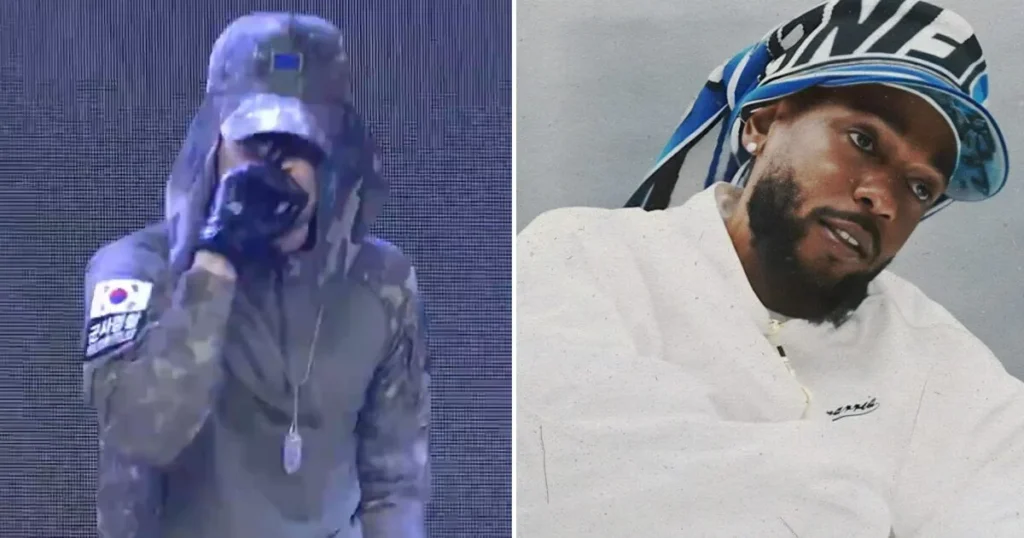
A recent performance by a South Korean Air Force soldier covering Kendrick Lamar’s highly charged tracks "Not Like Us" and "tv off" has sparked a widespread global debate, drawing sharp criticism and ardent praise across social media platforms and international news outlets. The video, initially posted some weeks prior, gained significant traction after being shared by a prominent Kendrick Lamar fan account on X (formerly Twitter) on September 1, 2026, quickly becoming a flashpoint for discussions on cultural appropriation, the global reach of Black culture, and the nuances of military public relations.
Background on South Korea’s Mandatory Military Service and Cultural Engagements
South Korea maintains a system of mandatory military conscription for all able-bodied male citizens, typically requiring service for approximately 18 to 21 months, depending on the branch. This obligation is deeply rooted in the nation’s security posture, given its ongoing technical state of war with North Korea. Exemptions are rare and typically granted only under extraordinary circumstances, such as severe health issues or exceptional achievements in specific fields like Olympic medals or classical music awards that bring significant national prestige.
During their enlistment, soldiers are often encouraged or required to participate in various activities designed to boost morale, foster camaraderie, and engage with the public. These activities frequently include cultural performances, talent shows, and public relations events. K-Pop idols, for instance, are often seen performing at military-organized concerts or special events during their service, leveraging their public appeal for positive outreach. Such performances serve a dual purpose: providing entertainment for military personnel and projecting a positive image of the armed forces to the civilian population, often showcasing the diverse talents within the ranks. The military regularly hosts events, sometimes broadcast on channels like the Korea Forces Network (KFN), featuring soldiers performing a variety of songs, from popular K-Pop hits to international tracks, as a means of cultural engagement and public communication.
The Performance in Detail: A Surprising Song Choice
The performance in question featured a South Korean Air Force soldier, identified as part of a military cultural event broadcast by KFN, delivering an energetic rendition of Kendrick Lamar’s "Not Like Us" and "tv off." The video, which has since been widely circulated, showed the soldier performing with evident enthusiasm and skill. While the exact date of the original KFN broadcast is not precisely known beyond "some time ago," its re-emergence on social media transformed it into an international phenomenon. The choice of songs, particularly "Not Like Us," proved to be the central catalyst for the ensuing controversy. These tracks, released amidst a highly publicized and intense rap rivalry between Kendrick Lamar and Drake, carry significant cultural and lyrical weight within American hip-hop.
The Viral Spark and Escalating Controversy
The video’s journey to global virality began in earnest on September 1, 2026, when the popular Kendrick Lamar X account (@WordFromKdot) shared the clip with the caption: "South Korean Air Force covers Kendrick Lamar’s ‘Not Like Us’ and ‘tv off’ 🇰🇷🇺🇸." This repost immediately thrust the performance into the global spotlight, exposing it to millions of followers who were intimately familiar with the context and nuances of Lamar’s music.
The sudden influx of attention led to an explosion of reactions, rapidly polarizing netizens. The comment sections across X, YouTube, and other platforms quickly filled with a cacophony of opinions, ranging from bewilderment and outrage to admiration and cultural analysis. The incident quickly transcended a mere military performance, evolving into a complex discussion about cultural understanding, global influence, and the potential pitfalls of decontextualized artistic expression.
Understanding the Controversy: Lyrical Context of Kendrick Lamar’s Tracks
To fully grasp the magnitude of the controversy, it is crucial to understand the lyrical and cultural context of "Not Like Us" and "tv off." Both songs were released in May 2024 at the height of a widely publicized and deeply personal feud between West Coast rapper Kendrick Lamar and Canadian artist Drake.
"Not Like Us," in particular, is a scathing diss track aimed directly at Drake, accusing him of various transgressions, including cultural appropriation, predatory behavior, and a perceived lack of authenticity within the hip-hop community. The song is steeped in specific cultural references to Black American experiences, particularly within the West Coast hip-hop scene, and uses highly charged language to delineate an "us vs. them" narrative. Phrases and themes within the song directly address Drake’s perceived alienation from Black culture despite his commercial success within it, and touch on sensitive topics related to racial identity, community loyalty, and socio-political dynamics within the African American diaspora. Its chorus, "They not like us," is a powerful declaration of cultural distinction and an assertion of a specific identity rooted in the Black experience.
"tv off," while less directly a diss track, also carries themes of authenticity, self-reflection, and the pursuit of truth, often framed within the context of Lamar’s personal journey and critiques of superficiality. Both songs are integral parts of a larger narrative within contemporary hip-hop that explores complex issues of identity, power, and cultural ownership.
When a South Korean Air Force soldier, a non-Black individual performing in a military context, chose to cover these songs, particularly "Not Like Us," it immediately raised red flags for many listeners, especially those within the Black community and hip-hop culture. The perceived disconnect between the performer’s identity and the deeply ingrained racial and cultural specificities of the lyrics became the primary source of contention.
Divided Reactions from Netizens: A Spectrum of Opinion
The online reactions were vehemently divided, reflecting a broader global discourse on cultural exchange and appropriation.
Criticism and Concerns:
A significant portion of the online commentary expressed strong disapproval, centering on several key arguments:
- Misinterpretation of the Message: Many netizens argued that the performer, and by extension the South Korean military event organizers, completely missed the profound and specific message embedded in "Not Like Us." As user @LizaSimpson34 succinctly put it, "They really missed the whole message of the song." The song’s critique of cultural appropriation and its assertion of Black identity seemed fundamentally at odds with a performance by a non-Black military individual.
- Cultural Appropriation Allegations: Some users saw the performance as a clear instance of cultural appropriation, where elements of Black culture, particularly a song born from a specific racial and social context, were adopted without a full understanding or respect for their origins and meaning. Comments like "We as a community gotta do something about Koreans lmao" from @Tyre_94, while hyperbolic, highlighted a sentiment of frustration regarding the perceived misuse of Black cultural artifacts. Another user, @hoodg3nius, expressed direct bewilderment: "What the hell he talking about he ain’t black, YOU ARE FROM KOREA!!!" This reaction underscores the perceived incongruity of a non-Black person performing lyrics that are deeply tied to Black identity and struggle.
- Military Propaganda Concerns: A particularly sharp critique came from those who questioned the strategic choice of such a song for a military event. User @sodjthe3rd remarked, "I just fucking realised its a military event. who the fuck brought up the idea to use kendrick for military propaganda." This perspective suggests that the performance, intentionally or unintentionally, leveraged culturally significant music for military public relations, raising ethical questions about the commodification of art with profound social messages. The juxtaposition of a song about racial identity and struggle with a national military institution further fueled this criticism.
- Historical and Social Context: Some users alluded to deeper historical contexts, with @thundercatliker sarcastically noting, "south korean talking about some ’40 acres and a mule’ alright." This comment implicitly references historical reparations and systemic racism in the United States, highlighting the vast cultural and historical chasm between the song’s origins and its performance context.
Praise and Appreciation for Global Influence:
Conversely, a substantial number of commenters celebrated the performance as a testament to the global reach and influence of Black culture and hip-hop.
- Global Impact of Black Culture: Supporters argued that the performance, regardless of its nuanced interpretation, demonstrated the undeniable power of Black artistry to transcend geographical and cultural boundaries. Dr. Allison Wiltz (@queenie4rmnola) encapsulated this sentiment with her tweet, "Black culture has global influence." This viewpoint posits that the adoption of such music by diverse populations is a form of homage and recognition of its universal appeal and artistic merit.
- Enthusiasm and Skill: Many simply appreciated the soldier’s energetic delivery and vocal talent, viewing it as a commendable performance rather than a political statement. They focused on the entertainment value and the performer’s evident passion for the music.
- Cultural Exchange: Some saw it as a positive instance of cultural exchange, where music acts as a bridge between different societies, fostering understanding and shared experiences, even if imperfectly executed.
Broader Media Coverage and Cultural Dialogue
The viral spread of the video and the ensuing debate quickly caught the attention of mainstream media outlets, particularly in the United States. Reports highlighted the cultural sensitivity surrounding the performance, examining the dual narratives of cultural appreciation versus appropriation. Articles explored the complexities of global cultural exchange in the digital age, where content can travel instantly across borders, often stripped of its original context.
This incident became a case study in how social media amplifies cultural nuances and sparks global conversations that might otherwise remain localized. It forced a broader public, beyond immediate hip-hop fans, to grapple with questions of authenticity, ownership, and respectful engagement with diverse cultural expressions.
Implications for Cultural Exchange and Military Public Relations
The South Korean Air Force soldier’s performance and its aftermath carry several significant implications:
- Challenges of Cultural Translation: The incident underscores the inherent difficulties in translating culturally specific art forms across different societal contexts. What might be perceived as a harmless or appreciative cover in one culture can be seen as disrespectful or ignorant in another, especially when the original work is deeply embedded in issues of identity, race, or historical struggle.
- The Role of Intent vs. Impact: While the performer’s intent was likely to entertain and perhaps demonstrate appreciation for popular music, the impact on audiences, particularly those for whom the songs hold deep meaning, was quite different. This highlights the critical distinction between intent and the actual consequences of cultural actions.
- Military Public Relations in a Globalized World: For military organizations, which often engage in cultural activities for public relations, this event serves as a cautionary tale. In an interconnected world, such performances are no longer confined to national audiences but are subject to international scrutiny. Military units must develop a heightened awareness of global cultural sensitivities when selecting material for public display, particularly when it involves music or art from historically marginalized communities. The potential for missteps can lead to unintended diplomatic or public image challenges. As of the time of this report, no official statement has been released by the South Korean military regarding the controversy, which itself is a form of response, leaving many questions unanswered about internal protocols and cultural awareness training.
- The Power of Social Media: The rapid virality and global reach of this controversy demonstrate the unprecedented power of social media to ignite and sustain cultural dialogues, often bypassing traditional media gatekeepers. It enables immediate, unfiltered reactions from a diverse global audience, creating a dynamic and sometimes volatile space for cultural critique.
The Evolving Landscape of Global Culture
This incident is more than just a viral video; it is a microcosm of the evolving landscape of global culture. As cultural products, whether K-Pop, Hollywood films, or American hip-hop, increasingly cross borders and influence diverse populations, the conversations surrounding authenticity, ownership, and respectful engagement will only intensify. The South Korean Air Force soldier’s performance of Kendrick Lamar’s songs has inadvertently opened a vital dialogue, reminding us that while music is a universal language, its dialects are rich with specific histories, identities, and meanings that demand careful consideration and respect in a truly globalized world. It highlights the ongoing responsibility of individuals and institutions alike to navigate the complexities of cultural exchange with sensitivity and informed understanding.