South Korea Clarifies Overexposure Law Amid International Misconceptions and Historical Sensitivities
Article Editorial Team

The South Korean government, under the administration of President Park Geun-hye, implemented a revised version of the Minor Offenses Act in late March 2013, sparking a significant domestic and international debate regarding personal expression and government overreach. The law, which includes a provision targeting "overexposure" in public spaces, was initially met with a wave of sensationalized reports suggesting that the country was returning to a conservative era of dress code enforcement. However, legal experts and government officials have since moved to clarify that the statute is aimed at curbing public indecency and "streaking" rather than regulating the fashion choices of ordinary citizens or the iconic wardrobes of K-pop performers.
The revised law mandates a fine of 50,000 South Korean Won (approximately $45 to $48 USD at the time of implementation) for individuals found guilty of "overexposure" in public. According to the National Police Agency, the specific intent of the legislation is to provide a legal basis for penalizing behaviors that cause public discomfort, such as excessive nudity or indecent exposure in parks, streets, and transit hubs. Despite these official explanations, the timing of the law—coming shortly after the inauguration of the nation’s first female president—triggered deep-seated cultural anxieties linked to South Korea’s authoritarian past.
Historical Context: The Legacy of the Yushin Era
To understand the intensity of the public reaction, one must look back to the 1970s, during the rule of President Park Chung-hee, the father of President Park Geun-hye. During the Yushin era, South Korea operated under a strict military-style social order. The government enforced rigorous "decency standards" that extended to the physical appearance of its citizens.
During this period, police officers were famously equipped with bamboo rulers to measure the length of women’s miniskirts. If a skirt was found to be more than 20 centimeters above the knee, the wearer could be fined or detained. Similarly, men were subjected to "long hair" crackdowns, where police would forcibly cut the hair of individuals whose locks touched their collars. These measures were symbols of the state’s total control over the individual. Consequently, when the 2013 "overexposure" law was announced, many South Koreans viewed it not as a simple update to a minor offense statute, but as a potential return to the paternalistic and restrictive governance of the elder Park’s regime.
Chronology of the 2013 Controversy
The controversy began to escalate in early March 2013, when the Cabinet, presided over by President Park Geun-hye, approved the amendment to the Minor Offenses Act. The amendment was part of a broader package of updates to various administrative fines and regulations.

On March 22, 2013, the law officially went into effect. Almost immediately, the South Korean digital landscape was flooded with criticism. Politicians from the opposition Democratic United Party (DUP) were among the first to voice concerns. Representative Ki-sik Kim and others argued that the law was vaguely worded and could be used arbitrarily by police to infringe upon civil liberties.
The situation reached a fever pitch when high-profile celebrities joined the conversation. Lee Hyori, a prominent K-pop icon known for her bold fashion and advocacy, posted on social media, expressing concern that her stage outfits might result in fines. Her comments were quickly picked up by domestic media, which then funneled the story into the global news cycle.
By the end of March, major international news outlets including CNN, the BBC, and The Daily Mail had published reports with headlines suggesting that South Korea had effectively "banned miniskirts." This narrative resonated globally, painting a picture of a modern, high-tech nation suddenly reverting to 19th-century social norms.
Legal Specifics and Government Clarification
In response to the mounting international and domestic pressure, the South Korean National Police Agency (NPA) issued several clarifying statements. The NPA emphasized that the "overexposure" clause was not a new creation but an update to a law that had existed for decades. The primary change was the transition of the offense from a "summary trial" offense to a "fine-on-the-spot" offense, intended to streamline administrative procedures.
According to the NPA’s official guidelines, the law defines indecent exposure as "exposing one’s naked body or showing parts of the body that should be covered in a way that causes others to feel embarrassment or discomfort." The police explicitly stated that the length of a skirt or the depth of a neckline in standard fashion would not fall under the purview of this law.
"The law is intended to regulate people who engage in activities like streaking or exposing themselves in public places," a police spokesperson stated during a press briefing in Seoul. "It has absolutely nothing to do with the length of miniskirts or the costumes worn by entertainers."
Supporting Data and Comparative Analysis
The implementation of public indecency laws is a standard practice in many developed democracies. For comparison, most states in the United States have statutes regarding "indecent exposure" or "public lewdness," which can carry penalties ranging from small fines to jail time, depending on the severity of the act. In the United Kingdom, the Public Order Act 1986 and the Sexual Offences Act 2003 provide similar frameworks for penalizing public nudity that is intended to cause alarm or distress.
In South Korea, the 50,000 KRW fine is considered a relatively low-level administrative penalty, comparable to fines for littering or smoking in prohibited areas. Data from the Ministry of Justice suggests that the number of citations issued for "overexposure" remained stable following the 2013 amendment, with the vast majority of cases involving public intoxication or deliberate acts of exhibitionism rather than fashion-related offenses.
Political and Social Reactions
The political fallout of the law highlighted the deep polarization within South Korean society. Supporters of the Park Geun-hye administration argued that the law was a necessary step toward maintaining public order and protecting the "moral fiber" of the country. They accused the opposition of "political framing" by intentionally linking the law to the President’s father to damage her approval ratings.
Conversely, civil rights groups expressed concern over the "vagueness" of the terminology used in the statute. "The problem is the interpretation of ‘discomfort,’" noted a representative from a Seoul-based human rights NGO. "If a police officer is personally conservative, they might interpret a short skirt as causing discomfort. Laws that rely on subjective emotional responses are always prone to abuse."
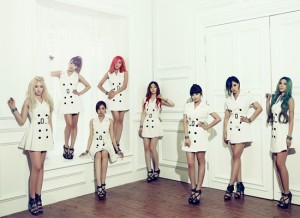
The K-pop industry, a major driver of South Korea’s "Hallyu" (Korean Wave) and a significant contributor to the national economy, also monitored the situation closely. Management agencies for groups like Girls’ Generation and f(x) initially expressed private concerns about how the law might affect televised performances, which are already subject to strict regulations by the Korea Communications Standards Commission (KCSC). However, as it became clear that the law would not be enforced against performers, the industry returned to its standard operations.
Broader Impact and Journalistic Integrity
The 2013 overexposure law controversy serves as a significant case study in the power of social media and the challenges of international journalism in the digital age. The rapid spread of the "miniskirt ban" myth demonstrated how cultural nuances can be lost when stories are translated and repackaged for a global audience.

For Western media, the story provided a "clickbait" opportunity by juxtaposing South Korea’s hyper-modern K-pop culture with what appeared to be repressive, old-world legislation. This led to a distorted perception of South Korean society, reinforcing stereotypes of Asian "backwardness" or "repressiveness" that did not align with the reality of the legal changes.
Furthermore, the incident highlighted the influential role of celebrities in political discourse. Lee Hyori’s tweet, while likely intended as a lighthearted comment, acted as a catalyst for a global narrative. This underscores the responsibility of high-profile individuals when commenting on legal and political matters, as their reach often exceeds that of official government communications.
Conclusion: A Maturing Democracy
Ultimately, the 2013 overexposure law did not result in a crackdown on fashion or the end of the miniskirt in South Korea. The streets of Seoul remain a vibrant hub of contemporary fashion, and K-pop continues to push the boundaries of visual aesthetics. The law remains on the books as a minor administrative tool for police to manage public order in extreme cases of indecency.
The true significance of the event lies in what it revealed about South Korea’s democratic health. The robust public debate, the immediate pushback from the opposition, and the government’s subsequent need to provide detailed clarifications all point to a society that is highly vigilant about its civil liberties. Having transitioned from military dictatorship to a vibrant democracy in the late 1980s, South Korea remains sensitive to any sign of a return to authoritarianism. The "overexposure" controversy was less about the law itself and more about a nation asserting its commitment to the freedoms it fought so hard to obtain.
Related News