K-Pop Star Breaks Down Filming Right After Death Of Her Dad
Article Editorial Team
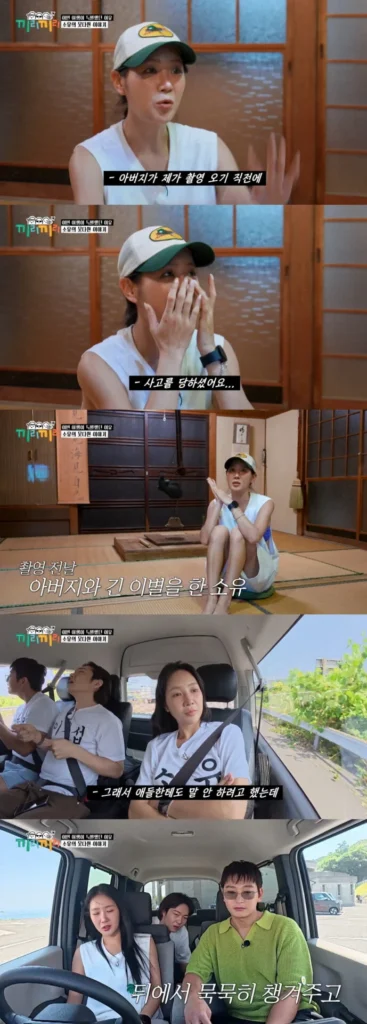
The intricate world of the South Korean entertainment industry is often characterized by its relentless pace and the unwavering professionalism required of its stars. This reality was poignantly illustrated in a recent broadcast of the KBS Joy variety program, Kkiri Kkiri, where Soyou, a prominent soloist and former member of the legendary girl group SISTAR, revealed the immense personal tragedy she was navigating while filming on location in Japan. During the episode aired on September 9th, Soyou shared that her father had passed away just one day before she was scheduled to depart for the shoot, a revelation that has sparked widespread discussions regarding the emotional labor and resilience of K-pop idols.
The episode featured Soyou alongside fellow industry veterans Changsub of BTOB and Jinwoon of 2AM. The trio had traveled to Shodoshima Island, a picturesque location in Japan’s Kagawa Prefecture known for its olive groves and scenic vistas. While the program’s premise typically revolves around lighthearted travel and camaraderie, the atmosphere shifted when Soyou opened up to the production team and her colleagues about the private turmoil she had been concealing.
The Disclosure on Shodoshima Island
The revelation occurred during a quiet moment of filming when the emotional weight of her circumstances became too heavy to bear in isolation. Soyou admitted to the production crew that she had not initially informed her co-stars about her father’s passing. "Actually, I didn’t tell them either," she confessed, referring to Changsub and Jinwoon. "My father had an accident just before the filming started. I saw him off the day before coming here."
The timeline provided by Soyou indicates a remarkably narrow window between her personal loss and her professional obligations. According to industry reports, Soyou’s father passed away on July 25th. The filming for Kkiri Kkiri took place shortly thereafter, meaning the singer was in the earliest stages of acute grief while being filmed for a national television program designed to entertain.

Soyou explained that her decision to proceed with the filming was heavily influenced by her mother’s perspective. In a culture where professional commitment and the "show must go on" mentality are deeply ingrained, her mother provided the necessary push to honor her father’s memory through her work. "My mother told me that work is still work, so I should go and do it. She said my dad would have wanted that too," Soyou shared. This sentiment reflects a common theme in the Korean entertainment industry, where personal sacrifices are often framed as a tribute to one’s family and supporters.
Support from Industry Peers
Despite her initial intention to remain stoic and keep her bereavement private, the physical and emotional toll of the situation eventually became apparent to her colleagues. Changsub and Jinwoon, both of whom have spent over a decade in the industry alongside Soyou, noticed a change in her demeanor.
"I was trying not to tell the others, but after the first day of filming, they asked if something had happened, so I told them," Soyou recounted. The reaction from her peers was one of immediate empathy and support. Rather than allowing the mood to remain somber, which might have made the filming process even more difficult for Soyou, Changsub and Jinwoon adjusted their approach to accommodate her emotional needs.
Soyou expressed deep gratitude for their sensitivity. She recalled them telling her, "Don’t force yourself to be upbeat. We’ll take care of everything." By taking on the primary responsibility for the show’s energy and humor, they allowed Soyou the space to simply exist without the pressure of performing her usual "variety persona." Soyou noted that their constant "silly jokes" were a source of much-needed levity. "I laughed a lot. It felt like the time I needed," she said, highlighting the therapeutic power of community and distraction in the wake of a sudden loss.
The Cultural Context of Professionalism in K-Pop
Soyou’s experience is not an isolated incident in the K-pop industry, but it serves as a stark reminder of the rigorous standards of professionalism expected of idols. The industry is known for its grueling schedules, where "comebacks," world tours, and variety show appearances are planned months or even years in advance. For many stars, canceling an appearance due to personal reasons is often viewed as a last resort, as it affects not only the star but also the production staff, advertisers, and fellow performers.

The concept of "professionalism" in South Korea often overlaps with the Confucian value of filial piety and the societal expectation of endurance. In Soyou’s case, her mother’s advice—that her father would have wanted her to fulfill her duties—aligns with the idea that one honors their parents by succeeding and remaining steadfast in their career. However, this often places an immense psychological burden on the individual, who must navigate the stages of grief while under the scrutiny of cameras and the public eye.
Timeline of Events and Public Statements
To understand the full scope of Soyou’s recent months, a look at the chronology of events provides a clearer picture of her resilience:
- July 25th: Soyou’s father passes away following an undisclosed accident.
- Late July: Soyou attends the funeral and takes a brief, private period of mourning.
- Late July/Early August: Filming for Kkiri Kkiri commences in Shodoshima, Japan. Soyou travels to the location and completes the shoot.
- August: Soyou begins to slowly return to her public schedule, maintaining a brave face for fans.
- September 9th: The episode of Kkiri Kkiri airs on KBS Joy, bringing the details of her father’s passing and her filming experience to the public’s attention.
Following the funeral in July, Soyou had shared a brief message on social media to thank those who supported her. "During the toughest time of saying goodbye to my father, I sincerely thank everyone who mourned with me, held my hand, and silently stayed by my side," she wrote. At the time, many fans were unaware that she had transitioned almost immediately from the funeral home to a filming set in a foreign country.
Implications and Industry Analysis
The disclosure of Soyou’s struggle during the Kkiri Kkiri filming has prompted a broader conversation about the mental health and welfare of celebrities. While the support she received from Changsub, Jinwoon, and the production team was exemplary, analysts suggest that the incident highlights the need for more flexible bereavement policies within the entertainment sector.
In recent years, there has been a growing movement within the South Korean entertainment industry to prioritize mental health. Agencies have begun to offer more comprehensive psychological support, and stars are increasingly vocal about their need for breaks. However, the "variety show" format, which relies on high energy and comedic timing, remains one of the most challenging environments for a grieving individual.

Soyou’s ability to complete the filming while processing such a significant loss is a testament to her tenured career. Having debuted with SISTAR in 2010, she has spent 14 years in the limelight, developing a level of grit that is common among "second-generation" K-pop idols. Her transparency in the KBS Joy program is seen by many as an act of vulnerability that humanizes the "idol" figure, reminding the audience that behind the glamorous travel and entertainment are individuals facing universal human tragedies.
Public Reaction and Fan Support
The response from the public has been overwhelmingly supportive. Social media platforms and online forums have been filled with messages of encouragement for Soyou, praising her strength and professionalism. Fans have also lauded Changsub and Jinwoon for their "true friendship," noting that their presence likely prevented the experience from becoming an insurmountable trauma for Soyou.
The episode has also highlighted the specific challenges of Shodoshima Island as a filming location. While beautiful, its remote nature meant that Soyou was physically distanced from her family during a critical time. This geographical isolation often exacerbates the feeling of loneliness in grief, making the support of her colleagues even more vital.
Conclusion
Soyou’s story is a powerful narrative of duty, grief, and the healing power of friendship. By choosing to share her experience on Kkiri Kkiri, she has provided a rare glimpse into the internal life of a K-pop star during their darkest moments. As she continues her solo career and navigates her life without her father, her journey serves as a poignant example of how public figures balance the heavy weight of personal loss with the demands of a career that requires them to always keep smiling. The entertainment industry, while often demanding, also provides a unique platform for connection, as seen in the bond between Soyou and her fellow performers who stepped up to carry the burden when she could not.
Related News