Aespa’s Ningning Faces Significant Backlash Following Controversial Instagram Profile Picture Update.
Article Editorial Team
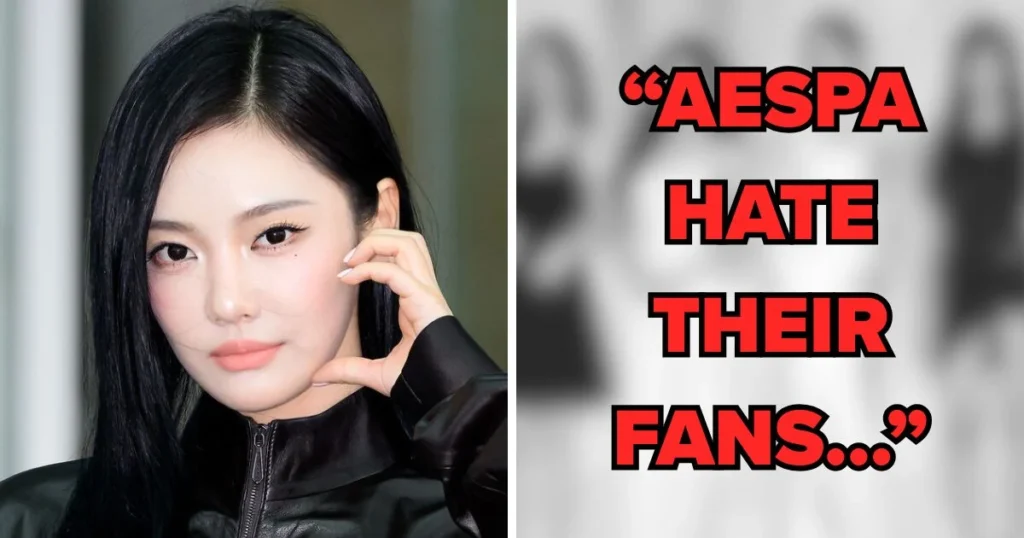
A seemingly minor change to her personal Instagram profile picture has ignited a substantial controversy surrounding Ningning, a prominent member of the popular K-pop girl group aespa. The incident, which unfolded over recent days, has sparked a heated debate among fans and netizens alike, highlighting the intense scrutiny and complex expectations placed upon K-pop idols in the digital age. The profile picture, a stylized and modified version of a generic default icon depicted with an arm raised and an extended middle finger, quickly went viral across social media platforms, drawing both vehement criticism and staunch defense.
The Genesis of the Controversy: A Digital Provocation
The catalyst for the widespread discussion was Ningning’s decision to update her Instagram profile image on September 11, 2026. Replacing her previous picture, the new image featured a simplistic, almost cartoonish avatar, typically seen as a placeholder icon, but notably altered. This modified figure was shown raising one arm, conspicuously displaying a middle finger. The image, uploaded to her official Instagram account, @imnotningning, was perceived by many as an act of defiance or an expression of indifference, instantly polarizing her substantial online following.
The rapid dissemination of the image across various social media platforms, particularly X (formerly Twitter), amplified the initial reactions. Screenshots of Ningning’s updated profile proliferated, with many users expressing shock, dismay, or amusement. The simplicity of the image belied the complexity of the reactions it provoked, quickly becoming a central topic of conversation within K-pop fan communities globally.
Immediate Fan and Netizen Reactions: A Divided Digital Space
The immediate aftermath of the profile picture change saw a sharp division in public opinion. One segment of netizens and fans reacted with strong condemnation, interpreting the gesture as disrespectful, immature, and unprofessional. Critics argued that as a public figure and a member of a globally recognized K-pop group, Ningning has a responsibility to maintain a certain image, and that such an explicit gesture was unbecoming of an idol.
Tweets reflecting this sentiment quickly emerged. For instance, user @__kim_swan expressed a harsh view, stating, "With aespa, it really feels like everyone except Karina genuinely hates the fans from the bottom of their hearts, and it’s rough to watch." This comment suggests a perceived disconnect or even hostility from the group members towards their fanbase, MYs, which the profile picture was interpreted to confirm. Another user, @sux3c8, questioned the group’s maturity, remarking, "Isn’t aespa’s mental age way too low? Everyone except Karina has the values of a middle schooler." This highlights the expectation for idols to project a mature and exemplary persona. The criticism further escalated, with some users like @idol13093388 attributing the alleged lack of decorum to a presumed deficit in proper upbringing or education, sarcastically commenting, "The end result of being locked up in SM’s basement practice room and never receiving a proper education." These reactions underscore the high moral and behavioral standards that a segment of the K-pop audience imposes on idols.
Conversely, a significant portion of fans rallied in support of Ningning, viewing the profile picture change as a harmless, humorous, or even empowering act of self-expression. These supporters interpreted the gesture as an "IDGAF" (I Don’t Give A F***) moment, a lighthearted jab, or a display of personality that should not be taken seriously. They argued against the excessive scrutiny and rigid expectations placed on idols, advocating for their right to express themselves authentically, even if unconventionally.
Tweets from this camp celebrated Ningning’s perceived boldness. User @aespapic enthusiastically shared, "NINGNING’S NEW PROFILE PICTURE ON INSTAGRAM 😂😂😂," signaling amusement rather than offense. Similarly, @chaenglovesus tweeted, "love how ningselle dgaf 😂😂😂," praising Ningning’s (and Giselle’s, another aespa member often seen as outspoken) carefree attitude. User @icurina playfully remarked, "when I’m at the idgaf competition and ningning walks in," further cementing the narrative of Ningning as someone who defies expectations with a nonchalant attitude. This dichotomy of reactions illustrates the ongoing tension between traditional K-pop idol imaging and the desire for more authentic, relatable personalities in an increasingly digital world.
Background of K-Pop Idols and Social Media Scrutiny
The incident involving Ningning is not isolated but rather fits into a broader pattern of intense scrutiny faced by K-pop idols, particularly concerning their social media activities. K-pop idols, from the moment they debut, operate under a unique set of unwritten rules and expectations. They are often expected to maintain an immaculate public image, embodying ideals of perfection, politeness, and dedication to their craft and fans. This expectation extends to their online presence, where every post, like, and profile update can be meticulously analyzed and dissected by millions.
Social media platforms, while offering a direct channel for idols to connect with their fans, also serve as double-edged swords. They enable idols to share glimpses into their lives and personalities, fostering a deeper bond with their audience. However, they simultaneously expose idols to constant surveillance, making them vulnerable to misinterpretation, moral policing, and rapid public backlash over seemingly minor actions. The K-pop industry, historically rooted in strict control over artist imaging, often prefers a curated online presence, leaving little room for spontaneous or unconventional expressions that might deviate from the established "idol persona."
Previous instances of idols facing controversy over social media posts range from perceived disrespect, insensitive comments, political statements, or even subtle changes in aesthetic that are deemed inappropriate by segments of their fanbase. This constant pressure creates an environment where idols must navigate their digital lives with extreme caution, often leading to a carefully constructed public facade rather than genuine self-expression.
aespa and Ningning: A Profile in the K-Pop Landscape
aespa, formed by SM Entertainment in 2020, quickly rose to prominence with its unique "metaverse" concept, blending real-world members with virtual avatars. The group, consisting of Karina, Giselle, Winter, and Ningning, has garnered a significant global following, known as "MYs," for their innovative sound and captivating visuals. As a leading fourth-generation K-pop group, aespa operates at the forefront of a rapidly evolving industry, where fan engagement and digital presence are paramount.
Ningning, born Ning Yizhuo, is the group’s youngest member (maknae) and one of its main vocalists. Hailing from China, she contributes to aespa’s international appeal and linguistic diversity. Her public image, like that of her bandmates, has generally aligned with the polished, charismatic, and talented persona expected of SM Entertainment artists. This makes her recent profile picture change particularly noteworthy, as it deviates from the typically restrained and professional image cultivated by idols, especially those from major agencies.
The Role of Fan Culture (MYs)
The K-pop fan culture, particularly that of dedicated fandoms like aespa’s MYs, plays a critical role in shaping idols’ careers and public narratives. Fandoms are often deeply invested, both emotionally and financially, in their idols. This investment fosters a strong sense of ownership and protectiveness, but it can also lead to heightened expectations and a tendency to scrutinize idols’ every move. The bond between idols and their fans is often portrayed as a reciprocal relationship, where idols provide entertainment and inspiration, and fans offer unwavering support and loyalty.
When an idol’s actions are perceived to violate this implicit contract or show disrespect towards the fanbase, the reaction can be severe. The middle finger gesture, universally understood as a sign of contempt or defiance, was interpreted by some MYs as a direct message of negativity towards them. This perception of betrayal or indifference can deeply wound fans who feel personally invested in the idol’s success and well-being, leading to strong emotional reactions and public backlash. The sentiment expressed by @__kim_swan about members "genuinely hating the fans" perfectly encapsulates this feeling of perceived disregard.
SM Entertainment’s Stance: Inferred Corporate Response
As of the immediate aftermath of the incident, SM Entertainment, aespa’s agency, has maintained official silence. This is a common practice for major K-pop agencies when faced with minor social media controversies. Historically, agencies tend to adopt one of several approaches: swift removal of the offending content, a public apology from the artist or agency, or, most frequently, simply allowing the controversy to fade naturally without official comment, often coupled with internal discussions or directives to the artist.
Given the nature of the gesture and the immediate division it caused, it is highly probable that internal discussions took place within SM Entertainment regarding the matter. The company’s priority would likely be to manage any potential damage to Ningning’s individual image and aespa’s collective brand. While no public statement has been issued, it is plausible that Ningning may have received guidance on her social media conduct. The lack of an official statement also allows the situation to be interpreted in multiple ways, rather than solidifying a single narrative that could further inflame either side of the debate.
Broader Implications: Idol Autonomy vs. Industry Expectations
Ningning’s profile picture incident serves as a microcosm of the ongoing tension within the K-pop industry regarding idol autonomy versus stringent industry expectations. The K-pop system is built on creating meticulously crafted images, where idols are often expected to embody specific archetypes – the innocent, the charismatic, the cool, the approachable – with little room for deviation. This model, while successful in creating global stars, frequently clashes with the increasing desire for authenticity and personal expression, especially among younger generations of artists and fans.
The incident raises critical questions: To what extent should idols be allowed to express their individuality, even if it challenges conventional notions of professionalism or politeness? How do agencies balance creative freedom with brand protection and public perception? And where do fans draw the line between supportive engagement and demanding control over an idol’s personal choices?
The "IDGAF" interpretation by some fans highlights a growing sentiment that idols should be allowed to be more human, imperfect, and even rebellious. This perspective challenges the traditional, almost sacrosanct, image of the K-pop idol. However, the strong negative reactions demonstrate that a significant portion of the audience still adheres to and expects the traditional, polished idol persona. This ongoing tug-of-war defines much of the contemporary K-pop landscape.
The Evolving Digital Landscape for Idols
The digital landscape continues to evolve, making the boundaries between an idol’s public and private life increasingly blurred. With multiple social media platforms, fan community apps, and direct messaging services, idols are constantly connected to their audience. While this fosters unparalleled fan engagement, it also means that every action, no matter how small or seemingly insignificant, can be magnified and scrutinized.
For idols like Ningning, navigating this complex digital environment is a constant challenge. What might be considered a harmless joke or an expression of individuality among peers can be misconstrued or weaponized in the public sphere. The incident underscores the need for both idols and agencies to carefully consider the implications of online actions, and for fans to critically assess their expectations and reactions. The global reach of K-pop means that cultural nuances and different interpretations of gestures also come into play, adding another layer of complexity to these digital interactions.
Conclusion
Ningning’s controversial Instagram profile picture change has undeniably sparked a significant debate, exposing the fault lines within K-pop fan culture and the broader industry. While some view it as an unprofessional misstep warranting criticism, others see it as a benign act of self-expression in a highly controlled environment. The incident serves as a potent reminder of the immense pressure and scrutiny K-pop idols face in the digital age, where a single image can ignite a global conversation. As the K-pop industry continues to expand its global footprint, the ongoing dialogue surrounding idol autonomy, fan expectations, and digital conduct will remain a crucial aspect of its evolution. The lack of an official statement from SM Entertainment means the immediate impact will likely be managed internally, but the broader discussion it has fueled will undoubtedly continue to shape how idols interact with their public platforms.
Related News