Former AOA Member Kwon Mina Vows Legal Action Against Allegations of Fraud and Intimidation Following Dispute Over Acting Lessons
Article Editorial Team
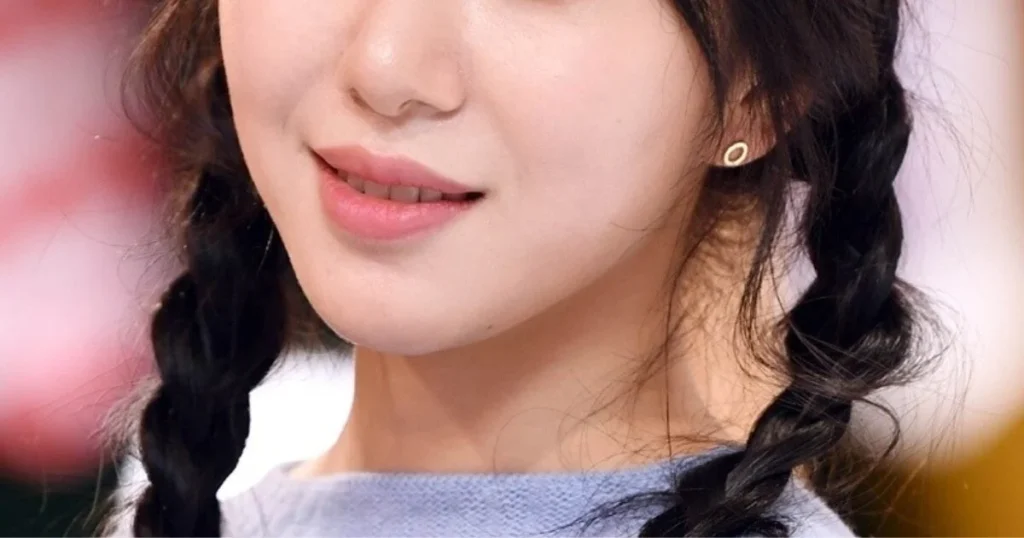
The South Korean entertainment industry has once again been drawn into a public dispute involving former AOA member and actress Kwon Mina. On September 14, 2026, Kwon addressed a series of serious allegations circulating on social media, specifically on the platform Threads, where an anonymous individual—hereafter referred to as "A"—accused the former idol of fraudulent behavior and intimidation. In a detailed statement released via her official Instagram account, Kwon denied the claims in their entirety, providing a counter-narrative of the events and signaling her intent to pursue legal remedies for defamation and false accusation.
The controversy marks the latest in a series of public challenges for Kwon, who has frequently made headlines since her departure from the K-pop girl group AOA in 2019. This specific conflict appears to have originated from a private arrangement regarding acting lessons, a career path Kwon has focused on following her transition from music to television and film.
The Origins of the Dispute: A Chronology of Events
According to Kwon’s statement, the relationship between her and "A" began when "A" contacted her under the guise of being a longtime admirer of her work. "A" reportedly expressed a strong desire to receive professional acting coaching from Kwon, citing her experience in the industry as a valuable resource. Kwon, who has appeared in several dramas such as "Hospital Ship" and "All About My Mom," agreed to the request.
The initial phase of the arrangement appeared productive. Kwon confirmed that she provided "A" with a professional acting lesson on at least one occasion. Following this session, "A" expressed interest in continuing the curriculum. However, Kwon alleges that the professional relationship quickly deteriorated due to what she described as consistent scheduling conflicts and a lack of commitment from the student.
As the weeks progressed, appointments were reportedly missed or rescheduled at the last minute. Kwon noted that while she attempted to accommodate "A’s" preferred timing, the frequent cancellations began to interfere with her own professional and personal obligations. "I have my own schedule too," Kwon remarked in her social media post, "but our appointments kept falling through and I couldn’t see any enthusiasm from them."
The tension peaked when a planned lesson failed to materialize after Kwon had already secured and paid for a rehearsal space. Despite the financial loss incurred by the room rental, Kwon stated that she opted to provide "A" with a full refund for the session to avoid further conflict. However, the refund did not resolve the matter. According to Kwon, "A" continued to demand additional lessons, arguing that Kwon was partially responsible for the missed sessions. Kwon ultimately refused to continue the mentorship, citing the ongoing logistical difficulties.
Allegations of Intimidation and Fraud
The dispute transitioned from a private disagreement to a public scandal when "A" allegedly took to Threads to post accusations against the actress. While the specific wording of the original posts has been subject to scrutiny, the core of the allegations suggested that Kwon had scammed "A" and used threatening language during their interactions.
Kwon’s rebuttal was swift. She claimed that she only became aware of the posts after receiving reports from fans and acquaintances. In her defense, she argued that the narrative presented by "A" was a distortion of the facts. She specifically countered the "scam" allegation by pointing to the refund she had already issued. Furthermore, she alleged that it was actually "A" who had engaged in intimidating behavior.
According to Kwon’s account, "A" made several remarks that she found distressing, including threats to poll friends about the situation and a suggestion that "A" would bring family members to meet Kwon in person. Feeling uncomfortable and threatened by these developments, Kwon chose to block the individual on all communication platforms.
"I only calculated things according to the schedule they wanted, and I tried to accommodate when they were available for lessons," Kwon explained. "But if the agreed time keeps getting pushed back, I can’t live my life solely around that person."
Legal Framework and Potential Consequences
The situation has now reached a point where legal intervention seems imminent. Kwon has explicitly challenged "A" to pursue the matter through the court system if they believe their claims are valid, while simultaneously preparing her own legal offensive.
"If you want to sue me, then do it," Kwon stated. "But I’ll file a complaint against you for false accusation. Defamation too."
In South Korea, the legal standards for defamation and false accusation (mugoh-joe) are stringent. Under Article 307 of the Criminal Act, a person who defames another by publicly alleging facts may be subject to imprisonment or heavy fines. If the alleged facts are proven to be false, the penalties are significantly more severe. By claiming to have preserved the entirety of her KakaoTalk conversations with "A," Kwon is positioning herself to provide digital evidence that could prove pivotal in a courtroom.
Legal experts note that in disputes involving celebrities and private citizens, digital records—such as chat logs, bank transfer receipts, and timestamped messages—often serve as the primary evidence. If Kwon can demonstrate that a full refund was issued and that the scheduling conflicts were primarily the fault of the student, the fraud allegations are unlikely to hold up under legal scrutiny.
Broader Context: The Challenges of Independent Freelancing for Idols
This incident highlights a growing trend within the Korean entertainment industry: former idols pursuing independent ventures such as private tutoring, YouTube content creation, or small-scale brand endorsements. While these paths offer a way to maintain a livelihood outside the traditional agency system, they also expose public figures to unique risks.
Unlike major agencies, which provide a buffer of legal teams and public relations managers to handle disputes, independent artists often have to manage these conflicts themselves. The lack of a formal contract or a third-party mediator in the "acting lesson" arrangement between Kwon and "A" likely contributed to the escalation of the misunderstanding.
Furthermore, the "fan-to-mentor" dynamic introduces a parasocial element that can complicate professional boundaries. Kwon’s experience suggests that what began as a gesture of goodwill toward a fan transformed into a liability when professional expectations were not met.

Historical Precedent and Public Perception
Kwon Mina’s public image has been a subject of intense debate in South Korea for several years. Since 2020, she has been at the center of several high-profile controversies, most notably her allegations of long-term bullying by a former AOA group mate. These events have resulted in a polarized public perception; while many fans offer her unwavering support, others remain critical of her frequent involvement in social media-driven disputes.
This history adds a layer of complexity to the current situation. For Kwon, this legal battle is not just about a refund or a few missed lessons; it is about defending her reputation in a climate where she is often scrutinized. By taking a hardline stance on legal action, she appears to be attempting to move away from the cycle of public social media arguments and toward a more formal resolution of grievances.
Analysis of the Implications
The outcome of this dispute could have several implications for the industry. First, it serves as a cautionary tale for other celebrities considering private mentorship or freelance work. The necessity of formal contracts, even for small-scale arrangements, is becoming increasingly apparent to avoid "he-said, she-said" scenarios.
Second, the role of newer social media platforms like Threads in the "cancel culture" ecosystem is evolving. While Twitter (now X) and Instagram have traditionally been the hubs for celebrity news, the emergence of Threads as a space for long-form accusations suggests that the landscape of public discourse is shifting.
Finally, the potential legal case will test the efficacy of South Korea’s defamation laws in the age of digital screenshots. If Kwon successfully sues for false accusation, it may act as a deterrent against individuals using social media to air private grievances against public figures without substantial proof.
Current Status and Next Steps
As of September 14, 2026, no formal lawsuit has been confirmed as filed by either party, though the rhetoric suggests that the "waiting period" for the original files is nearing its end. Kwon Mina has indicated that she is currently reviewing the original accusations posted by "A" to ensure her legal filing covers all aspects of the alleged defamation.
Fans and industry observers are closely monitoring Kwon’s Instagram for further updates. Meanwhile, the individual "A" has not yet issued a public response to Kwon’s counter-claims. Should the matter proceed to court, it will likely involve a thorough forensic audit of the communication logs and financial transactions between the two parties.
In the interim, Kwon Mina continues to focus on her career as an actress, though the shadow of this dispute remains a significant hurdle. The situation underscores the fragile nature of celebrity-fan interactions and the high stakes involved when professional boundaries are blurred in the digital age. As the industry awaits the next development, the primary takeaway remains the importance of transparency and documentation in all professional dealings, regardless of the status of the individuals involved.
Related News