The Evolution and Impact of South Korea’s Chaebols From Television Tropes to Global Economic Powerhouses
Article Editorial Team

The figure of the chaebol heir is a staple of South Korean popular culture, often depicted in television dramas as a polished, arrogant, and impeccably dressed young man destined to inherit a multi-billion dollar empire. In these fictional narratives, the "chaebol" (재벌) is characterized by immense wealth, boardroom power struggles, and a lifestyle of luxury that stands in stark contrast to the working-class protagonists they inevitably encounter. However, beyond the stylized tropes of K-dramas like Secret Garden, What Happened in Bali, and Scent of a Woman, the reality of the chaebol is far more complex, serving as both the engine of South Korea’s miraculous economic ascent and a source of deep-seated social and political tension.
A chaebol is a large, family-owned business conglomerate with a diversified portfolio spanning multiple industries. Unlike Western corporations that often focus on core competencies, a single South Korean chaebol may control subsidiaries in electronics, shipbuilding, construction, retail, and life insurance. Household names such as Samsung, Hyundai, LG, and SK Group are not merely companies; they are massive industrial networks that dominate the domestic economy and command significant influence on the global stage. While their success has placed South Korea among the world’s leading economies, their omnipresence has sparked a national debate regarding corporate governance, political corruption, and the future of competition in the Fourth Industrial Revolution.
The Historical Genesis of the Chaebol System
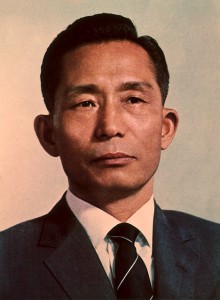
The origins of the chaebol system are inextricably linked to the post-Korean War era and the authoritarian leadership of President Park Chung-hee. Following the 1953 armistice, South Korea was one of the poorest nations on earth, with an infrastructure decimated by conflict and an economy heavily reliant on foreign aid. When Park Chung-hee took power in 1961, he initiated a series of Five-Year Economic Development Plans designed to transform the nation from an agrarian society into an industrial powerhouse.

The government’s strategy was built on "export-oriented industrialization." Rather than relying on a broad base of small businesses, the Park administration hand-picked a small group of loyal entrepreneurs and provided them with unprecedented state support. This support included low-interest loans from state-controlled banks, preferential access to foreign exchange, and protectionist trade policies that shielded domestic firms from international competition. In exchange, these companies were required to meet strict export quotas and align their business goals with the state’s developmental objectives.
Throughout the 1960s and 1970s, this symbiotic relationship between the Blue House (the presidential residence) and business leaders allowed for the rapid expansion of firms like Hyundai, which moved from construction into shipbuilding and automobiles, and Samsung, which transitioned from trade and textiles into electronics. This period, known as the "Miracle on the Han River," saw South Korea achieve double-digit annual growth rates, lifting millions out of poverty and establishing the chaebols as the pillars of national identity and economic security.
Chronology of Consolidation and Crisis
The growth of the chaebols was not without its volatility. The timeline of their evolution reveals a pattern of expansion followed by structural reckoning:
- 1960s–1970s: The Foundation. The government directs capital into "Heavy and Chemical Industrialization" (HCI). Companies like POSCO and Daewoo emerge as strategic assets.
- 1980s: Market Domination. Chaebols begin to diversify into consumer electronics and high-tech sectors. Their domestic market share becomes so large that they effectively stifle smaller competitors.
- 1997: The Asian Financial Crisis. Decades of debt-fueled expansion lead to a collapse. Several major chaebols, most notably Daewoo, go bankrupt. The International Monetary Fund (IMF) mandates structural reforms, forcing conglomerates to improve transparency and reduce debt-to-equity ratios.
- 2000s–Present: Global Expansion. Surviving chaebols like Samsung and LG pivot to high-end technology and global branding, becoming world leaders in semiconductors, smartphones, and electric vehicle batteries.
Quantitative Impact: The Economic Weight of Conglomerates
The sheer scale of the chaebols is difficult to overstate. Data from the Korea Fair Trade Commission and various economic research institutes highlight a staggering concentration of wealth. As of the early 21st century, the top five chaebols—Samsung, Hyundai Motor, SK, LG, and Lotte—accounted for approximately 50% of the total value of the South Korean stock market.

Samsung Group alone has, at various points, represented nearly 20% of South Korea’s total Gross Domestic Product (GDP). This level of concentration is unique among developed nations. While the United States has massive corporations like Apple or Amazon, their combined weight relative to the U.S. GDP does not reach the proportional dominance that the top three chaebols exert over the South Korean economy.
This dominance extends to the daily lives of citizens. A South Korean resident might live in a Samsung-built apartment, drive a Hyundai car, use an LG smartphone serviced by an SK Telecom network, and shop for groceries at a Lotte Mart. This "cradle-to-grave" presence ensures that the health of the chaebols is inextricably linked to the health of the national economy, creating a "too big to fail" scenario that complicates government regulation.
The Intersection of Business and Politics
The proximity between corporate boardrooms and political offices has led to frequent allegations of "crony capitalism." Because the chaebols were essentially created by government decree, a culture of mutual dependency developed. Historically, business leaders provided political contributions (and sometimes illicit bribes) in exchange for favorable legislation, pardons for corporate crimes, or the awarding of massive government contracts.
Several high-profile incidents have underscored this tension. For instance, former President Lee Myung-bak was the CEO of Hyundai Engineering and Construction before entering politics, symbolizing the revolving door between industry and the state. Furthermore, the 2016-2017 political scandal that led to the impeachment of President Park Geun-hye (daughter of Park Chung-hee) centered on allegations that she and a confidante pressured chaebol leaders to donate millions of dollars to non-profit foundations in exchange for political favors.

Even when corporate leaders are convicted of white-collar crimes—such as embezzlement or tax evasion—they have historically received presidential pardons. The justification offered by the government is usually that the leaders are "essential to the national economy" and their presence in the boardroom is necessary for maintaining global competitiveness and employment.
Social Implications and Public Sentiment
The public’s perception of the chaebol is deeply polarized. On one hand, there is a sense of national pride in the global success of Samsung and Hyundai. These companies represent South Korea’s transition from a war-torn recipient of aid to a sophisticated donor nation. For many young graduates, securing a "Gold Collar" job at a top-tier chaebol is the ultimate symbol of success, offering high salaries and social prestige.
On the other hand, there is growing resentment over the lack of social mobility and the stifling of small and medium-sized enterprises (SMEs). Critics argue that the chaebols use their massive resources to engage in "predatory" behavior, such as squeezing suppliers or copying the innovations of startups. This has led to the coining of the term "Hell Joseon," a satirical phrase used by the youth to describe a society with rigid hierarchies and limited opportunities for those not born into the elite "gold spoon" class.
Professor Robert Kelly of Pusan National University has noted that the chaebols function as oligopolists that, in a Western market context, would have likely faced antitrust dissolution decades ago. Their ability to internalize profits through "inter-subsidiary trading"—whereby one branch of a conglomerate buys services exclusively from another branch—prevents independent companies from competing on a level playing field.
Analysis: The Future of the Chaebol Model
As South Korea looks toward the future, the sustainability of the chaebol model is under scrutiny. The global economy is shifting toward agile, software-driven innovation, a sharp contrast to the capital-intensive, hardware-focused industrial model that the chaebols mastered in the 20th century.
There are three primary challenges facing the conglomerates:
- Succession Risks: Most chaebols are entering their third or fourth generation of family leadership. Maintaining the entrepreneurial drive of the founders while navigating complex inheritance taxes and public scrutiny of "dynastic" wealth is becoming increasingly difficult.
- Economic Democratization: There is a growing political movement toward "economic democratization," which seeks to curb the power of the conglomerates and provide more support to SMEs. Legislation aimed at improving corporate transparency and protecting minority shareholders is slowly gaining traction.
- The Innovation Dilemma: While chaebols excel at "fast-follower" strategies—improving upon existing technologies and scaling production—the rigid, hierarchical corporate culture often associated with these firms can stifle the creative disruption necessary for the digital age.
The story of the chaebol is the story of South Korea itself: a narrative of rapid growth, immense resilience, and the complicated legacy of state-led development. While the "poor little rich boy" of K-dramas may continue to capture the imaginations of international audiences, the real-world titans of Korean industry face a much more daunting task: evolving their empires to survive in a world that no longer guarantees the protections of the past. Whether these massive conglomerates can adapt to a more transparent and competitive era will determine South Korea’s economic trajectory for the next century.
Related News