South Korea Overexposure Law Sparks Controversy Amid Historical Sensitivities and Media Misinterpretation
Article Editorial Team

The implementation of a revised Minor Offenses Act in South Korea, specifically a clause addressing public overexposure, has ignited a significant national and international debate regarding civil liberties, cultural expression, and the lingering shadows of the country’s authoritarian past. Effective as of late March 2013, the law was introduced during the early weeks of President Park Geun-hye’s administration. While the South Korean government maintains that the legislation is a standardized update to public decency regulations, the move has faced intense scrutiny from opposition politicians, cultural icons, and global media outlets, many of whom interpreted the measure as a regressive step toward the state-mandated dress codes of the 1970s.
Legal Framework and Government Intent
The specific provision at the heart of the controversy is an amendment to the Minor Offenses Act, which prescribes a fine of 50,000 South Korean Won (approximately $45 to $48 USD) for individuals found guilty of "overexposure" in public spaces. According to the National Police Agency, the legal definition of the offense pertains to behavior that "causes discomfort or embarrassment to others by excessively exposing parts of the body that should remain covered or by acting in a way that suggests public indecency."
The South Korean government has repeatedly clarified that the law is not a moral crusade against fashion but a practical legal update. Government spokespeople emphasized that the primary targets of the fine are acts of public nudity, "streaking," or indecent exposure that disrupts public order. They noted that similar laws exist in almost every modern democracy, including the United States and various European nations, where public indecency is classified as a punishable offense to protect the general public from non-consensual exposure to lewd behavior. Furthermore, the 2013 revision actually represented a technical shift; rather than creating a new crime, it moved the offense into a category that allowed for immediate fines rather than more complex summary trials, aiming for administrative efficiency.

Historical Context: The Shadow of the Yushin Era
To understand the intensity of the public backlash, one must look toward South Korea’s complex political history, specifically the reign of President Park Chung-hee, the father of the 2013 incumbent President Park Geun-hye. During the 1970s, under the Yushin Constitution, the elder Park’s military government enforced strict social regulations as part of a broader "National Reconstruction" effort.
During this era, police officers were famously equipped with bamboo rulers to measure the length of women’s miniskirts. If a skirt was more than 20 centimeters above the knee, the wearer could be detained or fined. Similarly, men were subject to hair length regulations; those with hair deemed too long were often subjected to forced haircuts on the spot by patrolling officers. These measures were symbols of a repressive regime that sought to control not only the political landscape but also the personal identities and cultural expressions of its citizens.
Because President Park Geun-hye was the daughter of the former dictator, her every policy move was viewed through the lens of her father’s legacy. The introduction of an "overexposure" law so early in her term provided political ammunition for critics who feared a return to "Yushin-style" governance. The phrase "like father, like daughter" became a common refrain among opposition groups, suggesting that the new law was a subtle precursor to a broader crackdown on personal freedoms.
Chronology of the 2013 Implementation
The path to the law’s enactment followed a standard but politically charged legislative timeline:
- January – February 2013: During the presidential transition period, revisions to the Minor Offenses Act were discussed as part of an effort to streamline the judicial process for petty crimes.
- March 11, 2013: The Cabinet, presided over by newly inaugurated President Park Geun-hye, officially approved the amendment to the Minor Offenses Act.
- March 12 – March 20, 2013: News of the "overexposure" clause began to circulate on Korean social media platforms. High-profile celebrities and opposition politicians began to voice their concerns, leading to a viral spread of the "miniskirt ban" narrative.
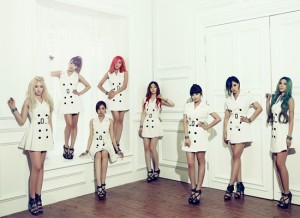
- March 22, 2013: The National Police Agency issued a formal statement clarifying that the law did not target miniskirts or K-pop stage outfits but was focused on public nudity and "lewd acts."
- March 23, 2013: International media outlets, including the UK’s Daily Mail and CNN, published reports suggesting South Korea was banning miniskirts, further fueling the global controversy.
- Late March 2013: The law officially went into effect, accompanied by continued protests and a surge in satirical commentary from the South Korean public.
The Role of Celebrity Influence and Social Media
The controversy was significantly amplified by South Korea’s hyper-connected digital landscape. In a country where pop culture icons hold immense social capital, a single tweet can shift the national discourse. Lee Hyori, a prominent K-pop soloist known for her bold fashion and advocacy, was among the first to react. She tweeted, "Is the overexposure fine for real? I’m so dead," a comment that was immediately interpreted by her millions of followers as a confirmation that the government was targeting the fashion industry.
Opposition politicians also leveraged social media to challenge the administration. Members of the Democratic United Party (now the Democratic Party of Korea) argued that the law’s language was "dangerously vague." They posited that "excessive exposure" was a subjective term, leaving too much discretionary power in the hands of individual police officers. This, they argued, could lead to selective enforcement and the targeting of individuals based on their political or social affiliations, mirroring the tactics of the 1970s.
International Media and the "Miniskirt Ban" Myth
The story underwent a dramatic transformation as it moved from domestic Korean news to international headlines. Major Western outlets frequently framed the story with sensationalist headlines such as "South Korea Bans Miniskirts" or "K-Pop’s Wardrobe Under Fire." These reports often conflated the legal fine for public indecency with a moralistic crackdown on the "hallyu" (Korean Wave) industry.
The misinterpretation was rooted in a lack of nuance regarding the legal text. By focusing on the historical irony of the Park family connection, international journalists prioritized a "clickbait" narrative over a factual analysis of the legislation. This led to a global perception of South Korea as a regressive society, a characterization that many South Korean citizens found offensive and inaccurate. While domestic critics were concerned about the potential for abuse of the law, they were well aware that miniskirts remained a staple of daily life in Seoul, which is home to some of the world’s most progressive fashion trends.
Broader Societal Impact and Implications
The "overexposure" controversy highlights a fundamental tension in South Korean society: the struggle between traditional Confucian values and the rapid liberalization of a modern, globalized democracy. While the country is a world leader in technology and pop culture, it remains socially conservative in many respects, particularly among the older "ajosshi" (middle-aged men) generation and the political elite.
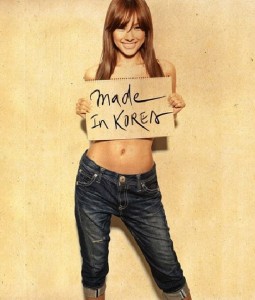
However, the reality of enforcement in the years following 2013 has largely vindicated the government’s claim that the law was an administrative update rather than a social purge. There have been no recorded instances of police officers measuring skirt lengths on the streets of Gangnam or Hongdae. The K-pop industry has continued to push boundaries with increasingly daring stage costumes, and the "no-pants" or "short-short" fashion trends have remained popular without state interference.
The lasting impact of the 2013 overexposure law is not found in a change in fashion, but in the precedent it set for public discourse. It demonstrated the power of historical memory in South Korean politics; any policy that even remotely echoes the authoritarian past is met with immediate and fierce resistance. It also served as a case study in the dangers of "echo-chamber" journalism, where a misunderstood local law can be transformed into a global scandal through the viral nature of social media.
Ultimately, the overexposure law remains on the books as a minor regulation for public order. For the South Korean public, the event served as a reminder of the importance of vigilance regarding civil liberties, while for the rest of the world, it provided a lesson in the complexities of South Korean domestic politics—a landscape where the ghosts of the past are never far from the legislation of the present.
Related News