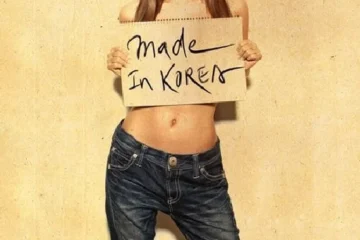
The Evolution of the Dwenjang-nyeo: Understanding South Korea’s Intersection of Consumerism Gender and Social Class
Article Editorial Team

The term dwenjang-nyeo, or "bean paste girl," emerged in the early 2000s as a potent symbol of social friction in South Korea, eventually gaining international recognition through the satirical undertones of Psy’s 2012 viral hit, Gangnam Style. While the song was celebrated globally for its infectious beat and horse-riding dance, local audiences recognized a pointed critique of a specific demographic: women perceived as sacrificing basic necessities to project an image of wealth and Western-aligned sophistication. This linguistic construct, rooted in the contrast between traditional Korean staples and modern luxury consumption, provides a window into the complex socioeconomic shifts that have defined South Korean society since the late 20th century.
The Etymology of Bean Paste and the Coffee House Contrast
To understand the weight of the term, one must first understand its namesake. Dwenjang, or fermented soybean paste, is a cornerstone of Korean cuisine. It is the primary ingredient in dwenjang-jjigae, a humble, pungent, and highly affordable stew that has sustained Korean families for generations. Historically, dwenjang-jjigae represents the domestic sphere, frugality, and the "authentic" Korean palate. It is the meal of the everyman, typically costing a fraction of a meal at a Western-style franchise.
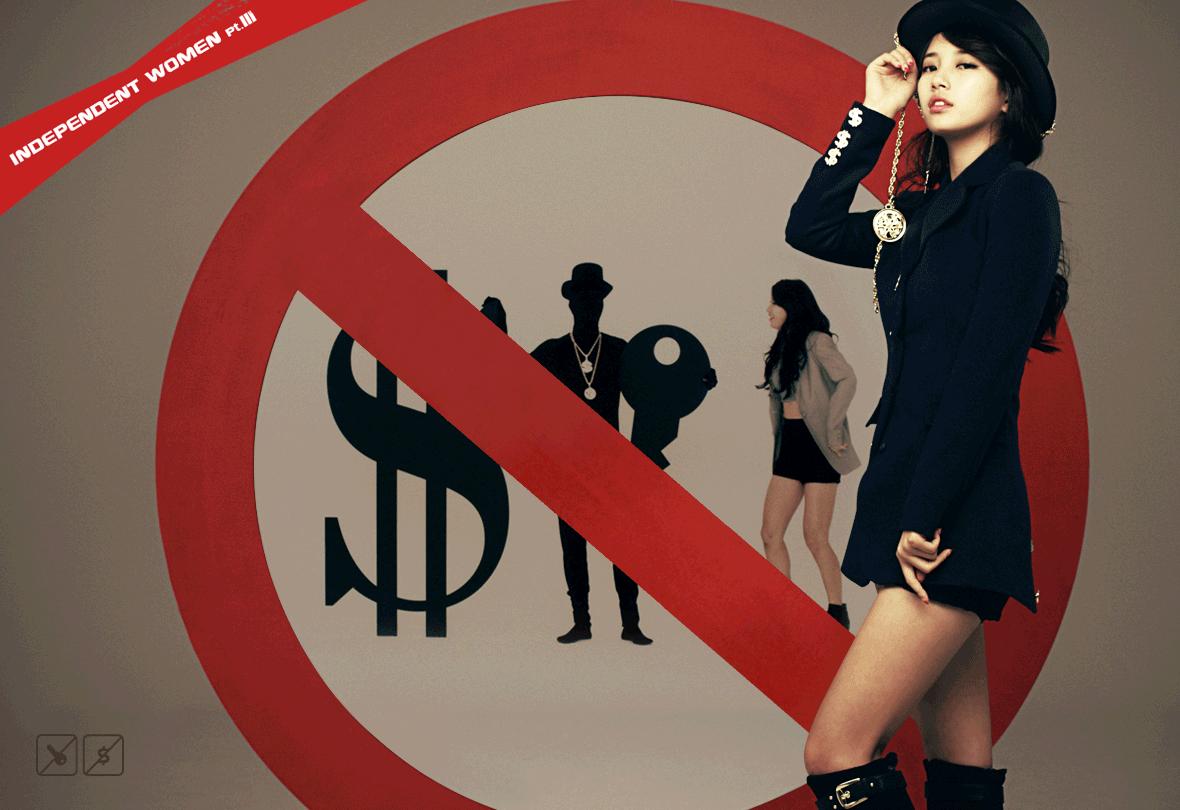
The "bean paste girl" moniker is derived from a specific behavioral paradox: a woman who eats a 4,000 KRW (approximately $3.00) bowl of dwenjang-jjigae for lunch specifically so she can afford a 6,000 KRW (approximately $4.50) specialty latte at a high-end coffee chain like Starbucks. In this context, the coffee is not merely a beverage but a "positional good"—an item whose value is derived largely from its status-signaling capabilities. By carrying a branded cup and wearing designer accessories, the dwenjang-nyeo is accused of "conspicuous consumption," a term coined by sociologist Thorstein Veblen to describe the spending of money on luxury goods to display economic power.
A Chronology of Consumption: From Frugality to "Kwasobi"
The vitriol directed toward the dwenjang-nyeo cannot be understood without examining South Korea’s rapid economic trajectory, often referred to as the "Miracle on the Han River." Following the devastation of the Korean War (1950–1953), South Korea was one of the poorest nations in the world, significantly lagging behind North Korea in industrial output and per-capita GDP.
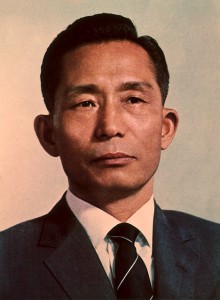
Under the authoritarian leadership of President Park Chung-hee in the 1960s and 1970s, the state enforced a culture of extreme frugality. The government launched national campaigns against kwasobi (excessive spending), framing luxury consumption as unpatriotic and a threat to national development. During this era, the "ideal" Korean citizen was one who saved every won to fuel the nation’s heavy industries.
However, the 1990s brought a pivotal shift. As South Korea joined the OECD and hosted the 1988 Olympics, the nation transitioned into a consumer-driven economy. The 1997 Asian Financial Crisis (the "IMF Crisis") briefly reinstated a sense of national austerity, but the subsequent recovery led to a boom in credit card usage and the proliferation of luxury department stores. By the early 2000s, the children of the "frugal generation" found themselves in a society that increasingly equated personal worth with brand-name ownership. The dwenjang-nyeo emerged at this exact junction—the collision of old-world frugality and new-world materialism.
Socioeconomic Data and the Luxury Market
South Korea’s relationship with luxury goods is supported by significant economic data. According to a 2022 report by Morgan Stanley, South Koreans are the world’s biggest spenders on personal luxury goods per capita, spending an average of $325 per year—far exceeding the $280 spent by Americans and the $55 spent by Chinese consumers.
For the dwenjang-nyeo, these purchases are often defensive. In a hyper-competitive society where social standing influences career prospects and marriage potential, luxury items serve as "social armor." Analysts suggest that for those who cannot afford the ultimate status symbols—such as real estate in the expensive Gangnam district—smaller luxury items like a Chanel lipstick or a Louis Vuitton handbag become "affordable luxuries" that bridge the gap between their reality and their aspirations.
The Gendered Lens: Why No "Bean Paste Boy"?
A significant point of contention in the dwenjang-nyeo discourse is its inherently gendered nature. While the term for women became a household name, the equivalent for men—dwenjang-nam—failed to gain similar traction in the public consciousness. This disparity highlights deep-seated gender inequalities in South Korean society, which consistently ranks near the bottom of the OECD’s Gender Wage Gap index.
Critics argue that the vilification of "bean paste girls" is a form of misogyny. Men in South Korea also engage in conspicuous consumption, often spending significantly higher sums on imported cars, electronics, and expensive alcohol (hoesik culture). However, these expenditures are often framed as professional necessities or "hobbies," whereas women’s spending on coffee and fashion is dismissed as vanity.
Sociologists point out that the visibility of the dwenjang-nyeo is what made her a target. Women congregate in highly visible public spaces—cafes and shopping malls—making their consumption patterns easy to observe and criticize. Furthermore, the term often implies that these women are "mooching" off their parents or boyfriends to fund their lifestyles, a stereotype that ignores the rising number of independent, working women in the Korean economy.

Cultural Reactions and Evolutionary Terms
The reaction to the dwenjang-nyeo phenomenon has evolved over the decades. In the mid-2000s, the term was used as a weapon in "gender wars" on internet forums like DC Inside. However, by the 2010s, a counter-narrative began to emerge. Some women reclaimed the term, arguing that if they earned their own money, they had the right to spend it however they saw fit without societal judgment.
In recent years, the discourse has shifted toward new slang terms that reflect changing economic realities:
- YOLO (You Only Live Once): A trend that peaked around 2017, encouraging young Koreans to spend on experiences and luxury rather than saving for a future that feels unattainable due to skyrocketing housing prices.
- Flex Culture: Borrowed from Western hip-hop, "flexing" refers to the unabashed display of wealth. Unlike the secretive or shamed consumption of the dwenjang-nyeo era, "flexing" is celebrated on platforms like Instagram and YouTube.
- Shibal Biyong (Stress Spending): A term used to describe money spent on small luxuries to cope with the stress of work or life, acknowledging that these purchases are a mental health coping mechanism rather than a delusion of grandeur.
Broader Implications and Societal Impact
The legacy of the dwenjang-nyeo continues to influence how South Koreans view class and identity. The phenomenon exposed a "compressed modernity" where traditional values and globalized consumerism exist in a state of constant tension. It also highlighted the "empty-shell" nature of social status; when anyone can buy a designer bag on a payment plan, the bag loses its ability to truly distinguish the elite from the aspirational.
Furthermore, the satirical success of "Gangnam Style" proved that these local anxieties resonated globally. The song’s depiction of a man trying to be "classy" while acting absurdly mirrored the dwenjang-nyeo’s struggle to project a Westernized ideal within a local context.
As South Korea grapples with one of the lowest birth rates in the world and increasing wealth disparity, the "bean paste girl" remains a historical marker of a society in transition. She represents the moment when the "nation-first" mentality of the post-war era finally gave way to the "individual-first" mentality of the 21st century. While the term itself may be fading into the archives of internet slang, the underlying issues of gendered criticism, the pressure to conform to high-fashion standards, and the search for identity through consumption remain as relevant as ever in the streets of Seoul.
In conclusion, the dwenjang-nyeo is not merely a girl who likes expensive coffee; she is a symptom of a nation that grew too fast, where the hunger for status often outpaces the means to achieve it. Whether viewed as a victim of consumerist propaganda or a pioneer of financial independence, her presence in the cultural lexicon ensures that the debate over what it means to be "successful" in modern Korea will continue for years to come.
Related News