BTS Navigates Legacy Identity and the Future of Global Music in Definitive Apple Music Interview with Zane Lowe
Article Editorial Team
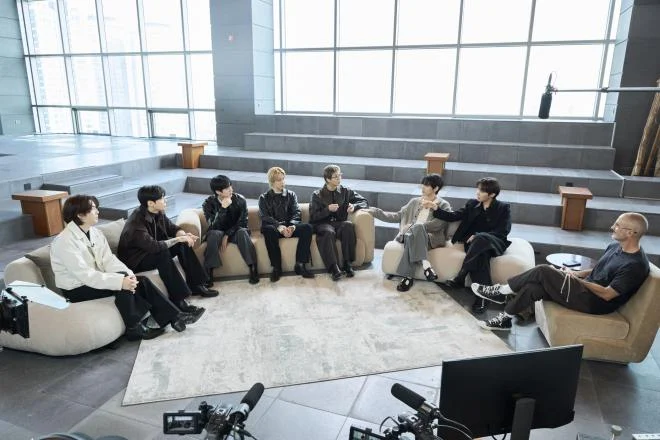
In an expansive and introspective dialogue with Apple Music’s Zane Lowe, the seven members of BTS—RM, Jin, SUGA, j-hope, Jimin, V, and Jung Kook—provided a rare, comprehensive look into the internal mechanics of the world’s most successful musical collective. The interview, which arrives as the group transitions into a new era following the completion of mandatory military service for several members, transcended standard promotional rhetoric. Instead, it served as a philosophical autopsy of their first decade and a strategic blueprint for their future. The discussion moved beyond the accolades of the past to address the complexities of time, the weight of leadership, and the deliberate intention required to maintain a global phenomenon in an industry characterized by rapid obsolescence.
The conversation comes at a pivotal moment for both the group and their agency, HYBE. Since announcing a temporary pause in group activities in June 2022 to fulfill national duties and pursue solo projects, the global music market has watched closely to see how the "BTS effect" would endure. This interview confirms that the hiatus was not a conclusion but a necessary period of gestation. By unpacking the themes of their upcoming work and the personal growth experienced during their time apart, BTS has signaled a shift from being contemporary idols to becoming a permanent fixture in the global cultural canon.
The Philosophy of Longevity: Practice Over Promise
A central theme of the discussion was the concept of "forever," a term often used loosely in the music industry but one that BTS approaches with pragmatic caution. When Lowe questioned the group on their potential for permanence, the responses were notably grounded. Jin, the eldest member, offered an honest assessment of impermanence, noting that while nothing in the physical world is truly eternal, the value of an endeavor is found in the effort to preserve it. For Jin, longevity is not a passive state but an active investment in meaningful moments.
This sentiment was echoed by j-hope, who described the group’s future as an entity shaped by "shared will." He argued that while no one can definitively guarantee the future, the collective agreement to continue is the only foundation upon which a legacy can be built. SUGA further expanded on this by envisioning a future where the members continue to create music into their senior years. Crucially, he framed this not as a contractual obligation but as a personal choice—a transition from "having" to make music to "choosing" to do so. This distinction is vital for a group that has spent much of the last decade under the intense pressure of global expectations.
V summarized the group’s approach as one of consistent effort over grand declarations. The consensus among the seven was clear: "forever" is not a destination they have reached, but a discipline they practice daily. This perspective reflects a maturation of the group’s brand, moving away from the idealism of youth toward a more sustainable, adult-oriented professional philosophy.
The Military Hiatus and the Mechanics of Reunion
The mandatory military service in South Korea has historically been a significant hurdle for male K-pop groups, often leading to a loss of momentum or permanent dissolution. However, for BTS, the period appears to have served as a catalyst for individual refinement. Jung Kook described the reunion of the members as an "instinctive" process rather than a calculated business move. Having spent his entire adult life within the group structure, he noted that returning to the collective felt like returning to a "default state."
The chronology of their service was managed with strategic precision, allowing for a staggered but cohesive return. This period of separation allowed members like Jimin to engage in deep self-reflection. Jimin revealed that his time in the military sharpened his work ethic, particularly as he observed the dedication of younger soldiers. He utilized this time to continue his creative development alongside Jung Kook, ensuring that the period of "pause" was, in reality, a period of quiet progress. This dedication underscores a broader trend within the group: the utilization of external constraints as opportunities for internal growth.
The transition back into group activities has been described by the members as "seamless." There was no reported sense of urgency or artificial pressure to reclaim their spot at the top of the charts; rather, the reunion felt like a natural continuation of a story that had never truly stopped. This organic transition is a testament to the deep-seated interpersonal bonds that RM described as having evolved from a professional partnership into a familial connection.
Leadership and the Evolution of Group Dynamics
As the leader of BTS, RM (Kim Nam-joon) has long occupied a unique position at the intersection of artistic direction and organizational management. In the interview, he spoke candidly about the complexities of leading a group for fifteen years. He noted that communication within the group has reached a stage where words are often unnecessary; a "quiet synergy" has developed through a decade and a half of shared experience.
However, RM did not shy away from the burdens of his role. He admitted that the weight of responsibility can sometimes feel isolating. Balancing his identity as the group’s spokesperson and strategist with his identity as one of seven equal members remains an ongoing process of calibration. His leadership style has shifted from one of active direction to one of authentic presence, reflecting a broader organizational maturity within BTS.

This internal stability is mirrored in the group’s relationship with their agency. RM recalled the early days of Big Hit Entertainment, a then-small company where staff and artists shared multiple roles. The evolution of Big Hit into HYBE—a multi-national corporation—parallels the group’s own trajectory. Despite the massive scale of their current operations, the members emphasized that their grounding remains in the people who supported them from the beginning, including their global fanbase, ARMY.
Creative Expansion and the "ARIRANG" Era
Perhaps the most significant revelation from the interview was the discussion surrounding their new musical direction and the title of their upcoming project, ARIRANG. The name carries profound cultural weight; "Arirang" is a traditional Korean folk song that is often considered the unofficial national anthem of Korea. It represents themes of longing, resilience, and the "Han"—a uniquely Korean concept of collective grief and hope.
RM explained that the choice of ARIRANG was deeply symbolic. During their military service, the distance from the stage and their fans fostered a sense of longing that mirrored the emotional core of the traditional song. By modernizing this cultural touchstone, BTS aims to bridge their Korean heritage with their status as global icons. The objective is to take a specific cultural identity and translate its universal themes of nostalgia and connection for a worldwide audience.
The creative process for this new era has also involved significant international collaboration. Jung Kook highlighted his work with the Spanish producer El Guincho (known for his work with Rosalía), which introduced the group to new musical textures and experimental approaches. This willingness to lean into unfamiliar territory suggests that BTS is not content to rely on their established "hit-making" formula. Instead, they are actively seeking to challenge their own artistic boundaries, embracing a more "avant-pop" sensibility that reflects their growth as individual artists.
Data and Economic Impact: The Context of a Comeback
The implications of BTS’s return extend far beyond the music charts. According to data from the Hyundai Research Institute, BTS was estimated to contribute over $3.6 billion to the South Korean economy annually during their peak activity years. Their influence on "Hallyu" (the Korean Wave) has driven significant growth in tourism, fashion, and the global consumption of Korean language and culture.
The "Chapter Two" of BTS, characterized by solo ventures, proved the individual viability of the members. All seven members saw their solo projects debut in the top tiers of the Billboard 200, with Jung Kook’s "Seven" and Jimin’s "Like Crazy" achieving historic milestones on the Hot 100. This data suggests that the "BTS" brand is not dependent on the group being together at all times, but rather on the strength of the individual components that make up the whole.
As they prepare for a projected world tour and the release of ARIRANG, market analysts expect a significant surge in HYBE’s valuation. The group’s ability to maintain a massive, engaged fanbase—many of whom have transitioned from students to working professionals with higher disposable income—positions BTS as one of the most economically resilient acts in history.
Conclusion: A Legacy Defined by Choice
The Apple Music interview with Zane Lowe ultimately painted a portrait of a group that is no longer fighting for recognition, but for meaning. BTS has moved past the "proving" stage of their career. The focus now is on expansion, depth, and the preservation of a connection that they acknowledge is a "once-in-a-lifetime" phenomenon.
The future of BTS is defined not by the absence of fear or uncertainty, but by the conscious decision to move forward despite it. As j-hope revealed, the decision to continue the group’s journey did not require long deliberations or complex negotiations. It was an unspoken alignment, a shared understanding that their story still has chapters left to be written.
In an industry that often views artists as disposable commodities, BTS’s commitment to "practicing forever" serves as a new model for longevity. They are not merely surviving the pressures of global fame; they are redefining what it means to be a legacy act in the digital age. By rooting their future in intention, authenticity, and a deep respect for their cultural heritage, BTS continues to chart a course that is entirely their own. The message to the world is clear: the most powerful legacies are not built on promises, but on the daily choice of people who decide to stay.
Related News