The Digital Diaspora of K-pop Fandom and the Structural Challenges of Global Consumption
Article Editorial Team

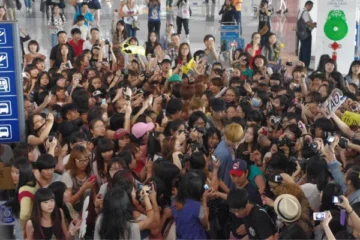
The global expansion of South Korean popular music, commonly known as K-pop, has transformed from a regional phenomenon into a multi-billion-dollar international industry. At the heart of this cultural shift is the "i-fan"—the international fan—a demographic that exists outside the domestic South Korean market but constitutes the majority of the genre’s digital consumption. While technology has bridged the geographical gap between Seoul and the rest of the world, international fans navigate a unique landscape of linguistic, cultural, and logistical obstacles. This digital diaspora is bound by a shared affinity for Korean media, yet it remains underserved by the very industry it sustains. Understanding these challenges requires an analysis of the digital divide, the economics of global touring, and the sociological friction inherent in cross-cultural consumption.
The Linguistic Barrier and the Evolution of Translation
For the international consumer, the primary hurdle remains the language barrier. Unlike Western pop music, which benefits from the global status of English, K-pop necessitates a robust translation infrastructure. Historically, this gap was filled by volunteer fan-subbing collectives—groups of bilingual fans who dedicated thousands of hours to translating variety shows, interviews, and social media posts.

However, the reliance on unofficial translations creates a precarious environment for the consumer. When official agencies fail to provide immediate subtitles for content, fans often resort to third-party hosting sites, many of which are plagued by copyright infringement issues or malicious software. The "crushing realization" of clicking on a highly anticipated video only to find it lacks subtitles remains a common experience. While platforms like YouTube and Viki have integrated official captioning, a significant portion of "behind-the-scenes" content and live broadcasts (such as those on Weverse or Instagram Live) still lacks real-time translation. This creates a tiered experience where domestic fans enjoy immediate access to information while international fans must wait for the "digital labor" of the community to provide context.
Sociological Friction and Subcultural Identity
The international K-pop fan often operates within a subculture that is misunderstood by their immediate local environment. This leads to a phenomenon where fans must constantly defend or explain their aesthetic and musical preferences to the "uninitiated." A common point of friction is the visual presentation of K-pop "idols," which often embraces gender fluidity and soft masculinity—concepts that may clash with traditional Western or conservative local norms.
The experience of explaining an artist’s gender or the concept of a "flower boy" (kkonminam) to a confused peer is a recurring social tax paid by the i-fan. This friction extends to the attempted "initiation" of others. When i-fans introduce K-pop to friends through high-budget music videos like Big Bang’s "Fantastic Baby," they often encounter a "sensory overload" response. The synchronized choreography, vibrant fashion, and unfamiliar linguistic structure can be alienating to those accustomed to the more individualistic and minimalist tropes of Western pop. This often results in a sense of social isolation, where the fan’s most significant cultural interest is kept private to avoid "harsh public condemnation" or ridicule.

The Economic Disparity of the "World Tour"
Perhaps the most significant grievance among the international community is the logistical exclusion from live performances. In the K-pop industry, the term "World Tour" is frequently criticized by fans for its narrow geographic scope. Data analysis of major K-pop tours reveals a heavy concentration in East Asia, North America, and select European capitals, often bypassing entire continents such as South America, Africa, and large portions of Southeast Asia.
For fans in these "skipped" regions, the K-pop experience is entirely mediated through a screen. This creates a digital-only participation where "fan accounts" are based on high-definition streaming rather than physical presence. The economic reality is that while K-pop has a global reach, the cost of transporting large-scale productions—often involving dozens of dancers, stylists, and technical crew—makes touring in emerging markets a financial risk for agencies like SM, HYBE, and JYP Entertainment. Consequently, the i-fan is often left watching "shaky fancams" from a laptop, participating in the fandom through the "i" of the internet rather than the reality of the stadium.
Linguistic Adaptation and the "Engrish" Phenomenon
The use of English in K-pop lyrics serves as a bridge for international fans, yet it frequently results in linguistic "uncanny valley" moments. The term "Engrish" refers to the creative, if occasionally ungrammatical, use of English words to fit the phonetic and rhythmic needs of a Korean song. While these lyrics—ranging from the nonsensical "cola cola cola so elastic" to the metaphorical "zoom zoom my heart like a rocket"—are often endearing to the community, they represent a significant hurdle for mainstream Western acceptance.

Furthermore, the naming conventions of K-pop groups often present a branding challenge. Acronyms like TEEN TOP (Teenager EmoBoys Emoticon Next Generation Talent Object Praise) or unconventional spellings like SHINee and T-ara require constant explanation. To the uninitiated, these names can appear juvenile or confusing, adding another layer of "translation" that the international fan must perform to make their interest seem legitimate to outsiders.
A Chronology of the International K-Pop Experience
To understand the current state of the i-fan, one must look at the evolution of the Hallyu (Korean Wave) timeline:
- 1990s – The Regional Era: K-pop (led by groups like H.O.T and S.E.S) begins to find a foothold in China and Taiwan. International fans outside of Asia are almost non-existent, limited to small immigrant communities.
- 2000s – The Forum Era: The rise of internet forums and the "Big Three" (SM, YG, JYP) leads to a niche following in the West. Fans rely on low-quality file-sharing and volunteer translators.
- 2012 – The YouTube Breakthrough: Psy’s "Gangnam Style" shatters the digital ceiling, proving that Korean-language content can achieve billions of views. This marks the beginning of the modern i-fan era.
- 2017-Present – The Global Saturation: BTS and BLACKPINK achieve unprecedented chart success in the US and UK. Agencies begin to prioritize global digital releases, yet the structural "struggles" of the average i-fan persist as demand outstrips the industry’s local infrastructure.
Industry Responses and the Future of Global Fandom
Major South Korean entertainment agencies have begun to acknowledge the "pain points" of their international audience. HYBE’s acquisition of Ithaca Holdings and the establishment of "HYBE America" suggest a shift toward a more localized presence in the West. Similarly, the rise of platforms like Weverse and Bubble aims to monetize the "direct-to-fan" relationship, offering official translation tools, albeit with varying degrees of accuracy.

However, the "cultural disassociation" mentioned by fans remains a poignant issue. As i-fans immerse themselves in Korean media, they often find their local music scenes increasingly foreign. This "reverse culture shock" highlights the power of K-pop as a totalizing cultural product—one that provides not just music, but a lifestyle, a vocabulary, and a community.
Analysis of Broader Implications
The struggle of the i-fan is more than a collection of minor inconveniences; it is a case study in the complexities of modern globalization. While digital platforms allow for the instantaneous export of culture, the physical and social infrastructures of the world remain segmented. The "repression" felt by fans in public spaces speaks to the lingering provincialism of global society, where interest in non-Western media is still viewed with suspicion or infantilized.
Moreover, the i-fan community represents a new form of "soft power" for South Korea. These fans act as unofficial ambassadors, learning the Korean alphabet (Hangul), studying the country’s history, and boosting its tourism and cosmetic industries. The "worthwhile cause" mentioned by enthusiasts is the fostering of cross-border bonds that transcend traditional diplomacy.

In conclusion, the international K-pop fan is a resilient figure in the digital age. They navigate a world where their favorite artists are "as unreachable as the Land of Oz," yet they continue to build digital bridges through translation, social media advocacy, and sheer dedication. As the K-pop industry continues to evolve, the challenge for agencies will be to move beyond seeing i-fans as mere data points on a streaming chart and instead recognize them as a vital, yet underserved, pillar of the global Hallyu phenomenon. The "struggle" of the i-fan is a testament to the music’s ability to transcend borders, even when the world’s systems are not yet designed to accommodate such a journey.
Related News