The Socioeconomic Roots and Cultural Implications of South Koreas Dwenjang-nyeo Phenomenon
Article Editorial Team

The term dwenjang-nyeo, or "bean paste girl," emerged in the mid-2000s as a potent symbol of South Korea’s anxieties regarding rapid modernization, gender roles, and the psychological impact of conspicuous consumption. While the term gained international visibility through the satirical lens of Psy’s 2012 viral hit "Gangnam Style," its roots are deeply embedded in the nation’s specific historical trajectory and the tension between traditional frugality and the allure of Western luxury. At its core, the dwenjang-nyeo is a pejorative archetype: a young woman who opts for a humble bowl of bean paste stew—one of the cheapest meals available—solely to save enough money to afford an expensive Starbucks coffee or a designer handbag. This figure serves as a lightning rod for criticism, reflecting broader societal debates over class, gender equality, and the definition of Korean identity in a globalized world.
Etymology and the Paradox of Consumption
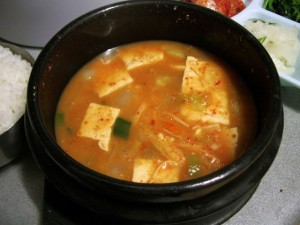
The term "bean paste girl" is derived from dwenjang (fermented soybean paste), a foundational ingredient in Korean cuisine. Dwenjang jjigae, or bean paste stew, is a staple of the Korean diet—hearty, nutritious, and remarkably inexpensive. In the mid-2000s, a standard bowl of this stew cost approximately 3,500 to 4,500 KRW (roughly $3.00 to $4.00 USD). By contrast, the arrival and expansion of Starbucks in South Korea introduced a new price floor for social consumption. A specialty latte or Frappuccino could easily cost 6,000 KRW or more, creating a paradox where a single beverage exceeded the cost of a full meal.
The "bean paste girl" was characterized by this specific fiscal trade-off. Critics argued that these women were sacrificing basic nutritional needs to project an image of affluence and "Westernized" sophistication. The image of a woman carrying a designer bag in one hand and a Starbucks cup in the other, while reportedly living on dwenjang jjigae in private, became a focal point for online vitriol. This dichotomy highlighted a perceived shallowness, where the appearance of wealth was prioritized over actual financial stability.
Divergent Definitions and Societal Perceptions
The definition of a dwenjang-nyeo is rarely static, and its meaning often shifts depending on the critic’s perspective. Sociologists have identified several distinct characterizations of the phenomenon:
- The Frugal Posturer: The most common definition describes a woman from a modest background who lives with her parents to minimize expenses. By eating the cheapest food possible, she accumulates the capital necessary to purchase high-end luxury items, such as those from Chanel, Louis Vuitton, or Gucci.
- The Social Moocher: A more aggressive definition paints the dwenjang-nyeo as a woman who relies on the financial resources of her parents or romantic partners to fund a lifestyle she cannot afford on her own. In this view, she is seen as a parasitic figure, exploiting traditional gender dynamics to secure modern luxury.
- The "Wannabe" Westerner: This characterization focuses on the rejection of Korean cultural markers in favor of Western ones. The dwenjang-nyeo is viewed as someone who views imported goods and foreign coffee brands as superior to domestic alternatives, using these products to distance herself from what she perceives as a "lowbrow" or "rural" Korean identity.
- The Self-Made Consumer: A minority view, often championed by feminist scholars, suggests that the dwenjang-nyeo could be seen as an icon of financial independence. This perspective argues that if a woman earns her own salary and chooses to spend it on luxury goods as a form of self-reward, she is making a rational choice in a consumerist society.
Historical Context: From Austerity to Abundance
To understand the vehemence behind the dwenjang-nyeo label, one must look at South Korea’s economic history. Following the devastation of the Korean War (1950-1953), South Korea was one of the poorest nations in the world, with a GDP per capita lower than that of many sub-Saharan African nations. The "Miracle on the Han River," the period of rapid economic growth that followed, was predicated on extreme national frugality.
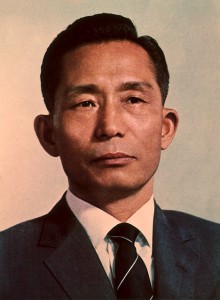
Under the authoritarian leadership of Park Chung-hee in the 1960s and 70s, the government launched aggressive campaigns against kwasobi (excessive spending). Frugality was framed as a patriotic duty; every won saved was a won that could be reinvested into national industry. This ethos created a generational divide. The "Sandglass Generation," who lived through the hardships of the post-war era, viewed conspicuous consumption not just as a personal failing, but as a betrayal of the national collective.
However, by the 1990s, South Korea had joined the OECD and transformed into a high-tech, high-income economy. The 1988 Seoul Olympics and the liberalization of overseas travel in 1989 opened the floodgates to foreign influence. Young Koreans, particularly those born after the 1980s, grew up in an environment of relative abundance. The psychological shift from "saving for the nation" to "spending for the self" created a cultural friction that found its outlet in the vilification of the dwenjang-nyeo.
Data and Economic Indicators
The prevalence of the dwenjang-nyeo narrative is supported by South Korea’s unique position in the global luxury market. According to data from Morgan Stanley, South Koreans are the world’s biggest spenders on personal luxury goods per capita, spending an average of $325 per year as of 2022—far exceeding the $280 spent by Americans and the $55 spent by Chinese consumers.
Furthermore, the "Starbucks Index" provides a glimpse into the specific consumption patterns of Seoul. As of 2023, Seoul has more Starbucks locations than any other city in the world, surpassing even New York and London. This ubiquity reinforces the idea that specialty coffee has moved from a luxury to a social necessity, particularly for young professionals seeking "third spaces" in a densely populated urban environment where private living spaces are often cramped.
The economic pressure is also reflected in household debt. South Korea has one of the highest household debt-to-GDP ratios in the OECD, hovering around 100%. Sociologists argue that the dwenjang-nyeo is a symptom of a society where social mobility has stalled, leading young people to seek "small luxuries" (so-hwak-haeng) or status symbols to compensate for the impossibility of larger milestones, such as home ownership.
The Gendered Nature of Criticism
A notable aspect of this cultural phenomenon is the absence of a "bean paste boy" (dwenjang-nam). While men in South Korea also engage in conspicuous consumption—often through expensive electronics, imported cars, or luxury watches—they are rarely subjected to the same degree of public shaming.

Critics of the dwenjang-nyeo term argue that it is rooted in deep-seated misogyny. South Korea consistently ranks low on the World Economic Forum’s Gender Gap Index, particularly in terms of economic participation and opportunity. The vilification of women’s spending habits is seen by some as a way to police female autonomy. When a man spends money, it is often framed as an investment in his social standing or professional image; when a woman does the same, it is frequently dismissed as vanity or financial illiteracy.
The term also reflects anxieties about the changing marriage market. As women become more educated and career-oriented, the traditional "breadwinner" model is under strain. The dwenjang-nyeo is often used as a cautionary tale for men, representing a partner whose "unreasonable" material demands would lead to financial ruin.
Broader Implications and the Evolution of the Term
While the specific term dwenjang-nyeo has faded somewhat from the daily lexicon, the sentiments behind it have evolved into new forms. In recent years, terms like "flex culture" and "YOLO" (You Only Live Once) have taken over, describing a similar drive for immediate gratification through high-end purchases. However, these newer terms are often more gender-neutral and carry a different set of social connotations.
The legacy of the "bean paste girl" remains a vital case study in how consumer behavior can become a proxy for larger societal tensions. It highlights the struggle of a nation trying to reconcile its past of extreme poverty and state-mandated austerity with its present as a global trendsetter in fashion, technology, and lifestyle.
Ultimately, the dwenjang-nyeo phenomenon was never just about coffee or handbags. It was a manifestation of the "compressed modernity" that South Korea experienced—a whirlwind of change that left the population grappling with the meaning of status, the value of money, and the shifting boundaries of gender in the 21st century. As South Korea continues to navigate its role as a cultural superpower, the ghost of the bean paste girl serves as a reminder of the complex psychological costs of the nation’s rapid ascent.
Related News