Bridging the Divide Through Heritage and Hardware The Cultural and Political Implications of North Koreas Arirang Smartphone
Article Editorial Team
The Korean Peninsula remains one of the most geopolitically volatile regions in the world, characterized by a decades-long stalemate and periodic escalations of military tension. While international attention often focuses on nuclear proliferation and military exercises, a subtler form of competition has emerged in the realm of information technology and cultural branding. In 2013, North Korea announced the launch of its first domestic smartphone, the Arirang, named after the peninsula’s most cherished folk song. While the device itself represents a modest step in mobile technology, its branding serves as a window into the complex socio-cultural fabric of East Asia, where shared history, colonial trauma, and modern nationalism intersect. The choice of the name Arirang is not merely a marketing decision but a calculated invocation of a thousand-year-old cultural symbol that resonates across the 38th parallel and beyond.
The Cultural Weight of Arirang: More Than a Folk Song
To understand the significance of North Korea’s choice of branding, one must first grasp the profound role the song "Arirang" plays in the Korean psyche. Often described as the unofficial national anthem of both North and South Korea, "Arirang" is a traditional folk song that has evolved into a symbol of Korean resilience. While the official national anthem of South Korea is "Aegukga" (The Song of Love for Country)—a formal, Western-influenced composition featuring heavy brass and patriotic lyrics—"Arirang" occupies a more intimate space in the cultural consciousness.
Musically, the song is simple, typically following a pentatonic scale that makes it easy to sing and remember. Lyrically, it is often viewed as nonsensical or melancholic, generally telling the story of a protagonist crossing the "Arirang Pass" while mourning the departure of a lover. However, the song’s lack of specific political messaging is precisely what allowed it to become a vessel for national identity. Scholars suggest that the song’s ambiguity allows it to represent "Han," a uniquely Korean concept of collective sorrow, longing, and suppressed resentment resulting from a history of foreign invasions and internal strife.
The song’s status was solidified on the international stage in December 2012, when UNESCO added "Arirang" to its Representative List of the Intangible Cultural Heritage of Humanity. This recognition followed an intensive diplomatic push by the South Korean government, which sought to formalize the song’s status as a pillar of Korean heritage. Interestingly, the song exists in hundreds of variations across the peninsula, including the popular "Bon Arirang," "Jindo Arirang," and "Miryang Arirang," proving its status as a living, evolving piece of history.
Historical Chronology: From Colonial Resistance to Cold War Symbol
The elevation of "Arirang" from a simple folk tune to a nationalist icon occurred primarily during the early 20th century. A timeline of its historical trajectory reveals how it became a tool of soft power and resistance:
- Pre-1900s: The song exists in various regional forms, primarily as a work song or a lament among commoners.
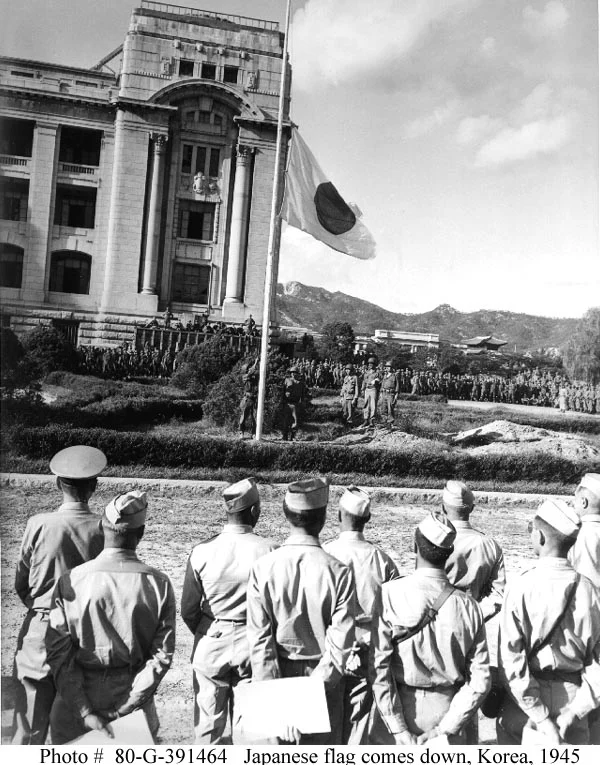
- 1910–1945: During the Japanese colonial occupation of Korea, "Arirang" became a symbol of resistance. It was famously used in the 1926 silent film Arirang by Na Woon-gyu, which served as a subtle protest against Japanese rule.
- 1931: Paradoxically, "Arirang" became a massive pop hit in mainland Japan. The Japanese public, influenced by a romanticized view of "oriental" melancholy, embraced the song, marking one of the earliest instances of Korean cultural exports.
- 1945–1953: Following liberation and the subsequent Korean War, the song remained a unifying element for families separated by the new border.
- 2012: UNESCO recognizes "Arirang" as a world cultural heritage.
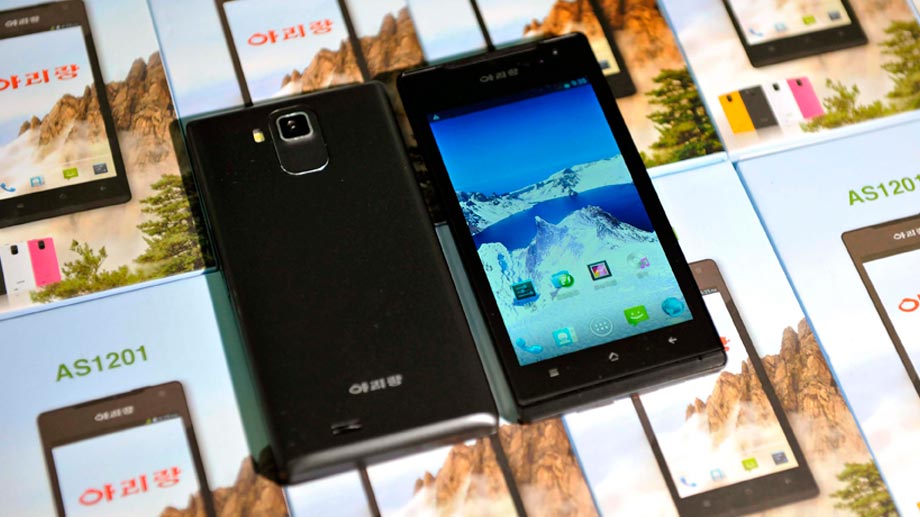
- 2013: North Korea launches the Arirang AS1201 smartphone, utilizing the name to project a sense of technological self-reliance (Juche).
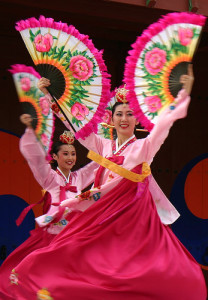
During the Japanese occupation, the song functioned as a "national archive" where the emotions of a colonized people were deposited. By the time the peninsula was divided, both the North and South had equal claims to the song’s legacy. In the North, the name is also famously attached to the "Arirang Mass Games," a massive gymnastic and artistic performance used to demonstrate the discipline and unity of the state.
The Arirang Smartphone: Technical Specifications and Skepticism
In August 2013, the North Korean state news agency (KCNA) released images of leader Kim Jong-un visiting a factory where the Arirang smartphone was reportedly being manufactured. The leader praised the "high soul" of the workers and emphasized the importance of producing goods that are "pleasing to look at" while ensuring the security of the software.
However, international technology analysts and intelligence agencies expressed significant skepticism regarding the "homegrown" nature of the device. The Arirang AS1201 appeared to be a rebranded version of the Uniscope U70, a budget Android-based handset manufactured in China. Analysis of the factory photos suggested that the "production" process likely involved final inspection and packaging rather than actual component manufacturing or circuit board assembly.
Despite the likelihood that the hardware was imported, the symbolic value for the North Korean regime was immense. By naming the device Arirang, the state sought to:

- Align modern technology with traditional national identity.
- Counter the influence of South Korean tech giants like Samsung and LG.
- Promote the ideology of Juche (self-reliance) by claiming domestic production.
- Provide a controlled mobile experience for its elite citizens, as the device runs a modified version of Android designed to prevent access to the global internet, instead connecting to the state’s domestic "Kwangmyong" intranet.
Regional Tensions and the Economic Battlefield
The launch of the Arirang phone coincided with a period of intense economic and territorial friction in East Asia. In 2013, the rivalry between South Korea and Japan was not only historical but also deeply commercial. South Korean firms like Samsung had successfully overtaken Japanese icons like Sony and Panasonic in the global smartphone and television markets—a source of immense national pride in Seoul and concern in Tokyo.
Simultaneously, diplomatic relations were strained by the ongoing dispute over the Liancourt Rocks (known as Dokdo in Korea and Takeshima in Japan). These territorial disagreements often spilled over into cultural boycotts and trade restrictions. Yet, amidst this friction, a phenomenon known as "Hallyu" or the Korean Wave continued to permeate borders.
In Japan, despite political cooling, K-Dramas and K-Pop remained popular. More surprisingly, reports from defectors and humanitarian organizations suggested that South Korean media was being consumed illegally in North Korea via smuggled USB drives and DVDs. This creates a fascinating cultural paradox: while the governments of Pyongyang, Seoul, and Tokyo may be at odds, their populations share a growing aesthetic vocabulary. The North Korean Arirang smartphone, in its own way, is an attempt to co-opt the "cool factor" of modern mobile culture seen in the South and Japan, but within a framework the Kim regime can control.
Analysis of Implications: Culture as a Bridge or a Barrier?
The rebranding of Chinese technology under the "Arirang" name highlights the enduring power of cultural symbols in statecraft. For North Korea, using a name that invokes the struggle against Japanese imperialism is a way to claim moral and historical legitimacy. It positions the regime as the "true" protector of Korean heritage, even as it adopts the technological forms of its rivals.
However, the "Arirang" phenomenon also suggests that there is a common foundation upon which future reconciliation could theoretically be built. If the same song can move a citizen in Seoul, a worker in Pyongyang, and a listener in Tokyo, it proves that cultural aesthetics can transcend political barriers. The widespread popularity of Korean pop culture (Hallyu) today is, in many ways, the 21st-century iteration of the "Arirang" success in the 1930s.
From a journalistic perspective, the Arirang smartphone launch should be viewed not as a breakthrough in telecommunications, but as a masterpiece of nationalist branding. It reflects a world where technology is the new frontier for old rivalries. While the hardware may be derivative, the intent is original: to signal that North Korea is a modern, tech-literate nation that remains deeply rooted in its ancestral identity.
As the Korean Peninsula continues to navigate its complex future, symbols like Arirang will remain pivotal. Whether through a folk song or a smartphone, the name continues to serve as a reminder of a shared past and a deeply divided present. The ultimate irony remains that while the "Arirang" of the past was a song of parting at a mountain pass, the "Arirang" of the present—the smartphone—is a tool designed for connection, yet it remains confined within one of the most disconnected nations on Earth.
Related News