The Evolution of Aesthetic Standards and the Plastic Surgery Discourse in South Korea’s Entertainment Industry
Article Editorial Team

The landscape of South Korean entertainment and its broader social fabric have long been characterized by a complex relationship with cosmetic surgery, a topic that frequently transitions from private medical clinics to the forefront of national public discourse. In recent years, the visibility of aesthetic enhancement has reached a zenith, catalyzed by viral media moments and candid debates among public figures. This phenomenon is perhaps most poignantly illustrated by two distinct events: the televised debate between solo artist G.NA and comedian Lee Yoon-suk, and the international controversy surrounding the 2013 Miss Daegu pageant candidates. Together, these instances highlight the tension between individual autonomy in self-improvement and the systemic societal pressures that drive a homogenization of beauty standards in East Asia.
The Celebrity Debate: Personal Satisfaction Versus Traditional Values
In a notable segment on a South Korean variety program, the singer G.NA and comedian Lee Yoon-suk engaged in a rare public exchange regarding the ethics and motivations behind plastic surgery. The discussion was sparked when Lee expressed a firm disapproval of his wife undergoing cosmetic procedures, characterizing such an act as a "violation of the marriage oath." Lee’s argument centered on a traditionalist perspective: that a spouse should be perceived as perfect in their natural state, and that the pursuit of surgery contradicts the acceptance inherent in a marital bond.
G.NA, however, offered a rebuttal grounded in the contemporary rhetoric of "self-care" and psychological well-being. She argued that the primary driver for many individuals is "personal satisfaction and happiness," rather than external validation. To support her position, she cited a personal anecdote regarding her grandfather, whose self-esteem and general disposition reportedly improved significantly following a hair transplant procedure. G.NA’s defense suggested that if a surgical intervention can alleviate a deep-seated insecurity and foster a more positive self-image, it should be viewed as a valid tool for personal empowerment.
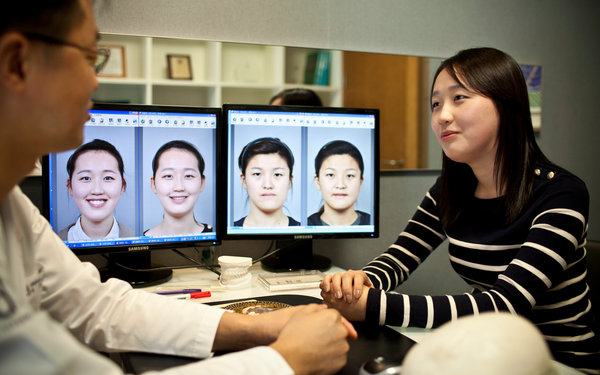
This exchange reflects a broader trend within the K-pop industry, where stars are increasingly caught between the expectation of "natural beauty" and the reality of a highly competitive visual market. While celebrities like Hyorin of SISTAR have occasionally admitted to procedures such as double eyelid surgery (blepharoplasty) after initially denying them, the industry standard remains one of discretion. G.NA’s willingness to defend the practice—even without a full admission of her own rumored procedures—represented a shift toward acknowledging surgery as a normalized component of modern Korean life.
The Miss Daegu Controversy and the "Clone" Allegation
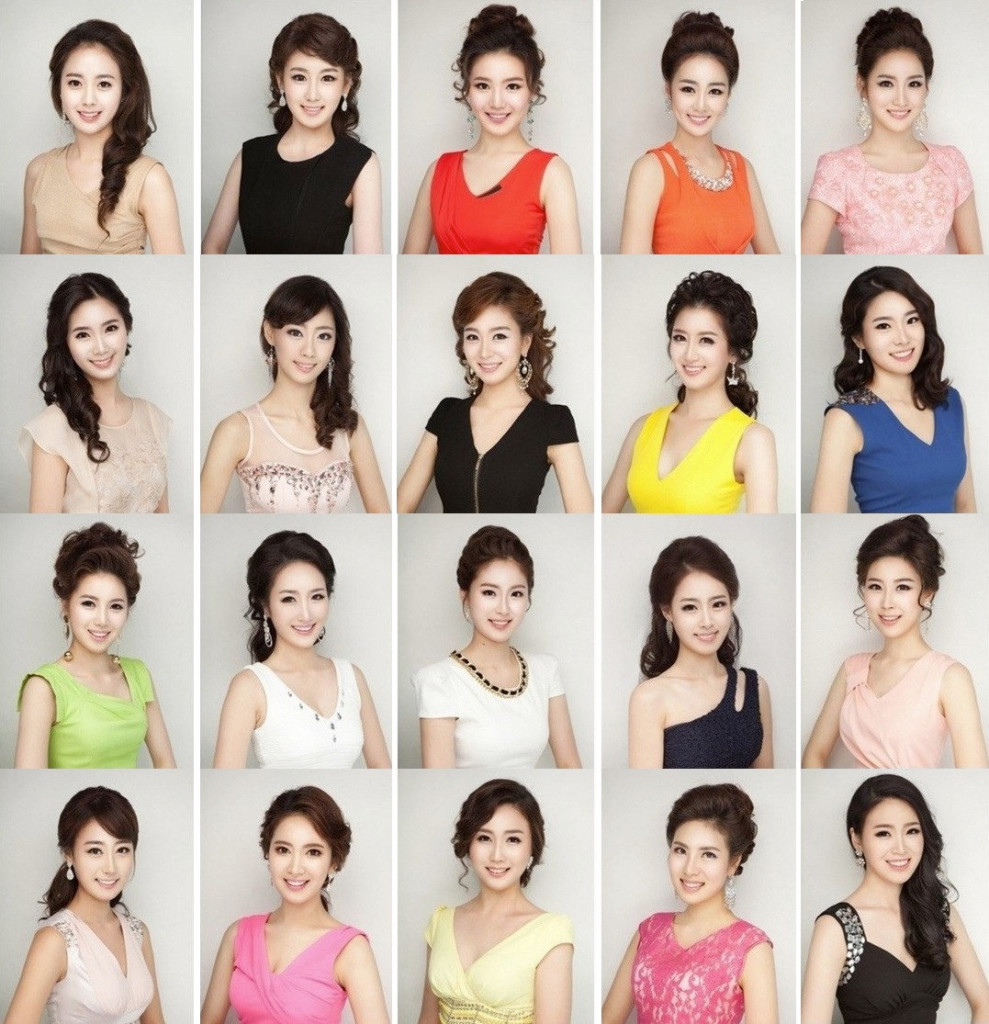
The debate over individualized "personal satisfaction" faced a significant challenge in 2013 when the promotional photographs for the Miss Daegu beauty pageant—a regional preliminary for Miss Korea—went viral globally. The images featured twenty contestants who possessed remarkably similar facial features: large, almond-shaped eyes with pronounced double eyelids, high and narrow nose bridges, luminous pale skin, and the "V-line" jaw symmetry that has become the hallmark of the Korean aesthetic ideal.
International media outlets and social media users quickly labeled the contestants as "clones," suggesting that the heavy reliance on plastic surgery had stripped the women of their unique ethnic and individual characteristics. The winner of that year’s pageant, Kwak Ka-hyun, became a focal point of this criticism, as her appearance was cited as the quintessential product of the "beauty belt" in Seoul’s Apgujeong district.
The Miss Daegu incident served as a visual manifestation of a statistical reality. According to data from the International Society of Aesthetic Plastic Surgery (ISAPS), South Korea consistently maintains the highest rate of cosmetic procedures per capita globally. In Seoul, it is estimated that one in five women has undergone some form of surgical enhancement. The ubiquity of these procedures has led to a phenomenon where the "ideal" face is no longer a rare genetic occurrence but a manufactured standard achievable through financial investment and surgical skill.

Statistical Landscape and the Economic Engine of Apgujeong
The concentration of the cosmetic surgery industry in South Korea is geographically centered in the Gangnam District, specifically the Apgujeong and Sinsa-dong neighborhoods. This area, often referred to as the "Beauty Belt," houses over 400 specialized clinics within a few square miles. The infrastructure is supported by a massive domestic market and a burgeoning medical tourism sector, with thousands of patients arriving annually from China, Japan, and Southeast Asia to seek the expertise of Korean surgeons.
The most sought-after procedures include:
- Blepharoplasty (Double Eyelid Surgery): Often the first procedure sought by young adults, intended to make the eyes appear larger and more "Westernized."
- Rhinoplasty: Focusing on raising the bridge of the nose to create a more defined profile.
- V-Line Jaw Surgery: A more invasive bone-contouring procedure designed to slim the lower face into a heart shape.
- Epicanthoplasty: A procedure to lengthen the eyes by removing the skin folds at the inner corners.
The prevalence of these surgeries is reinforced by aggressive advertising. Commuters in Seoul are frequently met with large-scale "before and after" posters in subway stations and on the sides of buses, framing surgery not as a medical necessity but as a routine lifestyle upgrade akin to a haircut or a new wardrobe.
Societal Pressures and the Concept of "Lookism"
The drive toward surgical enhancement in South Korea is not merely a matter of vanity; it is deeply intertwined with a socio-economic phenomenon known as "Lookism" (Oemojiseongjuui). In a hyper-competitive job market, physical appearance is often treated as a "spec"—a specification or qualification—similar to a university degree or a high score on an English proficiency exam.

Many South Korean resumes require a professional photograph, and it is widely believed among the youth that a more attractive face provides a competitive edge in job interviews and social advancement. This environmental pressure complicates G.NA’s argument for "personal satisfaction." When society mandates a specific aesthetic for professional success, the decision to undergo surgery transitions from a private choice to a survival strategy.
Furthermore, the media landscape plays a critical role in reinforcing these standards. Unlike Western media markets, which have seen a rise in "body positivity" movements and the elevation of diverse beauty icons like Tina Fey, Lena Dunham, or Lizzo, the South Korean media remains largely monolithic. Celebrities who do not fit the narrow aesthetic window are often relegated to "gagmen" or "gagwomen" roles, where their lack of traditional beauty is used as a comedic device. Figures such as Kim Shin-young or Jung Ju-ri are frequently the subjects of humor regarding their appearance, creating a stark dichotomy: one can either be beautiful and celebrated or "natural" and mocked.
Official Responses and the Shifting Narrative
In response to growing international and domestic criticism regarding the "homogenization" of Korean beauty, some organizations have attempted to pivot. Pageant organizers for Miss Korea have occasionally emphasized "natural intelligence" and "inner beauty" in their promotional materials, though the visual results of the winners often suggest a continued adherence to surgical ideals.
However, a more authentic shift is beginning to emerge from within the entertainment industry itself. Some K-pop groups have begun to address the psychological toll of these standards. For instance, the group Brown Eyed Girls released a satirical music video titled "Plastic Flower," which critiqued the obsession with perfection. Additionally, a small but growing number of "natural beauty" celebrities are being lauded by the public, though they remain the exception rather than the rule.
Broader Impact and Future Implications
The long-term implications of South Korea’s plastic surgery culture are multifaceted. On one hand, the country has achieved unparalleled medical expertise in reconstructive and aesthetic surgery, contributing significantly to global medical knowledge. On the other hand, the psychological impact of a "standardized" face has led to concerns regarding a loss of cultural identity and the erosion of self-esteem among those who cannot afford or do not wish to undergo surgery.
The debate sparked by G.NA and the Miss Daegu contestants is far from over. As the digital age continues to amplify visual culture through platforms like Instagram and TikTok, the pressure to conform to a filtered, "enhanced" reality is no longer unique to South Korea; it is becoming a global challenge. However, South Korea remains the primary case study for what happens when a society fully integrates surgical intervention into its definition of beauty and success.
Until the South Korean media and corporate sectors actively promote a more inclusive range of appearances—and until the "Lookism" in the employment sector is addressed through policy changes—the "Beauty Belt" will likely continue to thrive. The evolution of the discourse suggests that while individual satisfaction is a valid defense, it cannot be separated from the societal machinery that defines what "satisfaction" should look like. The challenge for the next generation of South Koreans will be to reclaim a definition of beauty that allows for the "unique snowflakes" that G.NA and others claim to celebrate, without the requirement of a surgeon’s scalpel.
Related News