Beloved K-Drama Male Lead Reveals Chilling Reason He Disappeared After Massive Success
Article Editorial Team
The Meteoric Rise of Reply 1994 and the Character Trash
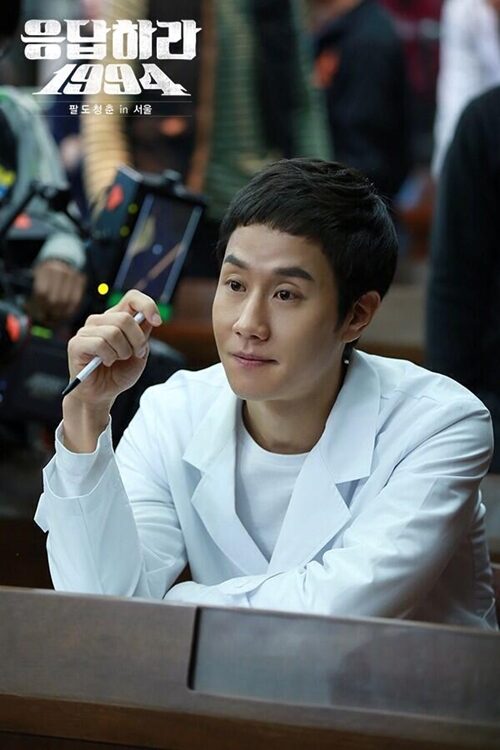
To understand the weight of Jung Woo’s disappearance, one must first revisit the scale of his success. Reply 1994 was the second installment of Shin Won-ho’s acclaimed Reply series, following the success of Reply 1997. Jung Woo portrayed Kim Jae-joon, affectionately known by his nickname "Trash" (Sseureki), a medical student with a gruff exterior but a deeply caring heart. His performance resonated with millions, earning him the Best New Actor award at the 50th Baeksang Arts Awards.
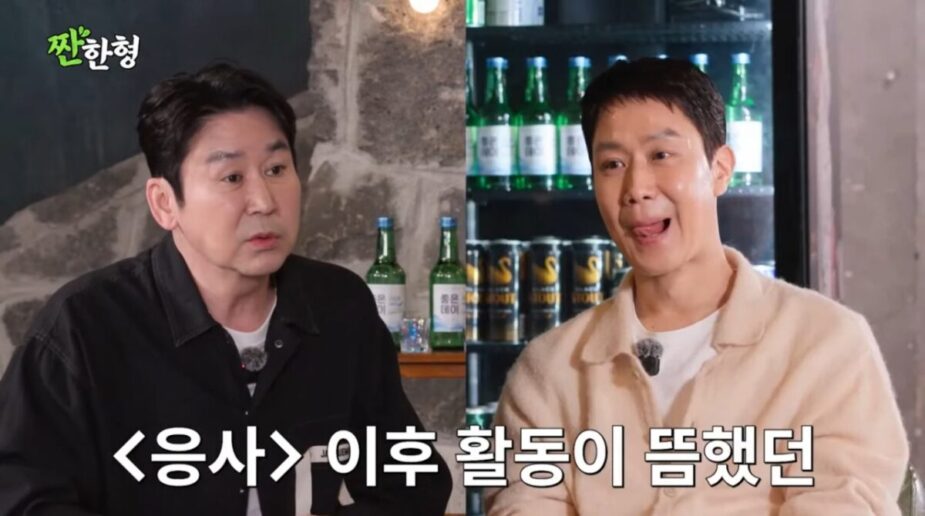
The drama achieved record-breaking viewership for cable television at the time, peaking at over 11%, a figure that was then considered astronomical for non-terrestrial networks. Jung Woo’s popularity reached a fever pitch; he became the face of numerous advertising campaigns, and his character became a cultural touchstone for the "perfectly imperfect" male lead. Shin Dong Yup noted during the Zzanbro episode that the actor’s popularity was so pervasive that even Shin’s own wife had set Jung Woo as her mobile phone wallpaper—a testament to his universal appeal across different demographics.
The Dark Side of Stardom: Invasive Sasaeng Behavior
While the public saw a rising star enjoying the fruits of a decade-long struggle in the industry, the reality behind the scenes was far more sinister. Jung Woo revealed that the sudden influx of attention brought with it a dangerous faction of the fandom known in South Korea as "sasaeng" fans. Derived from the Korean words for "private life," sasaengs are obsessive individuals who engage in stalking and other behaviors that constitute a gross invasion of privacy.
During the interview, Jung Woo described several "chilling" incidents that forced him into a state of hyper-vigilance. He recounted receiving mail that moved beyond the realm of traditional fan letters. "Some people sent me envelopes filled with their own hair, and others wrote letters in blood," he stated, visibly reflecting on the trauma of those experiences. These actions, often intended by the perpetrators as extreme displays of devotion, are viewed by psychological experts and law enforcement as forms of harassment and psychological terror.
The intrusion extended to his physical residence. Jung Woo shared that fans would frequently congregate in the narrow alleyways in front of his home, waiting for hours to catch a glimpse of him or to take unauthorized photographs. Most disturbingly, he revealed that some individuals would sift through his household trash, looking for personal items or information. "I couldn’t really handle that situation," Jung Woo admitted, explaining that the loss of his sanctuary—his home—led him to a period of self-imposed isolation.
A Chronology of Withdrawal and Selective Activity
In the immediate aftermath of Reply 1994, which concluded in late 2013, Jung Woo’s career path diverged from the typical "star" route. While many of his contemporaries might have jumped into multiple high-profile romantic comedies or variety shows to maintain momentum, Jung Woo entered what he describes as "hiding."
From 2014 to 2016, his output was markedly different from the expected trajectory:

- 2014: Despite being one of the most sought-after actors, he took a significant break to process the transition and deal with the security concerns surrounding his private life.
- 2015: He returned to film rather than television, starring in C’est Si Bon and The Himalayas. While successful, the film industry offered a layer of separation from the daily domesticity of television drama schedules and the accompanying fan frenzies.
- 2016: He maintained a low profile, focusing on his personal life and marrying actress Kim Yoo-mi in a private ceremony that emphasized his desire for a life away from the paparazzi.
Jung Woo explained that this period was defined by fear. "I was very scared, and I had to be cautious in many ways," he told Shin Dong Yup. This caution resulted in a perceived "slowdown" that confused industry insiders at the time, but which is now understood as a necessary measure for his mental health and physical safety.
The Socio-Legal Context of Stalking in South Korea
Jung Woo’s revelations highlight a broader systemic issue within the South Korean entertainment industry. For years, sasaeng behavior was often dismissed as "excessive fan love" or an unfortunate but unavoidable byproduct of fame. During the height of Jung Woo’s Reply 1994 fame, legal protections for celebrities against stalkers were significantly weaker than they are today.
It was not until the passage of the Anti-Stalking Punishment Act in 2021 that South Korea established a robust legal framework to prosecute such behaviors. Under the current law, stalkers can face up to three years in prison or 30 million KRW (approximately $22,000 USD) in fines. If a weapon is involved, the penalties increase to five years in prison. Had these laws been in place during 2013-2014, the actor might have had more recourse beyond simply "living in hiding."
The psychological impact of such harassment is profound. Experts in celebrity culture note that the constant surveillance and the "blood letters" mentioned by Jung Woo can lead to chronic anxiety, social withdrawal, and Post-Traumatic Stress Disorder (PTSD). By choosing to hide, Jung Woo was essentially engaging in a survival mechanism to preserve his autonomy.
Industry and Fan Reactions
The disclosure on Zzanbro has sparked a wave of support for the actor across social media platforms and online forums. Many fans expressed remorse that a period that should have been the most celebratory time of his career was marred by such "grotesque" violations of his humanity.
Industry colleagues have also hinted at the difficulty of managing the "Reply Syndrome"—a term used by the Korean media to describe the immense pressure placed on the leads of the Reply series. Actors like Park Bo-gum (Reply 1988) and Ryu Jun-yeol have similarly navigated the complexities of overnight superstardom, though Jung Woo’s account of sasaeng behavior is among the most graphic shared by a male lead from the franchise.
The general sentiment among netizens is a call for stricter enforcement of privacy laws and a cultural shift in how fans interact with their idols. The "blood letter" phenomenon, which was more common in the early 2000s K-pop scene (affecting groups like TVXQ and 2PM), was thought to be declining, but Jung Woo’s testimony suggests it remained a potent threat well into the 2010s.
A New Chapter: Audition 109 and Creative Autonomy
Fortunately, the narrative for Jung Woo is one of resilience. After years of being selective and protective of his space, the actor has transitioned into a new phase of his career where he exercises greater creative control. His latest project, Audition 109, represents a significant milestone. Not only is he returning to the screen, but he is also taking a more active role behind the scenes, signaling a shift from being a "subject" of the industry to a "creator" within it.
This move is seen by analysts as a way for Jung Woo to engage with his craft on his own terms. By involving himself in the production and creative direction, he can dictate the environment in which he works, ensuring a level of professional boundaries that may have been lacking during his initial rise to fame.
Conclusion: The Cost of the Spotlight
Jung Woo’s story serves as a sobering reminder of the hidden costs of the Hallyu wave. While the global expansion of Korean content has brought unprecedented success to its stars, it has also amplified the risks associated with obsessive fan culture. Jung Woo’s decision to prioritize his safety and mental well-being over commercial momentum is a rare example of an actor placing personal health above industry expectations.
As he returns to the spotlight with Audition 109, he does so with a hardened perspective and a clearer understanding of the boundaries required to sustain a long-term career in the public eye. His revelation on Zzanbro is more than just a piece of celebrity gossip; it is a critical testimony on the need for privacy, the dangers of unchecked fandom, and the enduring strength of an actor who refused to let the "chilling" actions of a few define his entire life. Fans who fell in love with "Trash" in 2013 are now rediscovering Jung Woo in 2024—not as a victim of his success, but as a survivor who reclaimed his narrative.
Related News