The Evolution of the Bean Paste Girl Decoding the Intersection of Gender Class and Consumerism in Modern South Korea
Article Editorial Team

The global explosion of Psy’s "Gangnam Style" in 2012 introduced international audiences to a vibrant, neon-soaked version of Seoul, but beneath the infectious beat and the "horse dance" lay a pointed satire of South Korean social stratification. Central to this critique is a controversial cultural trope known as the doenjang-nyeo (된장녀), or "Bean Paste Girl." While Western journalists initially glossed over the term as a mere reference to materialism, the doenjang-nyeo represents a complex nexus of South Korea’s rapid economic history, shifting gender roles, and the psychological weight of status-seeking in a hyper-competitive society. To understand the "Bean Paste Girl" is to understand the friction between South Korea’s frugal, traditional past and its brand-obsessed, globalized present.
Defining the Doenjang-nyeo: A Study in Contradiction
The term doenjang-nyeo is derived from doenjang, a fermented soybean paste that serves as the foundation for doenjang-jjigae, a humble, pungent, and inexpensive stew. In the Korean culinary hierarchy, doenjang-jjigae is the ultimate symbol of the domestic and the everyday—a meal that costs roughly 3,500 to 5,000 KRW (approximately $3 to $4 USD) and is often served in unassuming neighborhood diners.
The "Bean Paste Girl" is defined by a specific paradox of consumption: she is a woman who reportedly eats this cheap, traditional meal specifically so she can save enough money to afford a "luxury" experience, most notably a cup of coffee from an expensive foreign franchise like Starbucks. In the mid-2000s, when the term first gained traction on Korean internet forums, a Starbucks latte cost significantly more than a bowl of doenjang-jjigae. To critics, this behavior signaled a shallow, "wannabe" lifestyle—someone who sacrifices nutritional substance and cultural authenticity for the performative status of a green-and-white cardboard cup.
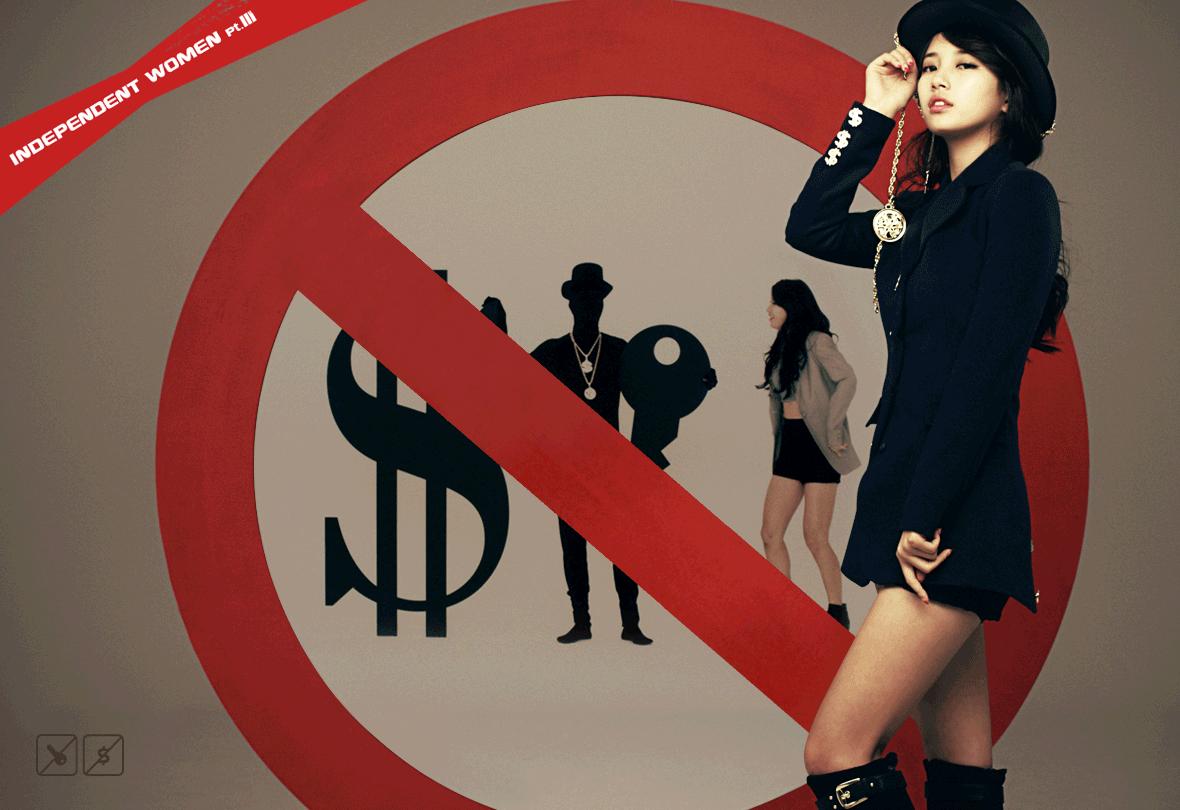
The archetype has since expanded to include women who live with their parents to save money, not for a dowry or a home, but for designer handbags from European fashion houses like Chanel, Louis Vuitton, or Prada. These women are often depicted as being obsessed with the "Western" lifestyle, prioritizing appearances over financial stability.
Historical Context: From Austerity to the "Miracle on the Han River"
To analyze why the doenjang-nyeo became such a lightning rod for criticism, one must look at South Korea’s compressed modernization. Following the devastation of the Korean War (1950–1953), South Korea was one of the poorest nations on earth, with a GDP per capita lower than many sub-Saharan African countries. The nation’s subsequent transformation into a leading global economy—often called the "Miracle on the Han River"—was built on a foundation of extreme national austerity.
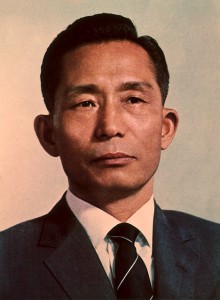
Under the authoritarian leadership of President Park Chung-hee in the 1960s and 70s, the South Korean government launched aggressive campaigns against kwasobi (excessive spending). Citizens were exhorted to live frugally, save their earnings in national banks to fund industrial development, and avoid imported luxury goods, which were seen as unpatriotic. During this era, frugality was not just a personal choice; it was a civic duty.
However, as the 1980s and 90s brought unprecedented wealth, the cultural mandate for austerity began to crumble. The 1988 Seoul Olympics served as a coming-out party for the nation’s new consumer class. Suddenly, the same population that had been told to "tighten their belts" for decades was surrounded by gleaming department stores and international brands. This rapid shift created a generational and ideological rift. Older generations, who remembered the hunger of the post-war years, viewed the conspicuous consumption of the youth with a mixture of envy and moral disgust. The doenjang-nyeo became the primary scapegoat for this perceived moral decay.

The Economics of Status and the "Veblen Effect" in Seoul
South Korea’s obsession with luxury goods is backed by startling data. According to reports by analysts at Morgan Stanley, South Koreans have become the world’s biggest spenders on personal luxury goods per capita, reaching an estimated $325 per person in 2022—far surpassing the $280 spent by Americans and the $55 spent by Chinese consumers.
This trend is driven by what economists call the "Veblen Effect," where the demand for a good increases as its price rises because it serves as a status symbol. In a society where social mobility is increasingly perceived as stagnant—a phenomenon young Koreans refer to as "Hell Joseon"—luxury goods provide a "small but certain happiness" (sohwakhaeng). If a young woman cannot afford a $500,000 apartment in the trendy Gangnam district, she can at least afford a $5,000 handbag that allows her to look the part while walking through it.
The doenjang-nyeo label, therefore, is an indictment of those who attempt to "cheat" the class system through visual signifiers. The criticism is rarely aimed at the truly wealthy who can afford luxury without sacrifice; rather, it is aimed at the middle and working-class women who use brands to blur the lines of their social standing.
Gender Dynamics and the Absence of the "Bean Paste Boy"
A significant point of contention in the doenjang-nyeo discourse is its inherently gendered nature. While men in South Korea also engage in conspicuous consumption—spending heavily on imported cars, electronics, and high-end watches—there is no equivalent derogatory term for men that carries the same social weight.

Sociologists argue that the vilification of the "Bean Paste Girl" is rooted in deep-seated misogyny and a reaction against the rising independence of women. As women entered the workforce in larger numbers and delayed marriage, they gained discretionary income that was no longer under the control of a father or husband. The doenjang-nyeo trope serves as a way to trivialize this financial autonomy, framing women’s spending as irrational, vain, and "un-Korean."
Furthermore, the term reflects a double standard regarding "gold-digging." Some definitions of the doenjang-nyeo characterize her as a woman who mooches off her boyfriend or parents to fund her lifestyle. However, even when women use their own hard-earned salaries—what some feminist commentators call "Sweat, Blood, and Tears" spending—they are still criticized for not saving that money for a future family, highlighting the societal expectation that a woman’s wealth should ultimately serve the domestic sphere.
Evolution of the Trope: From "Bean Paste" to "Flex Culture"
In the decade since "Gangnam Style" brought the term to the global stage, the doenjang-nyeo archetype has evolved. The specific focus on Starbucks has faded as luxury coffee has become a ubiquitous part of Korean daily life, no longer serving as a reliable marker of class pretension.
The discourse has shifted toward "Flex Culture" and the "Shibal Biyong" (stress spending) phenomenon. "Shibal Biyong" refers to money spent on things one wouldn’t normally buy if they weren’t under extreme stress—such as taking a taxi instead of the bus or ordering an expensive meal after a bad day at work. In this context, the "Bean Paste Girl" was perhaps a precursor to a wider societal acceptance of using consumption as a coping mechanism for the pressures of modern Korean life.
However, the derogatory roots remain. Newer terms like moms-충 (mom-roach), used to disparage mothers in cafes, show that the impulse to police women’s presence in public commercial spaces remains a potent force in Korean digital culture.
Broader Implications and Societal Impact
The doenjang-nyeo phenomenon is more than a footnote in pop culture; it is a window into the soul of a nation grappling with its identity. South Korea remains caught between a traditional Confucian heritage that values modesty and collective welfare, and a hyper-capitalist reality that rewards individual status and visual perfection.
The implications of this cultural policing are significant. It contributes to a high-pressure environment where "looking the part" is essential for professional and social success, leading to high rates of plastic surgery and debt among young adults. It also exacerbates gender tensions in a country that consistently ranks near the bottom of the OECD’s Gender Gap Index.
As South Korean dramas and music continue to dominate the global stage, the image of the stylish, brand-clad Seoulite remains a powerful export. Yet, the ghost of the "Bean Paste Girl" serves as a reminder that these images of luxury are often contested, debated, and used as weapons in an ongoing struggle over what it means to be a "proper" member of South Korean society. Whether seen as a victim of consumerist pressure, a savvy navigator of social status, or a symbol of generational change, the doenjang-nyeo remains a central figure in the narrative of modern Korea.
Related News