Staff Kept Screaming — Female Celeb’s Photoshoot That Was TOO Charismatic
Article Editorial Team
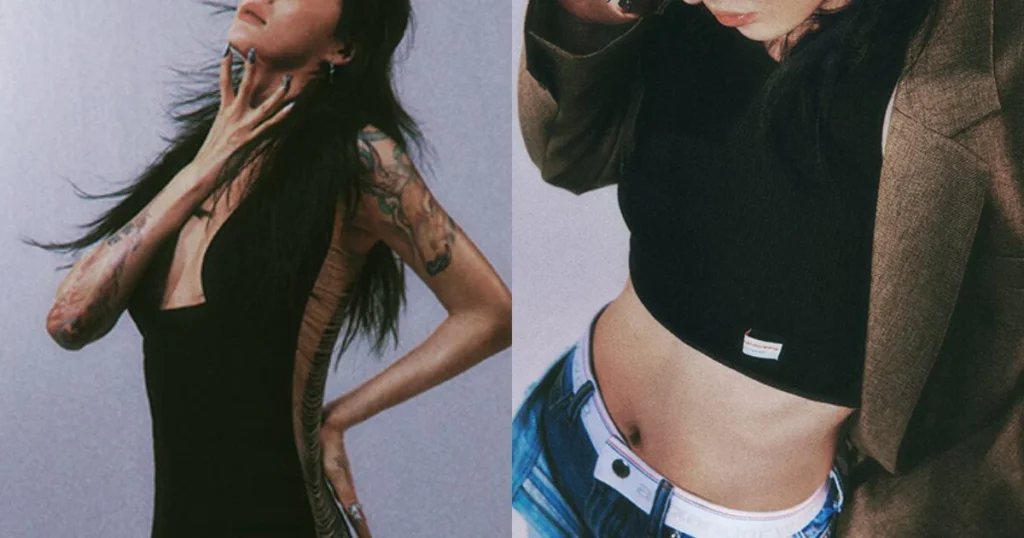
The Cosmopolitan Korea Editorial: Concept and Execution
The photoshoot was curated to reflect the modern "girl crush" aesthetic, a marketing and stylistic term prevalent in South Korean media that denotes women who possess a blend of charisma, independence, and unconventional beauty. Monika, whose birth name is Shin Jung-woo, was selected for the feature due to her reputation as one of the most formidable and artistically rigorous figures in the Korean dance scene.

The wardrobe for the session emphasized a fusion of high-fashion tailoring and street-style sensibilities. Key looks included an oversized brown blazer paired with a minimalist black crop top, a combination that highlighted Monika’s athletic physique while maintaining a sense of professional gravitas. In a move that trend analysts have noted as a nod to avant-garde streetwear, she also modeled a complex "double-layered" denim look, featuring two pairs of baggy jeans worn simultaneously. This specific styling choice, while difficult to execute, was managed by the dancer with a natural ease that further fueled the excitement of the crew.
Adding a layer of intellectualism to the "Fearless Female" concept, the styling team incorporated thick-rimmed glasses into several frames. This accessory was intended to project a "calculated and intelligent" aura, contrasting the raw, physical energy typically associated with Monika’s dance performances. According to reports from the set, the synergy between the wardrobe and Monika’s innate confidence resulted in a performance that transcended typical modeling, prompting the female staff members to vocalize their admiration throughout the duration of the shoot.

Chronology of Monika’s Rise to Mainstream Prominence
The intense reaction to Monika’s photoshoot is a direct result of her meteoric rise over the past three years. To understand the significance of this event, one must look at the timeline of her career and the broader shift in the Korean entertainment industry.
- Pre-2021: The Underground and Academic Era: Before her television debut, Monika was already a respected figure in the underground dance community and an academic in the field. As a professor at various arts colleges and the founder of the OFD (Only Forward) dance studio, she focused on street dance education and the professionalization of the craft.
- August 2021: The Street Woman Fighter Phenomenon: Monika appeared as the leader of PROWDMON on Mnet’s survival show Street Woman Fighter. The show was a watershed moment for Korean television, achieving a peak viewership rating of nearly 3%—exceptionally high for a cable dance program—and generating billions of views across social media platforms.
- Late 2021 – 2022: Cultural Impact: Following the conclusion of the show, Monika and her peers became the most sought-after figures for commercial endorsements. Unlike traditional K-pop idols, these dancers offered a "raw" and "authentic" alternative to the highly manufactured celebrity image.
- 2023 – Present: Fashion and Creative Direction: Monika expanded her portfolio into creative direction and high-fashion modeling. Her appearance in Cosmopolitan Korea’s February issue marks a consolidation of her status as a "celebrity’s celebrity," where her influence extends beyond dance into the realms of lifestyle and gender-neutral fashion.
Supporting Data: The Commercial Value of the "Dancer-Celebrity"
The "screaming" staff on the Cosmopolitan set is emblematic of a larger data trend regarding the commercial viability of professional dancers. Since the airing of Street Woman Fighter, the market value for top-tier dancers in South Korea has seen a dramatic increase.

According to industry marketing reports, brand reputation indices for dancers like Monika frequently rival those of top-tier actors and K-pop stars. In the year following her television debut, the "dancer" category in advertising saw an estimated 300% growth in contract volume. Brands ranging from luxury cosmetics to tech giants have pivoted toward dancers because of their high engagement rates among the "MZ Generation" (Millennials and Gen Z).
Furthermore, the "Fun Fearless Female" concept aligns with a shift in consumer behavior. Data from Korean retail analysts suggest that female consumers in their 20s and 30s are increasingly gravitating toward "strong female" role models. This has led to a surge in sales for oversized blazers, unisex silhouettes, and "athleisure" wear—all staples of Monika’s personal and professional wardrobe.

Official Responses and Netizen Reactions
The interaction between Monika and the staff during the shoot was not just a one-sided display of admiration. When Cosmopolitan staff noted that the women on set could not stop screaming due to her "handsome" appearance, Monika responded with a blend of humor and self-assurance that has become her trademark. "I’m handsome, right? I also like my face," she reportedly stated, laughing.
This response resonated deeply with her fanbase, often referred to as "Monsters" or "PROWDMON supporters." On various community portals and social media platforms, netizens echoed the sentiments of the photoshoot staff. Comments focused on her "androgynous charm" and the "unrivaled aura" she brings to still photography. One widely shared sentiment among fans was that Monika represents a new standard of beauty in Korea—one that prioritizes character, skill, and confidence over traditional, rigid aesthetic norms.

Industry insiders have also commented on this shift. A representative from a major Korean talent agency noted, "In the past, dancers were seen as a supporting element to the singer. Now, the dancer is the ‘IP’ (Intellectual Property). Someone like Monika doesn’t just dance; she provides a visual and philosophical narrative that magazines like Cosmopolitan are eager to capture."
Broader Impact and Cultural Implications
The "charismatic photoshoot" of Monika is more than a momentary social media trend; it is indicative of a broader transformation within the global entertainment landscape, spearheaded by the Korean market.

1. The De-stigmatization of Professional Dancing
For decades, professional dancing in South Korea was often viewed as a precarious career path with limited longevity. The mainstream success of figures like Monika has provided a roadmap for professional dancers to achieve financial stability and cultural influence. This has led to an increase in enrollment in dance academies and a more serious academic approach to street dance.
2. Redefining the "Girl Crush" Narrative
The "girl crush" concept has often been criticized for being a superficial marketing ploy. However, Monika’s iteration of this concept is grounded in actual professional authority. Her "charisma" on set is a byproduct of her years of leadership and technical mastery. This adds a layer of "earned authority" to the fashion editorial, making the "Fun Fearless Female" theme feel authentic rather than performative.

3. The Shift in Fashion Marketing
Luxury and lifestyle magazines are increasingly moving away from the "perfectly polished" look in favor of "personality-driven" editorials. The fact that the staff was audibly reacting to the shoot suggests a more visceral, human connection to the subject. This trend is likely to continue as publications seek to differentiate themselves in a saturated digital market.
Conclusion: The Future of the Monika Brand
As Monika continues to leverage her platform, her influence is expected to grow in the realms of creative direction and international collaborations. Her recent work with Cosmopolitan Korea serves as a testament to her ability to command a room—and a market—without saying a word. By embracing the "handsome" and "charismatic" labels, she is effectively broadening the scope of what it means to be a female celebrity in the 21st century.

For the Korean entertainment industry, the "Monika effect" serves as a reminder that authenticity and professional excellence are powerful commodities. As long as she continues to challenge stylistic boundaries and maintain her rigorous standards of performance, the "screams" of admiration from staff and fans alike are unlikely to fade. The February issue of Cosmopolitan Korea will likely be remembered not just for its fashion, but as a document of a pivotal figure at the height of her cultural powers.
Related News