JYP Entertainment Reevaluates Seoul Headquarters Expansion Following Zoning Shift of Adjacent Green Space
Article Editorial Team

The ambitious plan by JYP Entertainment to establish a landmark global headquarters in the Godeok-dong district of Seoul has encountered a significant strategic hurdle, as the company reportedly considers withdrawing from the project due to unexpected local zoning changes. The controversy centers on a decision by the Seoul Housing and Communities Corporation (SH Corporation) and the Gangdong-gu Office to rezone a neighboring plot of land, originally designated as a park, into a site for high-rise commercial development. This shift in urban planning has fundamentally compromised the architectural and functional integrity of JYP’s proposed "open cultural and relaxation space," leading to a standoff between the K-pop giant and municipal developers.
The Core Conflict: Architectural Vision vs. Urban Density
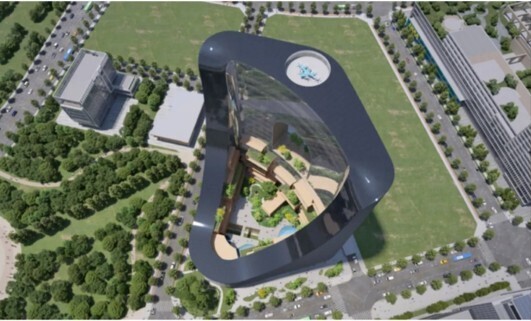
At the heart of the dispute is a 13,261-square-meter plot of land located in the Godeok-Gangil district of Gangdong-gu. For months, JYP Entertainment had been moving forward with plans to construct a state-of-the-art corporate headquarters on a site just 20 meters north of this plot. The design, which garnered significant attention in the architectural and entertainment industries, featured a unique ring-shaped structure centered around an expansive inner courtyard. This "open-air" concept was intended to integrate the building with the surrounding natural scenery, providing a serene environment for employees, artists, and the public.
However, on April 23, it was revealed that SH Corporation had changed the zoning of the southern park site to a "self-sufficient support facility site." This reclassification allows for the construction of buildings between 18 and 19 stories high with a floor area ratio of 400%. The land is currently being marketed for sale at a price of approximately 104 billion KRW (roughly $70.3 million USD), with applications for the plot accepted through mid-May.
For JYP Entertainment, this development is catastrophic to their original design. The company’s blueprint relied on the southern side remaining an open green space to ensure natural light, scenic views, and, most importantly, privacy. If a 19-story commercial building is erected just 20 meters away, the proposed courtyard and the glass-heavy aesthetic of the JYP building would be overlooked by neighboring offices, effectively rendering the "open space" concept impossible to execute while creating significant security and privacy risks for the agency’s high-profile celebrities.
Project Chronology and Development Timeline
The trajectory of JYP Entertainment’s relocation has been a multi-year endeavor aimed at consolidating the company’s various operations into a single, world-class hub.
- October 2023: JYP Entertainment successfully bid for a 10,675-square-meter plot in the Godeok-Gangil specialized business district. The company purchased the land from SH Corporation for 75.5 billion KRW (approximately $54.5 million USD). At the time of purchase, the surrounding master plan indicated that the adjacent southern plot would serve as a public park and green zone.
- Early 2024: The company revealed preliminary architectural sketches. The design emphasized a "breathable" building, featuring an 800-seat performance hall, specialized dance studios, high-end production suites, and a rooftop greenery system. The "ring" shape was specifically chosen to maximize internal light while maintaining a sense of community.
- March 2024: JYP finalized its building permits and prepared for a groundbreaking ceremony scheduled for the second half of the year.
- April 2024: SH Corporation announced the zoning change of the southern park site. The sudden pivot from "green space" to "high-density commercial" caught JYP and other nearby developers off guard.
- Current Status: JYP Entertainment has reportedly entered a period of internal review, weighing the costs of a total design overhaul against the possibility of abandoning the site entirely and seeking legal or financial restitution.
Technical Specifications and Financial Implications
The financial stakes of the project are immense. JYP Entertainment is one of the "Big 4" agencies in South Korea, alongside HYBE, SM Entertainment, and YG Entertainment. As of late 2023, JYP reported record-breaking annual revenues, driven by the global success of groups like Twice, Stray Kids, and ITZY. The move to Godeok-dong was seen as a move to match the infrastructure of its rivals, such as HYBE’s massive complex in Yongsan and YG’s fortress-like headquarters in Hapjeong.

The zoning change for the adjacent 13,261-square-meter plot significantly alters the real estate dynamics of the Godeok-Gangil district. By allowing a 400% floor area ratio, the city is effectively prioritizing vertical density and land sale revenue over the horizontal "green network" originally promised in the district’s promotional materials.
The sale price of 104 billion KRW for the adjacent lot reflects the high value of "self-sufficient support facility" land in Seoul. However, industry analysts suggest that if JYP Entertainment—the "anchor tenant" of the district—withdraws, the valuation of the surrounding plots could fluctuate. The presence of a major cultural icon like JYP was expected to drive foot traffic, increase local brand value, and stimulate the local service economy.
Official Responses and Justifications
SH Corporation and the Gangdong-gu Office have defended the zoning change, citing administrative necessity and broader educational infrastructure needs. According to officials, the decision to sell 1% of the district’s planned green space was made to secure essential funds for the installation of school facilities in the rapidly growing residential sectors of Gangdong-gu.
"The zoning change was carried out under relevant laws to secure funds for school facility installation," an official stated. "We had already notified potential buyers in the original sales announcements that the district plan may change depending on the progress of the project and municipal requirements."
This "fine print" defense has done little to soothe the concerns of JYP Entertainment. While legally the city may have reserved the right to alter the plan, the scale of the change—from a zero-story park to a 19-story tower—is being viewed by the development industry as a breach of "administrative trust."
JYP officials have been more cautious in their public statements but have signaled that the privacy issue is a non-negotiable factor. For an entertainment company, the ability to move artists in and out of a building without being subjected to constant surveillance from neighboring windows is a core operational requirement. The current design, which placed the "open" side toward the south to take advantage of the park, now faces a wall of glass and concrete.
Broader Impact on the Godeok-Gangil District
The potential withdrawal of JYP Entertainment would be a significant blow to the Gangdong-gu Office’s vision of transforming Godeok-dong into a cultural and business landmark. The Godeok-Gangil district was designed to be a "self-sufficient city," reducing the need for residents to commute to central Seoul or Gangnam for work and entertainment.
If JYP exits:
- Economic Loss: The district loses a major taxpayer and a primary driver of tourism and "K-culture" interest.
- Domino Effect: Other developers who purchased land in the area based on the "JYP effect" may also reconsider their investments or seek compensation for the loss of a major neighborhood anchor.
- Reputational Damage: The sudden zoning change may discourage other major corporations from participating in future SH Corporation urban development projects, fearing that the "rules of the game" could change mid-construction.
Fact-Based Analysis of Future Implications
The standoff presents JYP Entertainment with three primary options, each carrying significant risks.
First, the company could proceed with a complete architectural redesign. This would likely involve closing off the southern face of the building, moving the courtyard to a more central or northern position, and increasing the height of the building to compensate for the lost "openness." However, this would result in massive delays and significantly higher construction costs, potentially pushing the project’s completion back by several years.
Second, JYP could initiate legal action against SH Corporation. While the city claims the possibility of change was disclosed, JYP could argue that the magnitude of the change constitutes a "material alteration" of the conditions under which they purchased their land. Such litigation in South Korea can be protracted and may further delay the project.
Third, the company could withdraw and liquidate. JYP could attempt to sell the land back to the city or to a third-party developer and look for a new site in a different district, such as Hanam or a different part of Seoul. While this would be a logistical nightmare, it might be the only way to preserve the "privacy and openness" philosophy that founder J.Y. Park has championed for the new headquarters.
As the May 18 deadline for the adjacent land sale approaches, the industry is watching closely. The resolution of this conflict will serve as a precedent for how Seoul balances its need for high-density development and infrastructure funding with the architectural and operational needs of the creative industries that drive the nation’s global soft power. For now, the "oasis" in Godeok-dong remains a blueprint in jeopardy, caught between the competing interests of urban revenue and cultural vision.
Related News