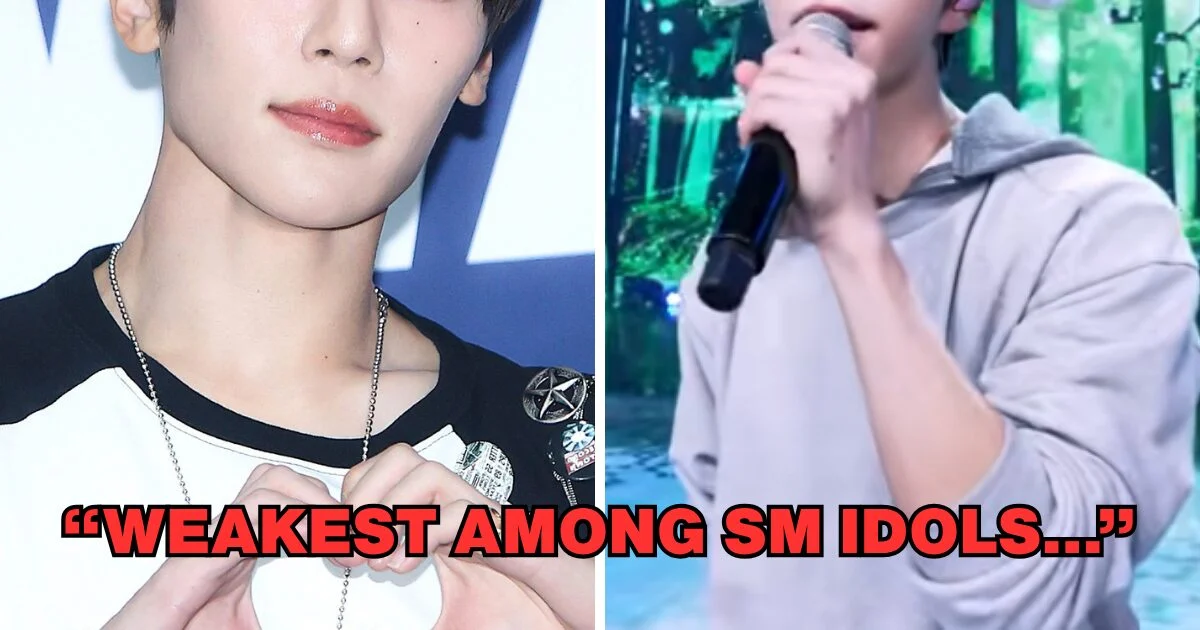
The incident has reignited a fierce debate within the South Korean music industry regarding the vocal proficiency of fourth- and fifth-generation K-pop idols. As SM Entertainment has historically been regarded as a powerhouse of vocal training—producing legendary vocalists in groups such as TVXQ, SHINee, and EXO—the perceived failure of their newest unit to deliver a stable live performance has drawn a level of scrutiny that extends beyond the group itself, reflecting on the agency’s current training methodologies.
The Music Bank Victory and the Subsequent Encore
NCT Wish, the final sub-unit of the global NCT brand, has enjoyed a meteoric rise since their debut. Their latest comeback with “Ode to Love” has been a commercial success, culminating in their first-place win on the May 1st broadcast of Music Bank. The group edged out stiff competition to claim the trophy, a moment that should have served as a milestone in their burgeoning career.
In South Korean music show culture, the winning artist is required to perform an “encore” of their winning song immediately following the award presentation. Unlike the primary performance, which often utilizes a "Live AR" (a backing track that includes pre-recorded live-sounding vocals) to support complex choreography, the encore is traditionally performed over a "MR" (Music Recorded) track, which contains only the instrumental and minimal backing harmonies. This format is widely considered the "moment of truth" for idols, as it strips away the polish of post-production and heavy backing tracks, leaving the raw vocals exposed to the audience.
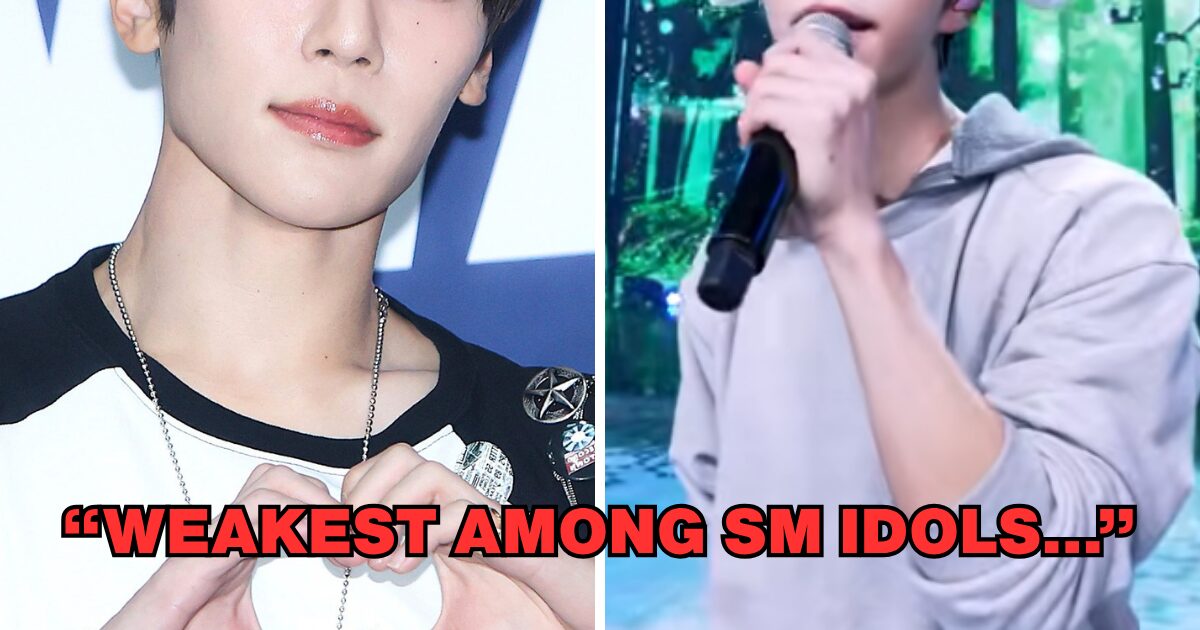
As the members of NCT Wish began "Ode to Love," the initial cheers from the live audience were soon met with a different reaction online. Viewers noted visible discomfort among some members and, more significantly, a series of vocal inconsistencies. The performance was characterized by pitch instability, strained high notes, and what many described as an overly nasal vocal placement that hindered the clarity of the lyrics.
Analysis of Public Sentiment and Online Criticism
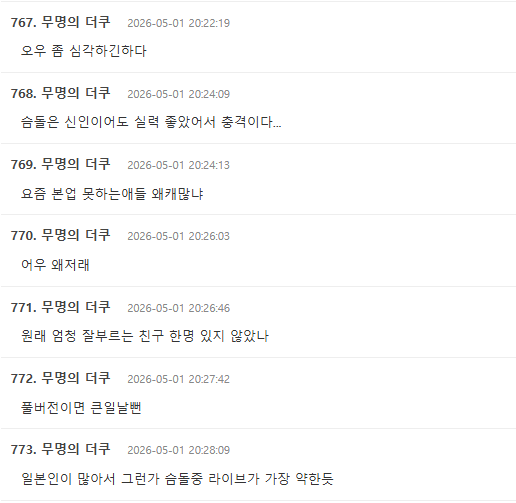
The reaction from the Korean general public and online fan communities was swift and largely unforgiving. On popular community portals such as TheQoo and Nate Pann, threads discussing the performance garnered hundreds of thousands of views within hours. The consensus among many commenters was that the performance was "disastrous," with several users questioning how a group under the prestigious SM Entertainment banner could struggle so significantly with their own discography.
Critics pointed out that while the members appeared to be enjoying the win, the technical quality of the singing did not match the prestige of the award. Common critiques included:
- Intonation Issues: Several members struggled to maintain the correct key, particularly during the transition from the verses to the chorus.
- Vocal Tone: The "nasal" quality of the singing was a recurring point of contention. In K-pop vocal pedagogy, a nasal tone is often seen as a sign of poor breath support or incorrect technique, leading to "thin" sounds that do not project well in a live environment.
- The "SM Standard": Perhaps the most damaging criticism was the comparison to their seniors. Historically, SM Entertainment has been the gold standard for "vocalist-heavy" groups. The perceived gap between NCT Wish and previous generations of SM artists has led to concerns that the agency’s rigorous training standards may be shifting in favor of visual appeal or performance-based metrics.
Conversely, some fans defended the group, citing the inherent difficulties of the encore stage. Supporters argued that the members were emotional following their win, which can physically constrict the throat and make singing difficult. Furthermore, they pointed out the lack of "warm-up" time and the poor audio monitoring on stage, which often makes it difficult for performers to hear themselves over the roar of the crowd.

The Technical Reality of Music Show Encores
To understand the severity of the criticism, one must look at the technical environment of a music show set. During a standard broadcast performance, idols use In-Ear Monitors (IEMs) that provide a direct feed of the instrumental and their own voices. However, during encores, these monitors are often removed or the audio mix is altered to allow the artists to interact with fans and fellow performers.
Without the isolation provided by IEMs, and with the "MR" track playing through house speakers that can create a slight delay or echo, even seasoned vocalists can struggle with pitch. Nevertheless, the South Korean public has increasingly used these encores as a litmus test for "talent." This trend has intensified in 2024 and 2025, following high-profile vocal controversies involving other top-tier groups. The scrutiny faced by NCT Wish is part of a broader cultural shift where "live vocal ability" has become the primary metric for idol legitimacy among domestic netizens.
Chronology of NCT Wish’s Rise and the "Ode to Love" Era
The current controversy stands in stark contrast to the group’s trajectory over the past year. NCT Wish was formed through the survival reality show NCT Universe: LASTART, which aired in 2023. The group, consisting of Sion, Riku, Yushi, Jaehee, Ryo, and Sakuya, was marketed as a fresh, youthful addition to the NCT ecosystem, primarily focusing on the Japanese and Korean markets simultaneously.
- February 2024: NCT Wish officially debuts with the single "WISH," performing at the Tokyo Dome. The debut is hailed as a success, with praise for their energetic choreography.
- Late 2024 – Early 2025: The group wins several "Rookie of the Year" awards at major year-end ceremonies, solidifying their status as leaders of the fifth generation.
- April 2026: The group announces their comeback with "Ode to Love." The pre-order sales exceed 500,000 copies, a personal best for the unit.
- April 25, 2026: "Ode to Love" is released to critical acclaim for its production value and catchy melody.
- May 1, 2026: The group achieves their ninth win on Music Bank, leading to the controversial encore performance.
The "Ode to Love" era was intended to be a victory lap for the group, proving their staying power. While the song continues to perform well on digital charts like Melon and Genie, the "disaster" label attached to the live performance threatens to overshadow the song’s commercial achievements.

Broader Implications for SM Entertainment and the Idol Industry
The criticism directed at NCT Wish does not exist in a vacuum. It follows a series of debates regarding the "decline" of live vocal training in the K-pop industry. As performance complexity increases—with choreography becoming more athletic and visually demanding—agencies have been accused of prioritizing dance and "visual center" qualities over traditional vocal stability.
For SM Entertainment, this incident is particularly sensitive. The agency has recently undergone significant internal restructuring (referred to as "SM 3.0") following the departure of founder Lee Soo-man. Critics of the new management structure often point to these types of vocal controversies as evidence that the "SM DNA"—the rigorous, multi-year vocal training system that produced legends like Bada, Taeyeon, and Chen—is being diluted in the pursuit of faster content turnaround and higher profit margins.
Industry analysts suggest that this backlash may force a pivot in how "rookie" groups are prepared for live broadcasts. There is a growing demand for "raw" talent, and agencies that can prove their artists can sing live without the safety net of post-production are seeing a surge in "brand reputation" and public trust.
Official Responses and Potential Path Forward
As of May 2, 2026, SM Entertainment has not issued an official statement regarding the performance. Historically, the agency rarely responds to specific criticisms of live performances, instead choosing to focus on future content and improved training. However, insiders suggest that the feedback has been noted internally.
For NCT Wish, the path forward involves a delicate balance of damage control and skill demonstration. It is common for groups facing such criticism to release "Live Performance" videos or "It’s Live" sessions where they perform in a controlled studio environment with high-quality microphones to prove their capabilities. These "redemption" performances are often crucial in shifting the public narrative.
The group still has several scheduled appearances on upcoming music programs, including Show! Music Core and Inkigayo. All eyes will be on these subsequent encore stages—should they win—to see if the members have adjusted their approach.
Conclusion: The Evolving Standard of Excellence
The "scathing criticism" faced by NCT Wish serves as a potent reminder of the high stakes in the K-pop industry. In an era where every moment is captured, clipped, and analyzed by a global audience, a single three-minute encore can impact a group’s reputation as much as a multi-million dollar music video.
While the "disaster" label may be seen by some as an exaggeration born of the internet’s tendency toward hyperbole, the underlying demand for vocal competency is a legitimate shift in consumer expectations. For NCT Wish, this moment of criticism may ultimately serve as a catalyst for growth. As they continue their "Ode to Love" promotions, the group faces the challenge of not only winning trophies but also winning back the confidence of a public that expects nothing less than perfection from an SM Entertainment act. The coming weeks will be a testament to the group’s resilience and their ability to rise above the "scathing" headlines to redefine their legacy in the fifth generation of K-pop.