"Perfect Crown" Solidifies Reign as Top K-Drama, Consistently Breaking Rating Records and Dominating Popularity Charts
Article Editorial Team
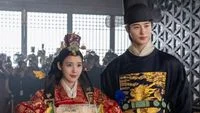
Seoul, South Korea – The highly anticipated Korean drama (K-drama) Perfect Crown has consistently demonstrated its formidable appeal, successfully maintaining its position at the pinnacle of viewership ratings and public discourse since its premiere on April 10, 2026. The series, starring critically acclaimed actors Byeon Woo Seok and IU, continues to captivate audiences both domestically and, increasingly, on the global stage, marking a significant milestone in the competitive landscape of Korean television.
The latest broadcast on May 2, 2026, saw Perfect Crown achieve an impressive nationwide rating of 11.2 percent, with an even higher 11.6 percent recorded in the Seoul metropolitan area, according to data released by Nielsen Korea. This achievement is particularly noteworthy as it marks a sustained level of performance, mirroring the robust 11.2 percent national rating garnered by the preceding episode. The consistent two-digit viewership figures underscore the drama’s strong hold on the Korean audience, a benchmark often indicative of a widely successful and culturally impactful production within the fiercely competitive domestic broadcast market. Achieving and maintaining such ratings is a clear signal of the drama’s widespread popularity and its ability to draw and retain a significant portion of the viewing public.
A Deep Dive into Rating Performance and Industry Benchmarks
The consistent performance of Perfect Crown above the 10 percent threshold is a critical indicator of its success. In the South Korean television industry, a drama achieving two-digit ratings is considered a major triumph, especially in an era of fragmented viewership across numerous linear channels, cable networks, and burgeoning streaming platforms. Nielsen Korea, the leading audience measurement company in the region, employs rigorous methodologies to compile its data, including a panel-based system that monitors TV viewing habits across a representative sample of households. The distinction between national and Seoul metropolitan area ratings is also significant; the latter often serves as an indicator of urban trends and the engagement of a more demographically diverse and often trend-setting audience. The higher rating in Seoul suggests a particularly strong resonance with viewers in the capital, often translating to broader cultural influence.
The previous episode, which aired prior to May 2, 2026, was a pivotal moment for the series, featuring a highly anticipated and emotionally charged scene: Prince Yi An (portrayed by Byeon Woo Seok) proposing to Hui Joo (played by IU). Such climactic plot developments are strategically placed within a drama’s narrative to maximize viewer engagement and often result in rating spikes. The fact that the subsequent episode managed to retain these elevated numbers speaks volumes about the drama’s ability to sustain narrative momentum and audience interest beyond singular impactful events. This consistency points to a well-crafted storyline, compelling character development, and strong performances that keep viewers invested week after week.
Dominating the Digital Discourse: The Buzz Factor
Beyond traditional viewership metrics, Perfect Crown has also established an undeniable presence in the digital realm. Good Data Corporation, a prominent analytics firm specializing in tracking media buzz and online sentiment for Korean television programs, reported that Perfect Crown has maintained its top position as the most talked-about K-drama for three consecutive weeks. This unprecedented streak highlights the drama’s pervasive influence across social media platforms, online forums, and news portals, reflecting a vibrant and engaged fan base. Good Data Corporation’s rankings are compiled by analyzing vast amounts of online data, including news articles, blog posts, social media comments, and community forums, providing a comprehensive overview of public interest and engagement.
The drama’s consistent dominance in these "buzz" rankings signifies its success in generating significant word-of-mouth, a crucial factor for modern entertainment properties. In an increasingly digital landscape, a strong online presence and high levels of discussion contribute not only to viewership but also to the overall cultural impact and longevity of a series. It suggests that Perfect Crown is not merely watched but actively discussed, debated, and celebrated by its audience, fostering a strong sense of community among its fans.
Star Power and Narrative Craftsmanship: The Pillars of Success
A significant factor contributing to Perfect Crown‘s soaring popularity is undoubtedly its lead cast. Byeon Woo Seok and IU, both established stars with considerable individual fan bases, have been consistently ranked as the most talked-about actors of the week, mirroring the drama’s overall dominance. Byeon Woo Seok, known for his charismatic screen presence and versatile acting, has seen his star power amplified by his portrayal of Prince Yi An, a character both regal and vulnerable. IU, a multi-talented artist celebrated for her singing, songwriting, and acting prowess, brings a compelling depth to the character of Hui Joo. Their on-screen chemistry, a critical element for any romance-driven drama, has been widely praised by critics and viewers alike, serving as a powerful magnet for audiences.
The narrative of Perfect Crown itself offers a compelling blend of genres that resonates deeply with K-drama enthusiasts. The story revolves around Grand Prince Yi An (Byeon Woo Seok), a nobleman beloved by the populace but caught in the perilous web of palace power struggles and political intrigue. Counterbalancing this traditional royal drama is Hui Joo (IU), a wealthy conglomerate heiress determined to transcend the rigid hierarchical boundaries of common citizenry. Their paths intersect through a strategic contractual marriage, an increasingly popular trope in K-dramas, which they enter into to achieve their respective individual goals. This setup provides a fertile ground for both romantic development and intense political drama, appealing to a broad spectrum of viewers.
The Unique Allure of a Fictional Monarchy in Korea
The drama’s unique setting—a fictionalized Korea operating under a monarchical system—has particularly captivated audiences. While modern South Korea is a republic, the fascination with historical and alternate-reality monarchies remains strong, drawing upon a rich cultural heritage and a love for intricate palace dramas. This blend of historical aesthetics with contemporary themes of ambition, social mobility, and contractual relationships creates a fresh and engaging narrative landscape. The premise allows for exploration of classic themes like duty versus desire, personal sacrifice for power, and the subversion of societal expectations, all wrapped in a visually stunning package characteristic of high-budget Korean productions. This distinct blend has helped Perfect Crown stand out in a crowded market, attracting viewers who appreciate both traditional historical drama elements and modern romantic tropes.
A Chronology of Ascendance
The journey of Perfect Crown from its premiere to its current reigning status has been marked by a steady and impressive climb:
- April 10, 2026: The drama officially premieres, generating significant pre-broadcast buzz due to its star-studded cast and intriguing premise. Initial ratings are strong, laying the groundwork for future success.
- Late April 2026: The series begins to gain traction, with its ratings steadily increasing week after week. Online discussions and social media engagement intensify as the plot thickens and character relationships develop.
- Week of April 21, 2026 (approx.): Perfect Crown first secures the top spot on Good Data Corporation’s list of most talked-about K-dramas, a position it would not relinquish for weeks to come.
- Early May 2026: The pivotal episode featuring Prince Yi An’s proposal to Hui Joo airs, generating significant emotional response and a notable spike in viewership, pushing national ratings into the coveted two-digit range.
- May 2, 2026: The latest episode airs, successfully maintaining the two-digit ratings, demonstrating the drama’s ability to convert peak viewership into sustained engagement. This solidifies its status as a ratings powerhouse.
- Present: Perfect Crown continues its reign, both in terms of traditional viewership and online popularity, becoming a benchmark for success in the current K-drama landscape.
Broader Industry Implications and Economic Impact
The resounding success of Perfect Crown carries significant implications for various stakeholders within the Korean entertainment industry. For the network broadcasting the series, the high ratings translate directly into increased advertising revenue and enhanced brand prestige. Such a hit drama can bolster a network’s overall market share and attract future high-profile productions. For the production company behind Perfect Crown, this success validates their creative vision and investment, potentially opening doors for more ambitious projects and lucrative international distribution deals.
The drama’s triumph also profoundly impacts the careers of its lead actors, Byeon Woo Seok and IU. Their heightened visibility and confirmed ability to draw audiences will undoubtedly lead to a surge in endorsement opportunities, expanded roles in future projects, and increased global recognition. For supporting cast members, the exposure from a hit drama can be a significant career accelerator.
Economically, the success of a K-drama like Perfect Crown contributes to the broader "Hallyu" or Korean Wave phenomenon. This includes a boost in related industries such as tourism (filming locations become popular destinations), fashion (trends set by characters), and music (original soundtracks often achieve standalone success). International streaming platforms are keenly aware of domestic success indicators, and Perfect Crown‘s strong performance makes it a prime candidate for lucrative global licensing and distribution, further extending its reach and cultural footprint worldwide. The global demand for K-dramas has been steadily increasing, with major platforms investing heavily in Korean content, and shows like Perfect Crown reaffirm the genre’s universal appeal.
Analyst Perspectives and Future Outlook
Industry analysts point to Perfect Crown‘s success as a testament to strategic casting, a compelling script that effectively blends popular tropes with fresh elements, and high production values. "The combination of established stars like Byeon Woo Seok and IU, a universally appealing ‘contract marriage’ premise, and the visually rich setting of an alternate historical Korea creates a potent formula," notes one Seoul-based entertainment critic. "The consistent ratings and buzz suggest that the creative team has struck a chord with what audiences are looking for in terms of escapism, romance, and political intrigue."
Looking ahead, the challenge for Perfect Crown will be to maintain its momentum through its remaining episodes and deliver a satisfying conclusion that lives up to the high expectations it has set. A strong finale could solidify its legacy as one of the defining K-dramas of 2026. Furthermore, its success could inspire a new wave of historical fantasy romance dramas, encouraging producers to explore similar genre fusions and narrative structures. The potential for spin-offs, sequels, or even adaptations in other markets also remains a distinct possibility, given the drama’s widespread popularity.
In conclusion, Perfect Crown has not merely achieved success; it has established a dominant presence in the K-drama landscape, setting new benchmarks for ratings and online engagement. Its journey from a highly anticipated premiere to a consistent chart-topper exemplifies the intricate interplay of compelling storytelling, stellar performances, and astute production strategies that define the pinnacle of Korean television entertainment. The drama’s enduring popularity is a powerful affirmation of the global appeal of K-dramas and a shining example of the genre’s continued evolution and influence.
Related News