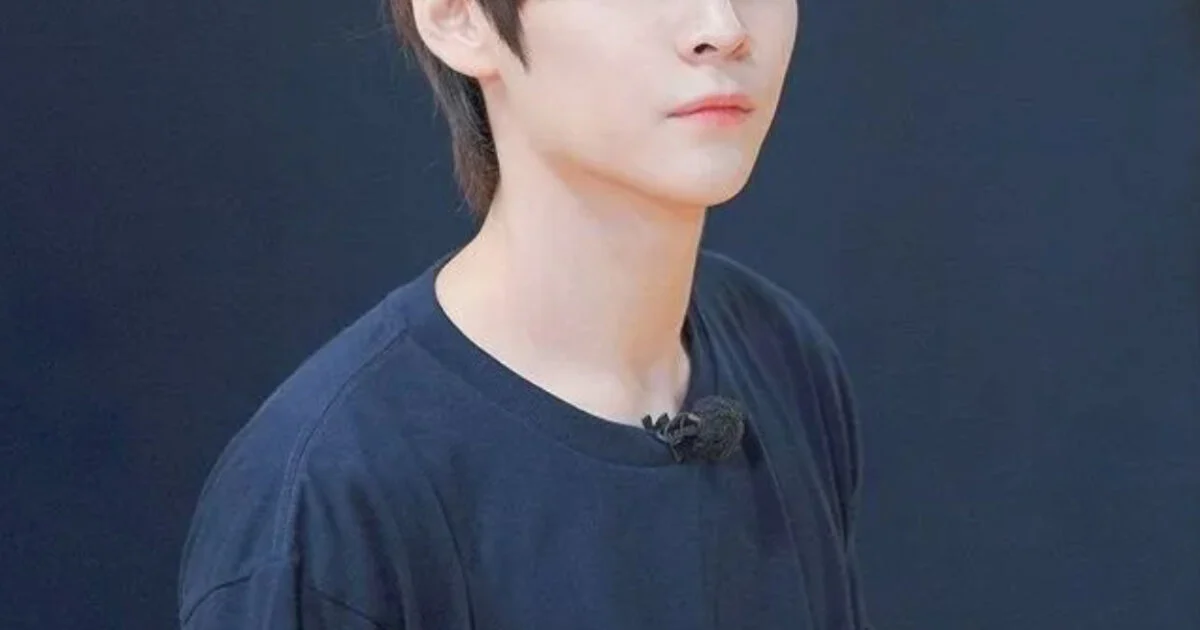
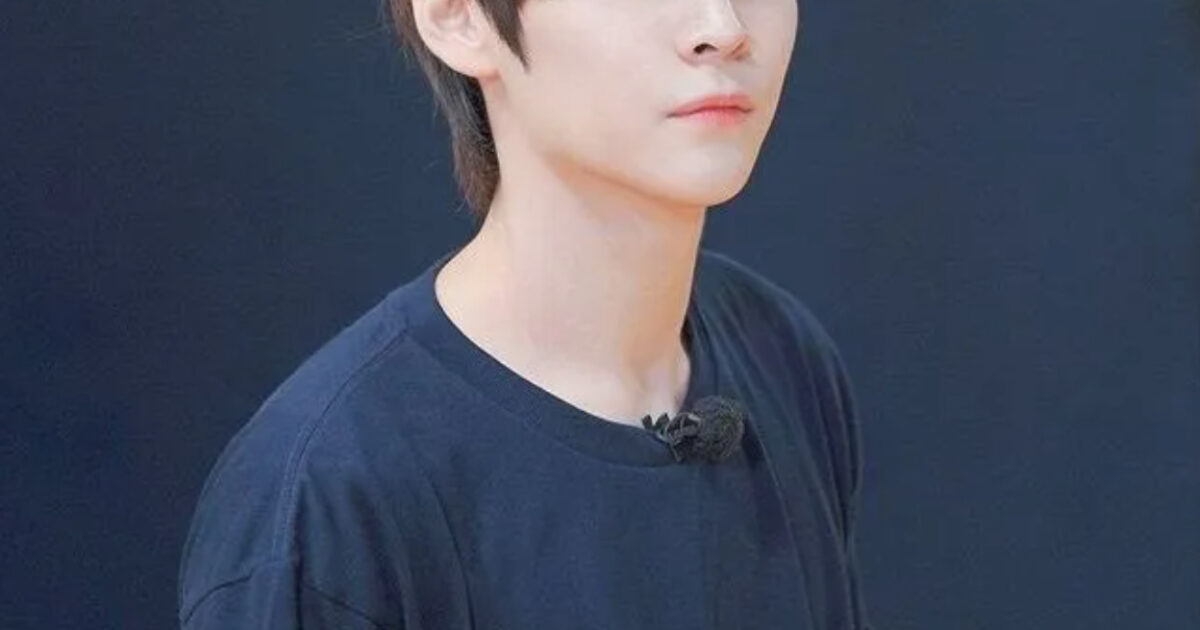
Eunseok, a prominent member of the South Korean boy group RIIZE, has issued a direct and formal apology following a social media controversy involving the use of a derogatory term. The incident, which unfolded during the celebration of Children’s Day in South Korea, saw the idol utilize a word historically associated with racial insensitivity, prompting a swift backlash from the global music community and a subsequent period of reflection from the artist. The event highlights the ongoing challenges K-pop idols face as they navigate the intersection of domestic cultural norms and the expectations of a diverse, global fan base.
The Incident: A Children’s Day Post Gone Wrong
On May 5, in observance of Children’s Day—a significant public holiday in South Korea where individuals often share nostalgic photos from their youth—Eunseok uploaded a childhood photograph to a fan communication platform. While the image itself was a standard commemorative post, the caption accompanying the photo contained the term kkamdoongie.
The term kkamdoongie is derived from the Korean word kkamman, which means "black." Historically, the term has been used in Korea to describe people with darker skin complexions, often in a way that is intended to be "cute" or familiar. However, in modern discourse and particularly within the context of global racial sensitivity, the word is widely recognized as a derogatory slur. It is frequently compared to the "n-word" or "darkie" in English, carrying heavy connotations of colorism and racial prejudice.
International fans, particularly those from the African diaspora and Western regions, were quick to identify the term and flag its offensive nature. The speed with which the message spread across social media platforms like X (formerly Twitter) and TikTok underscored the heightened vigilance of the global K-pop fandom regarding issues of cultural appropriation and racial insensitivity.
Chronology of the Controversy and Response
The timeline of the event suggests a rapid realization of the mistake by both the artist and his management team at SM Entertainment. Within a short window after the post was published, the message was deleted. However, screenshots of the original post had already circulated widely, leading to a polarized debate online.
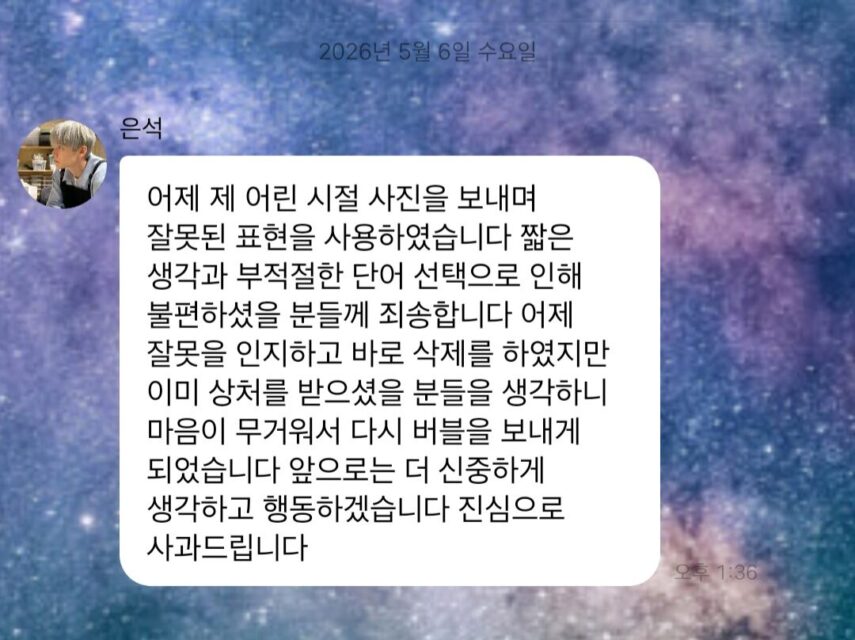
On May 6, roughly twenty-four hours after the initial post, Eunseok returned to the fan-to-artist communication app, Bubble, to address the situation directly. Unlike some instances where labels issue boilerplate statements, Eunseok took a personal approach to the apology, acknowledging the weight of his "thoughtless" actions.
In his message, Eunseok stated: "Yesterday, I used an inappropriate expression while sending a photo of myself from my childhood. I apologize to those who were offended by my thoughtless and wrong choice of words. Although I realized my mistake yesterday and deleted the post immediately, my heart still felt heavy thinking about the people I had hurt, so I decided to send another message here on Bubble. I sincerely apologize and will think and act more carefully in the future."
The direct nature of this apology—specifically naming the error as a "wrong choice of words" and admitting to a "heavy heart"—was noted by industry observers as an attempt to take full accountability rather than deflecting blame onto staff or technical errors.
Understanding the Linguistic and Cultural Context
The use of kkamdoongie sits at a complex juncture of Korean linguistic evolution. In decades past, the term was often used by older generations to describe children who had become tanned from playing outside in the sun. In that specific domestic context, many Koreans did not associate the word with global anti-Blackness, instead viewing it as a descriptor for a temporary physical state.

However, as South Korea has moved toward a more multicultural society and K-pop has become a dominant global export, the linguistic landscape has shifted. The term is now inextricably linked to colorism—the prejudice or discrimination against individuals with dark skin tones, typically among people of the same ethnic or racial group. In the K-pop industry, where idols are often praised for "porcelain" skin, the use of descriptors like kkamdoongie serves to reinforce harmful beauty standards and marginalize those with naturally darker complexions.
Furthermore, the comparison to Western racial slurs is not accidental. As Korean youth become more attuned to global social justice movements, there has been an internal push within South Korea to retire such terms from the vernacular. Eunseok’s use of the word, even if intended to describe his own tanned childhood self, was seen as a failure to recognize the broader harmful implications of the vocabulary.
Fan Reactions: A Divide Between Domestic and International Perspectives
The reaction to Eunseok’s apology highlighted a recurring divide in the K-pop fandom. On domestic Korean forums such as TheQoo and Nate Pann, many netizens expressed a degree of leniency. The prevailing sentiment among these users was that since Eunseok was referring to himself and had apologized promptly, the issue should be considered resolved. Some argued that the term is still misunderstood by many in Korea as a harmless childhood nickname, suggesting that the backlash was an example of "over-sensitivity" from international fans.
Conversely, the international fandom remained more critical. For many global fans, the repeated occurrence of such "mistakes" by idols under major labels like SM Entertainment suggests a systemic lack of cultural sensitivity training. RIIZE, being a "5th generation" group, was launched into a market that is more globalized than any previous era of K-pop. Critics argue that idols in this generation should be held to a higher standard of global awareness, as their content is consumed by millions of people across different racial and ethnic backgrounds.
Broader Implications for RIIZE and SM Entertainment
RIIZE, consisting of members Shotaro, Eunseok, Sungchan, Wonbin, Sohee, Anton, and Seunghan (who is currently on an indefinite hiatus), has been positioned as one of the leaders of the new K-pop era. Since their debut in September 2023, they have achieved significant commercial success and secured high-profile brand ambassadorships, including a global partnership with Louis Vuitton.
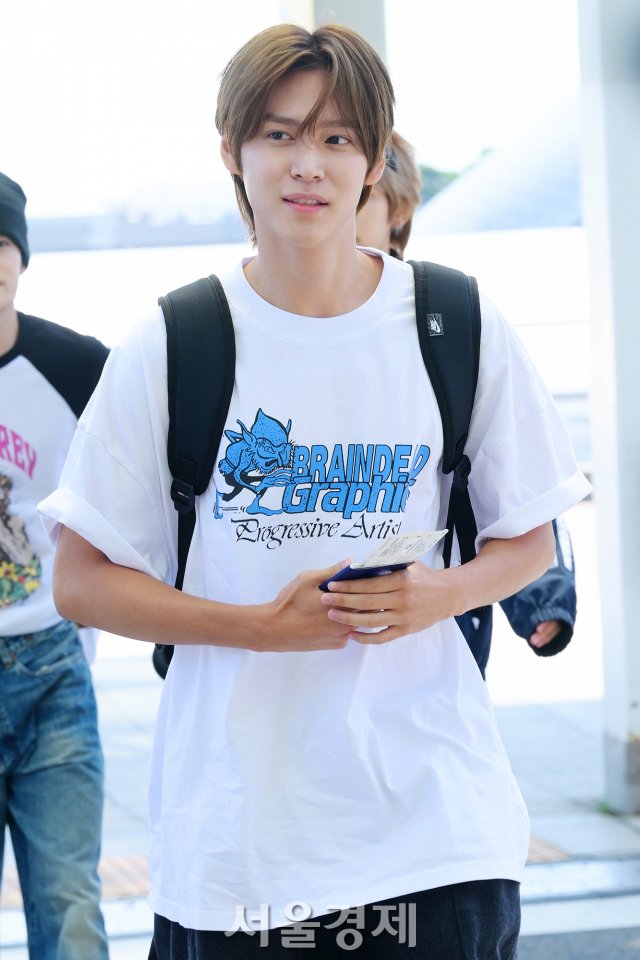
When an idol associated with luxury global brands and international music charts uses racially insensitive language, the stakes are significantly higher. Such incidents can jeopardize brand deals, limit touring opportunities in Western markets, and alienate the very fans responsible for the group’s "global" status.
For SM Entertainment, this incident serves as a reminder of the necessity for robust internal education. While the label has previously faced criticism for various instances of cultural insensitivity—ranging from hairstyles to music video sets—the direct apology from Eunseok suggests a shift in how the company manages these crises. By allowing the artist to speak directly to fans in a candid manner, the company likely hoped to humanize the mistake and demonstrate a genuine commitment to growth.
The Path Forward: Education and Accountability
The "Eunseok controversy" is part of a larger pattern in the Hallyu wave where the rapid expansion of Korean culture has outpaced the domestic awareness of global racial dynamics. In recent years, several high-profile idols have faced similar scrutiny for using the n-word in song covers, wearing culturally insensitive attire, or making remarks that touch on colorism.
The resolution of this specific incident will likely depend on Eunseok’s future actions. In the K-pop industry, "sincerity" is a highly valued trait. By acknowledging the hurt he caused and promising to be more "careful in the future," Eunseok has taken the first step toward rehabilitating his image. However, the incident serves as a cautionary tale for the industry at large.
As K-pop continues to solidify its place as a cornerstone of global entertainment, the demand for cultural competency will only increase. Fans are no longer satisfied with simple deletions or vague company statements; they require evidence of learning and a proactive effort to avoid the tropes of the past. For RIIZE, a group whose name is a combination of "Rise" and "Realize," this moment represents a difficult but necessary realization of the responsibilities that come with global stardom.
Moving forward, the focus will remain on whether SM Entertainment and other major agencies will implement more rigorous cultural sensitivity training to prevent such occurrences. For now, the discourse surrounding Eunseok remains a poignant example of the growing pains associated with a local industry transforming into a global powerhouse.