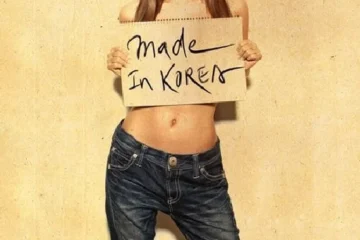
The Cultural Paradox of the Bean Paste Girl Understanding South Koreas Complex Relationship with Luxury and Status
Article Editorial Team

The global ascent of South Korean pop culture, often referred to as the Hallyu wave, reached a definitive milestone in 2012 with the release of Psy’s "Gangnam Style." While the world danced to the infectious beat and the "horse dance," social commentators and linguists pointed toward a deeper, more acerbic subtext within the lyrics. Central to this satire is the figure of the dwenjang-nyeo (된장녀), or "Bean Paste Girl." This term, which has permeated South Korean social discourse for over two decades, serves as a lightning rod for debates regarding consumerism, gender roles, and the psychological fallout of the nation’s rapid economic transformation. To understand the dwenjang-nyeo is to understand the friction between South Korea’s humble past and its hyper-capitalist present.
Defining the Dwenjang-nyeo: The Irony of the Fermented Bean
The term dwenjang-nyeo is a portmanteau of dwenjang (fermented soybean paste) and nyeo (woman). To grasp the insult, one must first understand the cultural weight of the soybean paste itself. Dwenjang jjigae, or bean paste stew, is a foundational element of the Korean diet. It is a humble, nutritious, and remarkably inexpensive dish, often associated with the warmth of a grandmother’s kitchen or the simplicity of rural life. In the early 2000s, a bowl of this stew typically cost between 3,500 and 5,000 Korean Won (approximately $3 to $4 USD).
The "Bean Paste Girl" archetype describes a young woman who deliberately chooses to eat this cheap, basic meal—not out of a preference for tradition, but as a strategic financial sacrifice. By saving money on essential sustenance, she accumulates the capital necessary to purchase high-end Western luxury goods. The quintessential image of the dwenjang-nyeo is a woman carrying a designer handbag—perhaps Louis Vuitton or Chanel—while holding a Starbucks latte that costs more than the meal she just consumed.
While the definition has shifted slightly over the years, three primary characterizations remain consistent:
- The Sacrificial Consumer: A woman from a modest background who lives frugally in private to project an image of extreme wealth in public.
- The Social Parasite: A woman who relies on the financial support of parents or romantic partners to fund a lifestyle she cannot personally afford.
- The Westernized Wannabe: A woman criticized for rejecting Korean cultural values in favor of a superficial, imported "New Yorker" lifestyle, symbolized by expensive coffee and European fashion.
Historical Chronology: From Post-War Frugality to Compressed Modernity
The emergence of the dwenjang-nyeo cannot be viewed in isolation; it is a direct consequence of South Korea’s "compressed modernization." The timeline of this evolution reveals a society that moved from agrarian poverty to a leading global economy in less than three generations.
1950s–1960s: The Era of Survival
Following the devastation of the Korean War, South Korea was among the poorest nations in the world. During this period, the nation relied heavily on foreign aid. Frugality was not a choice but a necessity for survival. The cultural ethos was centered on "tightening one’s belt" to rebuild the country.
1970s–1980s: The Miracle on the Han River
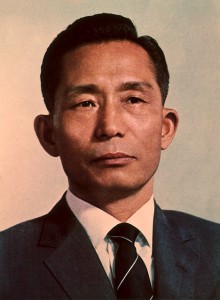
Under the authoritarian leadership of President Park Chung-hee, the South Korean government initiated aggressive economic development plans. National campaigns were launched to discourage kwasobi (excessive spending). Citizens were exhorted to save money in national banks to provide capital for industrial conglomerates (Chaebols). During this era, conspicuous consumption was viewed as unpatriotic, and the purchase of imported luxury goods was often restricted or heavily taxed.
1990s: Liberalization and the IMF Crisis
The 1990s saw the opening of South Korean markets to global brands. However, the 1997 Asian Financial Crisis (often called the "IMF Crisis" in Korea) served as a traumatic reminder of economic fragility. Even as the country recovered, the psychological shift had begun: wealth was no longer just for the nation’s growth; it was a tool for individual distinction.
2000s–Present: The Rise of the Status Symbol
By the early 2000s, South Korea had become one of the most wired and trend-conscious societies on earth. The introduction of high-end coffee chains like Starbucks in 1999 provided a new venue for social performance. The "Bean Paste Girl" term gained traction on internet forums around 2005-2006, coinciding with a surge in luxury brand consumption among the youth.

Supporting Data: The Economics of the Luxury Market
The vitriol directed at the dwenjang-nyeo is often disproportionate to the actual economic behavior of young women, yet the data shows why the "luxury obsession" became a national talking point. South Korea consistently punches above its weight in the global luxury market.
According to a 2022 report by Morgan Stanley, South Koreans are the world’s biggest spenders on personal luxury goods per capita. The analysis showed that South Korean spending on luxury goods grew by 24% in 2022 to $16.8 billion, or about $325 per person. This far exceeds the $280 spent per capita by Americans and the $55 spent by Chinese citizens.
The "Latte Index" also provides insight into the dwenjang-nyeo critique. For many years, the price of a Starbucks Americano or Latte in Seoul was significantly higher than in New York or London when adjusted for purchasing power. In the mid-2000s, spending 6,000 Won on a coffee while the minimum wage hovered around 3,000 Won per hour was seen by critics as a clear sign of fiscal irresponsibility.
The Gendered Lens: Why No Bean Paste Boy?
A significant point of contention in the dwenjang-nyeo discourse is the lack of a male equivalent. While young men also engage in conspicuous consumption—often through expensive electronics, cars, or designer streetwear—they rarely face the same level of public vilification.
Sociologists suggest several reasons for this disparity:

- The Visibility of Fashion: Handbags and coffee are highly visible, "portable" status symbols used in public spaces like subways and cafes, making women easier targets for observation and judgment.
- The "Mooch" Narrative: Traditional patriarchal structures often placed the financial burden on men. When women began demanding higher standards of living or expensive gifts, it was characterized by some men as "gold-digging," leading to the derogatory labeling of women who prioritized aesthetic consumption.
- OECD Gender Gap: South Korea consistently ranks at the bottom of the OECD for the gender wage gap. Critics argue that the dwenjang-nyeo trope is a form of "misogyny-lite," used to dismiss women’s economic choices and keep them in a defensive social position.
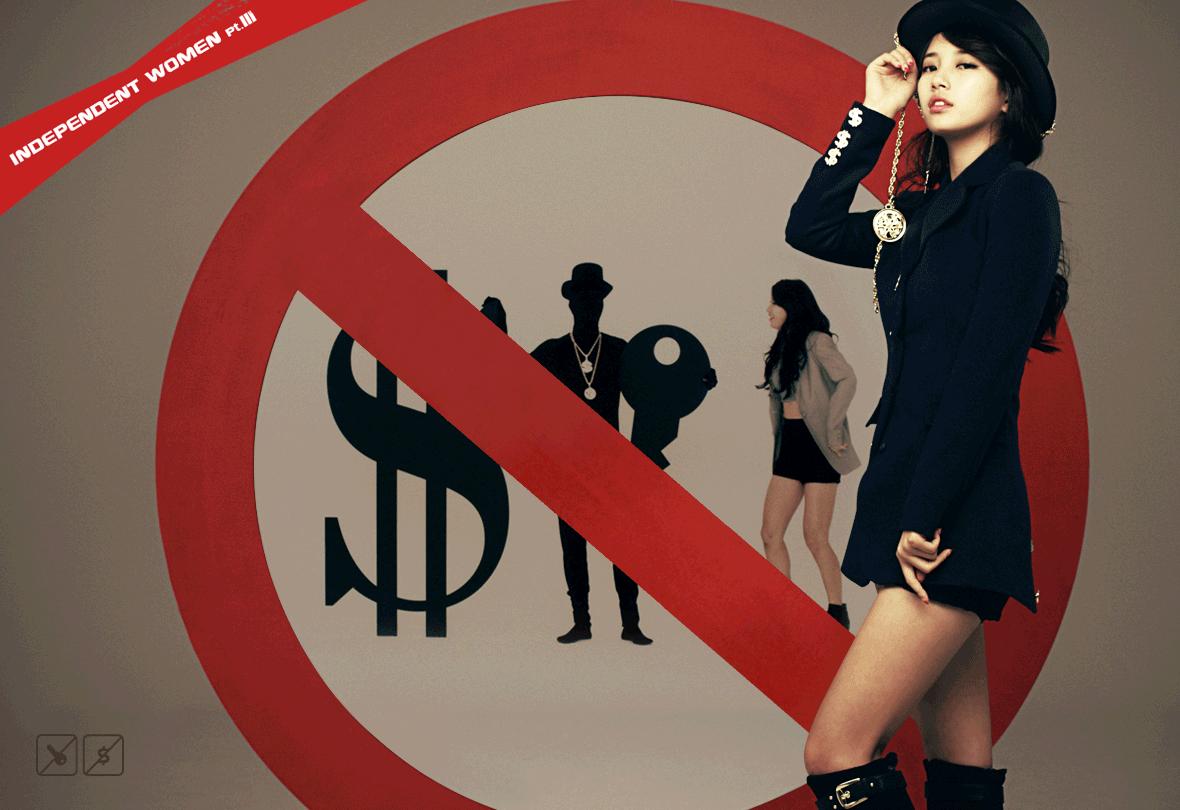
In recent years, some feminist voices have attempted to reclaim the term. They argue that if a woman works hard and chooses to spend her own earnings on a luxury item rather than traditional savings, she is exercising her right as an autonomous economic agent. This "Miss A" brand of feminism—referencing the K-pop group’s lyrics about being an independent woman—suggests that the bean paste girl is a victim of a double standard.
Broader Impact and Social Implications
The dwenjang-nyeo phenomenon has had a lasting impact on South Korean media and social policy. In television dramas, the "materialistic girl" became a stock character, often serving as the antagonist to a "hardworking, humble" heroine. However, the trope also reflects a deeper "status anxiety" prevalent in South Korean society.
In a hyper-competitive environment where social mobility is increasingly difficult, brand-name goods serve as a "positional good." When one cannot afford a luxury apartment in Gangnam, a luxury handbag serves as a more attainable proxy for status. The dwenjang-nyeo is, in many ways, a symptom of a society where one’s value is frequently measured by outward appearance and the brands one consumes.
Furthermore, the term paved the way for even more aggressive derogatory labels, such as kimchi-nyeo, a highly controversial term used by certain online communities to disparage women they perceive as selfish or ungrateful. This evolution shows how a term that started as a critique of consumption habits can morph into a broader tool for gender conflict.
Conclusion: A Mirror of Modernity
The dwenjang-nyeo is more than just a girl with a coffee and a bag; she is a mirror reflecting South Korea’s complex journey through the 21st century. She represents the tension between the frugal, communal values of the post-war generation and the individualistic, brand-conscious desires of the modern era.
While Psy’s "Gangnam Style" brought the satire of the Gangnam lifestyle to a global audience, the "Bean Paste Girl" remains a uniquely Korean construct—a product of specific historical pressures, economic triumphs, and unresolved gender tensions. As South Korea continues to lead global trends in fashion and technology, the debate over who gets to consume, and at what social cost, remains a central theme in the nation’s ongoing cultural narrative. Whether viewed as a victim of societal pressure or a shallow pursuer of status, the dwenjang-nyeo remains a definitive icon of the "Dynamic Korea" era.
Related News