The Chaebol Legacy Navigating the Intersection of K-Drama Fantasy and South Koreas Corporate Reality
Article Editorial Team

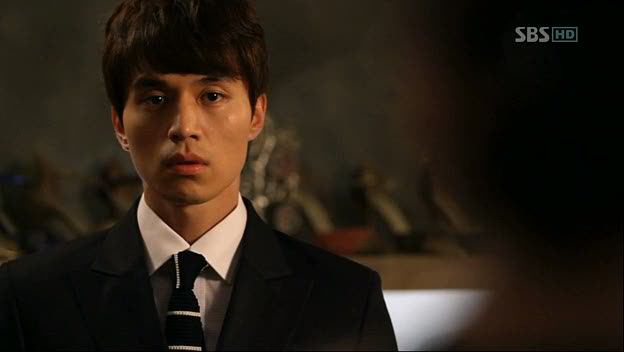
The archetype is a staple of South Korean television: a strikingly handsome, impeccably dressed, and often profoundly arrogant young man who navigates the corridors of power with a sense of weary entitlement. In the world of K-dramas, this character is almost invariably the heir to a "chaebol"—a massive, family-run conglomerate that wields immense influence over the nation’s economy and social fabric. He is typically seen clashing with a stern CEO father in a mahogany-row boardroom, only to later find redemption or conflict through a chance encounter with a hardworking woman from a modest background. While these narratives offer escapism and romanticism to millions of viewers globally, they reflect a complex and often polarizing reality within South Korean society. The term "chaebol" (재벌), derived from the characters for "wealth" or "property" and "clique" or "faction," describes a corporate structure that is uniquely Korean, deeply rooted in the nation’s history, and central to its identity as a global economic powerhouse.
Defining the Chaebol: More Than Just a Corporation
To the uninitiated, a chaebol might appear to be a standard multinational corporation, but its internal structure and external influence are distinct. A chaebol is characterized by a single family or a founding patriarch who maintains control through a complex web of cross-shareholdings. Unlike Western conglomerates, which are often managed by professional boards and diverse shareholders, chaebol leadership is typically hereditary. This model allows the founding families to maintain absolute authority over dozens of subsidiary companies across entirely unrelated industries.
The scale of these entities is difficult to overstate. In South Korea, the "Big Four"—Samsung, Hyundai, SK Group, and LG—dominate the domestic landscape. Their reach extends from high-tech electronics and automotive manufacturing to retail, insurance, heavy industry, and even food production. For instance, a South Korean citizen might live in an apartment built by a chaebol’s construction arm, use a smartphone manufactured by its electronics division, drive a car from its automotive subsidiary, and shop at a department store owned by the same parent group. This omnipresence ensures that the chaebol are not merely businesses; they are the pillars of the South Korean domestic economy.
The Historical Genesis: From War to Wealth
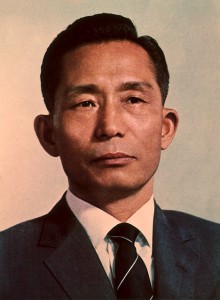
The rise of the chaebol is inextricably linked to the "Miracle on the Han River," the period of rapid economic growth that followed the devastation of the Korean War (1950–1953). When the armistice was signed in 1953, South Korea was one of the poorest nations in the world, with its infrastructure decimated and its population displaced. The emergence of the modern chaebol system began in earnest under the administration of President Park Chung-hee, who took power in a military coup in 1961.
Park’s administration implemented a series of Five-Year Economic Development Plans that prioritized export-oriented industrialization. To achieve rapid growth, the government hand-selected a group of promising entrepreneurs and provided them with unprecedented support. This support included:
- Preferential Financing: The government nationalized banks to ensure that low-interest loans were directed toward these selected companies.
- Protectionism: High tariffs and import restrictions were placed on foreign goods to allow domestic industries to grow without external competition.
- Labor Suppression: The state maintained strict control over labor unions to keep production costs low and ensure industrial stability.
- Strategic Directives: The government dictated which industries the companies should enter, moving from light textiles in the 1960s to heavy chemicals, shipbuilding, and electronics in the 1970s and 80s.
In exchange for this state-sponsored patronage, the chaebol were expected to meet strict export quotas. This symbiotic relationship between the "Blue House" (the presidential residence) and the corporate boardrooms created a powerful engine for growth, transforming South Korea into a leading industrial nation in just a few decades.
A Chronology of Influence and Crisis
The history of the chaebol is a timeline of meteoric ascent punctuated by systemic shocks. By the 1980s, groups like Samsung and Hyundai had become household names internationally. However, the unchecked expansion of these groups, fueled by excessive debt and government guarantees, led to a reckoning during the 1997 Asian Financial Crisis.

- 1960s–1970s: The foundational period where the government and chaebol formed a "Korea Inc." partnership.
- 1980s: Expansion into global markets and high-technology sectors.
- 1997: The Asian Financial Crisis hits. Several major chaebol, most notably the Daewoo Group—then the second-largest conglomerate in the country—collapsed under the weight of massive debt. The crisis forced the South Korean government to accept a $58 billion bailout from the International Monetary Fund (IMF).
- Post-1997 Reforms: In the wake of the crisis, the government mandated reforms to improve corporate transparency, reduce debt-to-equity ratios, and eliminate some cross-guarantees between subsidiaries.
- 2010s to Present: A period of increased public scrutiny and legal challenges. High-profile scandals involving chaebol leaders and political figures have led to calls for "economic democratization."
Supporting Data: The Economic Weight of the Giants
The influence of the chaebol can be quantified through their staggering contribution to South Korea’s Gross Domestic Product (GDP). Data from various economic institutes indicate that the revenue of the top five chaebol combined often equals nearly 50% to 60% of the nation’s total GDP.
Samsung Electronics alone is a titan of the global economy. As of recent fiscal reports, the Samsung Group accounts for approximately 15% to 20% of South Korea’s total exports. This concentration of wealth and power has created a "too big to fail" scenario. While these conglomerates provide high-paying jobs and prestigious career paths for many South Koreans, they also stifle competition. Small and medium-sized enterprises (SMEs) often struggle to survive in the shadow of the chaebol, as the conglomerates frequently expand into niche markets, such as bakeries or local logistics, utilizing their vast resources to undercut smaller competitors.
Public Perception and Official Responses
Public sentiment regarding the chaebol is deeply conflicted. On one hand, there is a sense of national pride in the global success of brands like Samsung and Hyundai. These companies are seen as the champions who carried Korea from poverty to the G20. On the other hand, there is growing resentment over the perceived "imperial" management styles of the founding families.
The phenomenon of "gapjil"—a term referring to the abuse of power by those in superior positions—has become a frequent topic of national debate. Notable incidents, such as the 2014 "nut rage" scandal involving a Korean Air executive (a daughter of the Hanjin Group chaebol), sparked international headlines and domestic outrage.

Official responses have varied by administration. Conservative governments have generally favored the chaebol, viewing them as the primary drivers of national stability. Progressive administrations, such as that of former President Moon Jae-in, campaigned on platforms of chaebol reform, seeking to limit the power of the founding families and protect minority shareholders. Despite various legislative attempts to curb their influence, the fundamental structure of the chaebol has proven remarkably resilient.
Implications for South Korea’s Future
The enduring dominance of the chaebol presents a unique set of challenges for South Korea’s future. One of the most pressing issues is the "Korea Discount," a term used by investors to describe the lower valuations of South Korean stocks compared to global peers. Analysts attribute this discount to opaque corporate governance and the tendency of chaebol leaders to make decisions that benefit the family rather than the shareholders.
Furthermore, the concentration of economic power is linked to the social phenomenon known as "Hell Joseon," a term used by the youth to describe the harsh socio-economic conditions and lack of upward mobility. The intense competition to secure a job at a top-tier chaebol has created a high-pressure education system and exacerbated wealth inequality.
However, the chaebol are also evolving. In response to global trends, many have begun to pivot toward sustainable energy, biotechnology, and artificial intelligence. They remain the largest investors in research and development within the country.
Conclusion: The Reality Behind the Drama
When K-drama fans watch a "chaebol heir" navigate a fictionalized version of Seoul’s corporate world, they are seeing a stylized reflection of a very real and potent force. The chaebol are the architects of modern South Korea, having built the nation’s prosperity through a unique blend of state cooperation and aggressive industrial expansion. Yet, the same system that enabled the "Miracle on the Han River" now faces scrutiny for its role in fostering inequality and political corruption.
As South Korea moves further into the 21st century, the relationship between the state, the public, and the conglomerates will continue to define the nation’s trajectory. Whether the chaebol can transition from family-run empires to transparent, modern corporations remains the central question of the South Korean economy. For now, they remain larger-than-life entities—omnipresent in the lives of citizens and endlessly fascinating as the subjects of the world’s most popular television dramas.
Related News