Girls’ Generation Wins Video of the Year at Inaugural YouTube Music Awards Signaling K-Pop Global Dominance
Article Editorial Team
The global music landscape witnessed a seismic shift on November 3, 2013, when the South Korean girl group Girls’ Generation, also known as SNSD, was announced as the winner of the Video of the Year award at the first-ever YouTube Music Awards (YTMA). Held at Pier 36 in New York City and streamed live to millions of viewers worldwide, the event was designed to celebrate the artists and videos that turned the platform into a primary driver of modern music culture. Girls’ Generation’s victory for their hit single "I Got a Boy" was not merely a win for a single group; it served as a definitive marker of the power of digital fan mobilization and the increasing mainstream penetration of Korean pop music (K-pop) beyond the borders of Asia.
The Inaugural YouTube Music Awards: A New Paradigm
The YouTube Music Awards were established as a digital-first alternative to traditional ceremonies like the MTV Video Music Awards or the Grammy Awards. Under the creative direction of acclaimed filmmaker Spike Jonze and hosted by actor Jason Schwartzman and musician Reggie Watts, the event aimed to reflect the actual consumption habits of the internet age. Rather than relying on a panel of industry insiders or academy members, the YTMAs leveraged "big data"—specifically engagement metrics such as views, likes, comments, and shares.
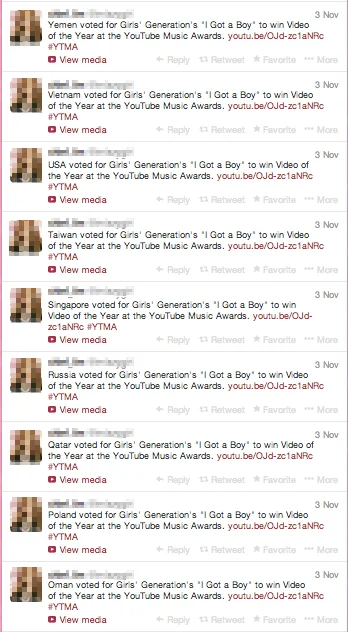
The Video of the Year category was the evening’s most prestigious honor. To determine the winner, YouTube selected nominees based on performance data from the previous year and then opened the final decision to a public vote. However, unlike traditional call-in or website-based voting, the YTMA required fans to share specific nomination videos across social media platforms including Twitter, Facebook, and Google+. This mechanic favored artists with highly organized, digitally savvy fanbases, setting the stage for a showdown between Western pop titans and the burgeoning global force of K-pop.
A Field of Global Heavyweights
The magnitude of Girls’ Generation’s win is best understood by examining the competition they faced. The nominee list for Video of the Year included some of the most recognizable names in the Western music industry, many of whom possessed massive radio airplay and established chart dominance in the United States. The nominees included:
- Justin Bieber – "Beauty and a Beat" (feat. Nicki Minaj)
- Miley Cyrus – "We Can’t Stop"
- Lady Gaga – "Applause"
- One Direction – "Best Song Ever"
- Selena Gomez – "Come & Get It"
- Demi Lovato – "Heart Attack"
- Macklemore & Ryan Lewis – "Thrift Shop"
- PSY – "Gentleman"
- Epic Rap Battles of History – "Barack Obama vs. Mitt Romney"
Despite the presence of Miley Cyrus, whose "We Can’t Stop" was a cultural phenomenon that year, and Justin Bieber, who historically commanded the most engaged digital audience, it was the nine-member group from SM Entertainment that secured the trophy. Tiffany Hwang, a member of the group, accepted the award on behalf of her bandmates, expressing shock and gratitude for the global support.
The Mechanics of a Digital Fandom: Power Voting and Global Relay
The victory of "I Got a Boy" was the result of a sophisticated and highly disciplined campaign by the group’s global fanbase, known as "Sones." While Western fanbases often rely on organic momentum, K-pop fandoms have long pioneered structured "power voting" techniques. In the weeks leading up to the ceremony, Sones organized what were effectively "voting relays" across different time zones.
As fans in Asia concluded their daily voting efforts, they would pass the baton to fans in Europe, who would then transition the workload to fans in North and South America. This ensured that the engagement metrics for Girls’ Generation remained constant 24 hours a day. Fans utilized multiple accounts and devices, creating a flood of social media activity that made the "I Got a Boy" nomination video the most shared link in the category.
Industry analysts noted that while the "eyes-to-screen" unique viewership might have been lower for Girls’ Generation compared to an artist like Justin Bieber, the intensity of their audience’s engagement was significantly higher. This phenomenon highlighted a critical distinction in the digital age: the difference between a "casual listener" and a "dedicated participant."
"I Got a Boy": An Experimental Catalyst
The song that led to this historic win, "I Got a Boy," was itself a departure from standard pop structures. Released on January 1, 2013, the track was a genre-bending experimental piece that fused elements of bubblegum pop, hip-hop, dubstep, and rock. Its unconventional structure—characterized by frequent tempo changes and a "multi-song-in-one" feel—was initially met with mixed reviews from critics but was praised for its ambition.
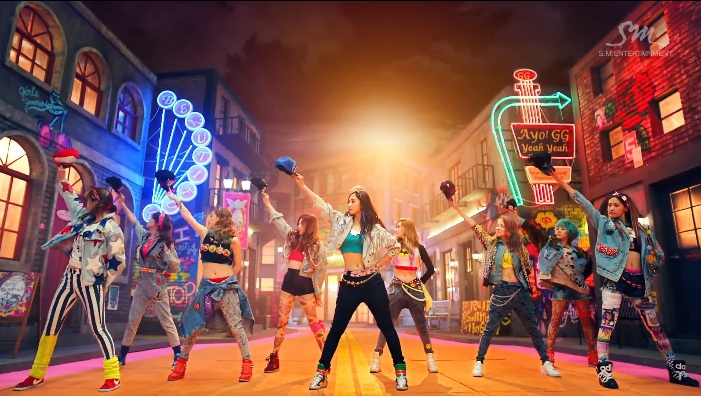
The music video was a visual spectacle of high-fashion streetwear, intricate choreography, and vibrant sets, perfectly suited for the YouTube medium. By the time of the YTMAs, the video had already amassed tens of millions of views, proving that the group’s aesthetic and musical output had a universal appeal that transcended language barriers.
Cultural Friction and the "Who is Girls’ Generation?" Backlash
The announcement of the win was met with a wave of confusion and, in some corners of the internet, open hostility from Western music fans. On Twitter, the hashtag "Who is Girls’ Generation?" trended briefly as fans of Justin Bieber and One Direction expressed frustration that an "unknown" group had beaten their idols.
This reaction exposed a significant cultural divide. While Girls’ Generation was a household name across Asia and had sold out arenas in multiple continents, they were still a niche act in the American mainstream consciousness in 2013. The backlash often carried xenophobic undertones, with some users questioning why a "foreign" group was winning an American-hosted award.
However, many music journalists argued that this friction was a necessary growing pain for a globalizing industry. The win forced the Western music establishment to acknowledge that the center of gravity in pop culture was shifting. It was no longer enough to be popular on U.S. radio; global digital dominance required a level of fan engagement that K-pop had perfected.
Chronology of the 2013 YouTube Music Awards Win
- January 1, 2013: Girls’ Generation releases the "I Got a Boy" music video, garnering over 10 million views within the first 55 hours.
- October 21, 2013: YouTube announces the first YouTube Music Awards and reveals the nominees for Video of the Year based on performance data.
- October 22 – November 3, 2013: The voting period commences. K-pop fanbases mobilize globally, using social media shares to drive the group to the top of the leaderboard.
- November 3, 2013: The live ceremony takes place in New York. Tiffany Hwang accepts the Video of the Year award, marking the first time a Korean artist wins a major category at a Western digital music awards show.
- November 4, 2013: Media outlets worldwide, including CNN and The Wall Street Journal, report on the "upset" victory, bringing Girls’ Generation to the forefront of international news.
Implications for the Future of K-Pop and SM Entertainment
The success at the YTMAs served as a validation of SM Entertainment’s "Culture Technology" strategy, which focused on creating localized content with global appeal. Following the win, speculation intensified regarding the group’s formal expansion into the United States. While the group had previously signed with Interscope Records for the release of "The Boys" in 2011, the YTMA win provided a renewed sense of legitimacy for their American aspirations.
Furthermore, the win paved the way for future K-pop acts. If PSY’s "Gangnam Style" in 2012 was a viral anomaly, Girls’ Generation’s 2013 win proved that the K-pop model was sustainable and capable of producing consistent, high-level engagement. It signaled to Western labels and media platforms that the K-pop audience was a demographic that could no longer be ignored.
Conclusion: A Legacy of Digital Mobilization
Looking back, the 2013 YouTube Music Awards was a watershed moment. It was the point where the "vocal minority" of the internet proved they could outmaneuver the "passive majority" of mainstream pop culture. For Girls’ Generation, the award was a crowning achievement in a career that had already spanned six years of dominance in South Korea and Japan.
While the group eventually shifted their focus back to Asian markets, the impact of their win remains. It established the blueprint for how international artists can leverage digital platforms to bypass traditional gatekeepers. Today, as K-pop groups like BTS and BLACKPINK regularly top the Billboard charts and win major Western awards, they do so on a path that was significantly widened by the organized, passionate, and relentless efforts of the Girls’ Generation fans who clicked "share" in the autumn of 2013.
Related News