The Global Expansion of K-pop and the Persistent Challenges Facing the International Fan Diaspora
Article Editorial Team

The global ascent of South Korean popular music, commonly known as K-pop, has transformed from a regional cultural export into a multi-billion-dollar global industry. Central to this phenomenon is the "international fan" or "i-fan," a demographic that exists outside the Korean Peninsula but remains the primary engine for the genre’s digital consumption and global chart dominance. Despite the technological advancements that have bridged the geographical gap between Seoul and the rest of the world, this international community operates within a unique framework of logistical, linguistic, and social challenges. As K-pop continues to integrate into the global mainstream, the friction between the industry’s centralized Korean operations and its decentralized global audience highlights a series of persistent hurdles that define the modern i-fan experience.
The Digital Architecture of Global Fandom
The international K-pop diaspora is a community bound together by digital infrastructure rather than physical proximity. From the tropical climates of Southeast Asia to the urban centers of South America and the suburbs of North America, technology serves as the primary conduit for cultural exchange. However, this reliance on digital mediation introduces the first and perhaps most pervasive challenge: the translation barrier.

For many years, the burden of translation fell almost entirely on volunteer "fan-subbers." These individuals or collectives would spend hours translating variety shows, interviews, and social media posts, often navigating complex copyright landscapes to provide content to non-Korean speakers. While platforms like YouTube and V-Live (now integrated into Weverse) eventually introduced official subtitling, the delay between a content release and its translation remains a point of significant frustration. I-fans frequently encounter "dead zones" where content is released in Korean, leaving them to rely on machine translations or the hope that a bilingual fan will provide a summary. This linguistic gap creates a tiered experience within the fandom, where those who do not speak the language are often the last to receive news or understand the nuances of their favorite artists’ personalities.
Navigating Cultural Misunderstandings and Gender Perceptions
The international consumption of K-pop often involves a clash of cultural norms, particularly regarding aesthetics and gender expression. In many Western societies, the "idol" aesthetic—characterized by meticulous grooming, makeup, and "flower boy" (kkonminam) imagery—challenges traditional perceptions of masculinity. International fans frequently find themselves in the position of cultural mediators, defending their interests against uninitiated peers.
A common occurrence in the i-fan experience involves the scrutiny of their personal media, such as phone wallpapers or social media headers. Figures like Ren (formerly of NU’EST), known for his androgynous styling during his early career, often become catalysts for awkward social interactions. The i-fan is frequently tasked with explaining that the "pretty" individual on their screen is, in fact, a male performer. These interactions highlight a broader societal resistance to non-Western standards of beauty and performance. The bewilderment of the "uninitiated" often leads to a defensive posture from the fan, who must navigate accusations of "weirdness" or "immaturity" simply for appreciating a different cultural standard of artistry.

The Terminological Barrier: A Specialized Lexicon
As the K-pop community has grown, it has developed a specialized vocabulary that is often incomprehensible to those outside the bubble. Terms such as "bias" (one’s favorite member), "comeback" (a new release), "aegyo" (displays of cuteness), and "sasaeng" (obsessive, intrusive fans) form a linguistic shorthand that facilitates communication within the fandom but alienates the general public.
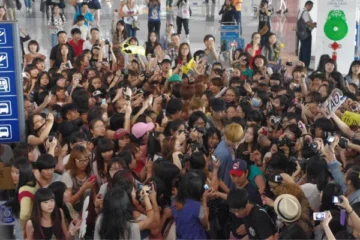
The use of this terminology in "real-world" contexts often leads to social friction. When an international fan attempts to explain the mechanics of the industry—such as the difference between a "fansign" and a concert, or the role of "fansites" in capturing "airport fashion"—they are often met with confusion. The complexity of the K-pop ecosystem, which includes rigorous training periods, highly choreographed social media presence, and specific fan-driven milestones, requires a glossary that many outsiders are unwilling to learn. This further isolates the i-fan, creating a subculture that feels increasingly insular.
Geographic Disparity and the "World Tour" Paradox
Perhaps the most significant grievance for the international fan is the geographic limitation of the "World Tour." Despite the global demand for K-pop, the industry’s touring circuits remain heavily concentrated in East Asia and select major cities in North America and Western Europe. For fans in Latin America, Africa, the Middle East, and many parts of Southeast Asia, the opportunity to see an idol live is a rare, often once-in-a-lifetime event.

The term "i-fan" itself has come to symbolize a digital-only existence. Many fans must consume their fandom through 1080p high-definition videos and shaky fan-recorded clips (fancams) rather than physical attendance. This geographic exclusion creates a sense of "second-class citizenship" within the global fandom. While domestic Korean fans can attend weekly music show recordings or local fan meetings, the international fan is often left to participate through their screens, wearing fandom colors in their bedrooms while watching a livestream at 3:00 AM due to time zone differences.
Linguistic Hybridity and the Controversy of English Lyrics
In an effort to appeal to the global market, many K-pop agencies have increased the use of English lyrics in their songs. While this makes the music more accessible, it has historically led to the "Engrish" phenomenon—the use of English phrases that are grammatically unconventional or contextually awkward. Lines like "You zoom zoom my heart like a rocket" or the famously repetitive "Cola cola cola so fantastic" are often cited as moments of cognitive dissonance for native English-speaking fans.
While these lyrics are often catchy and serve the rhythmic needs of the song, they present a challenge for the i-fan who wishes to present K-pop as a "serious" musical genre to their peers. However, in recent years, this has shifted. Groups like BTS, Blackpink, and NewJeans have moved toward more fluent, often entirely English, releases. This transition has sparked a debate within the community regarding whether the "K" in K-pop is being diluted to cater to Western tastes, or if this is simply the natural evolution of a globalized genre.

Psychological and Cultural Dissociation
A more profound and less discussed aspect of the i-fan experience is the gradual dissociation from one’s own local culture. As fans immerse themselves in Korean media—consuming not just music but also television (K-dramas), food, and language—they may find their local culture feeling increasingly foreign.
It is not uncommon for long-term international fans to find local radio hits sounding "strange" compared to the highly produced, multi-genre structures of K-pop. This cultural shift can lead to a sense of alienation from one’s immediate environment. The more a fan embraces the aesthetics and values of the Hallyu wave, the more they may feel like an outsider in their own country. This dissociation is often a byproduct of the intense "escapism" that K-pop provides, offering a vibrant, idealized world that stands in stark contrast to the mundane realities of the fan’s daily life.
Societal Perception and the Subcultural Struggle
Despite its massive economic impact, K-pop fandom is still frequently stigmatized in many societies. International fans often feel the need to "closet" their interests in professional or formal settings to avoid being labeled as obsessive or "fangirls"—a term often used pejoratively to dismiss the interests of young women.

The act of "fangirling" in public—such as reacting to a new music video or a social media update—is often met with judgment. This social repression forces fans into a double life where their passion is relegated to private digital spaces. The original article notes that this feeling of being unable to express oneself could be seen as a violation of the spirit of personal freedom, though in a journalistic context, it is more accurately described as a struggle for subcultural legitimacy. The "repressed" nature of the fandom has, ironically, strengthened the bonds within the community, as fans turn to one another for the validation they do not receive from the broader society.
Industry Response and Future Implications
The South Korean entertainment industry is not blind to these struggles. Major corporations like HYBE, SM Entertainment, JYP Entertainment, and YG Entertainment have begun to pivot their strategies to better serve the international diaspora. This includes the establishment of US-based subsidiaries, global auditions for multi-national groups, and the integration of sophisticated translation AI on fan platforms.
Data from the Korea Foundation’s "Hallyu Status" reports indicate that the number of global Hallyu fans has surpassed 200 million. This sheer volume of consumers is forcing a change in how content is delivered. We are seeing a move toward "localized" K-pop—groups that follow the K-pop training model but are based in and sing in the language of their target markets (e.g., JYP’s VCHA or HYBE’s KATSEYE).

While these industry shifts address some of the logistical hurdles, the fundamental "i-fan" experience remains one of distance and negotiation. The international fan remains a vital, albeit often misunderstood, component of the global music economy. Their willingness to navigate language barriers, social stigma, and geographic isolation is what has allowed K-pop to transcend its borders. As the industry evolves, the "i-fan" will likely remain at the forefront of digital cultural consumption, serving as a bridge between the localized origins of the music and its global aspirations. The struggle, it seems, is part of the bond that keeps the community resilient.
Related News