Paul McCartney and John Lennon Lead All-Time Billboard Hot 100 Songwriting Ranks, Max Martin Dominates Producer Chart
Article Editorial Team
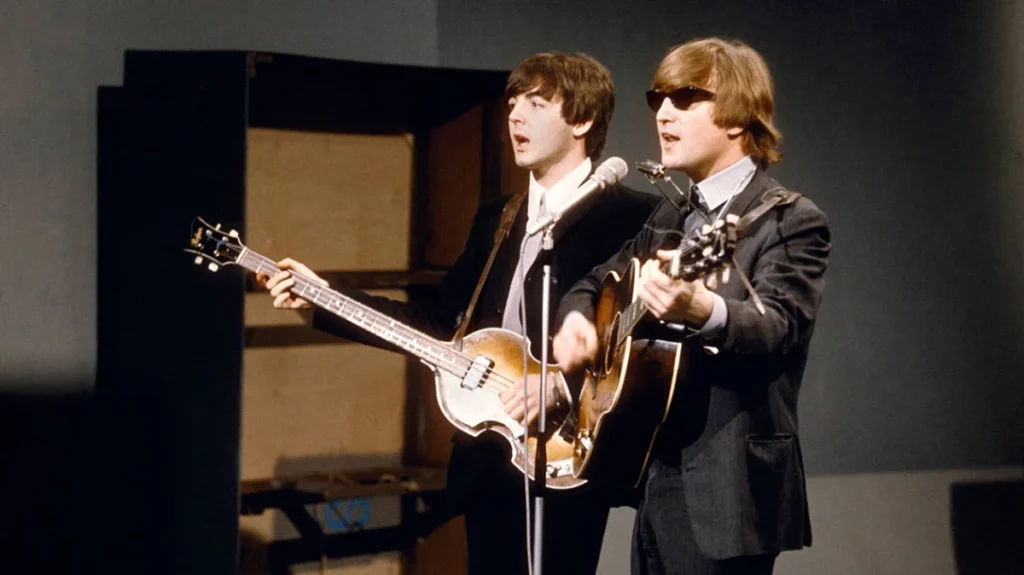
The illustrious history of the Billboard Hot 100 is a testament to the enduring power of musical artistry, and a deeper look into its archives reveals the titans of songwriting and production who have consistently shaped the charts. While The Beatles hold the record for the most No. 1 singles as recording artists with an impressive 20, the individuals behind the pen and the mixing board have achieved their own monumental feats. Among songwriters, Paul McCartney and John Lennon, the legendary duo from The Beatles, stand at the pinnacle, with McCartney boasting 32 co-written Hot 100 No. 1s and Lennon following closely with 26. This remarkable achievement is further amplified by the modern-day dominance of Swedish songwriter and producer Max Martin, who has surged to the second position on the all-time writers’ list with 30 chart-topping hits.
On the production side, Max Martin has not only surpassed contemporary rivals but also historical giants, now holding the record for the most Billboard Hot 100 No. 1s as a producer with 28. This achievement marks a significant shift in the historical landscape, as Martin has now outpaced the esteemed George Martin, the visionary producer behind the majority of The Beatles’ iconic sound. The data, compiled through extensive research by the Billboard charts department and drawing on the invaluable historical records of Fred Bronson’s "The Billboard Book of Number One Hits," provides a comprehensive overview of these influential figures up to the chart dated June 13, 2026.
The Architects of Chart Success: Songwriters’ Pantheon
The competition for the most songwriting credits on Billboard Hot 100 No. 1 singles is a testament to sustained creativity and a keen understanding of popular music. Paul McCartney’s unparalleled 32 No. 1s are a direct result of his prolific songwriting partnership with John Lennon during The Beatles’ meteoric rise, as well as his highly successful solo career and collaborations. Lennon’s 26 No. 1s similarly reflect his immense contribution to The Beatles’ catalog and his own post-Beatles work.
Max Martin’s ascent to the second spot is a remarkable story of modern pop music mastery. His career, which began to gain significant traction in the late 1990s, has seen him craft a string of global smashes for an array of artists. His first Hot 100 No. 1 as a writer was Britney Spears’ breakthrough hit "…Baby One More Time" in 1999, and his most recent chart-topper, as of the compilation’s cutoff, is Ariana Grande’s "Hate That I Made You Love Me." This extensive run highlights his consistent ability to connect with audiences across generations.
The historical context of songwriting on the Hot 100 reveals a fascinating evolution. Early pioneers often penned their own hits or worked within tight-knit writing teams. As the music industry matured, the role of the dedicated songwriter became increasingly prominent, with individuals specializing in crafting melodies and lyrics for a diverse roster of performers. McCartney and Lennon, while also performers, exemplify the power of a strong songwriting partnership that transcends the act of singing. Martin, on the other hand, represents the contemporary model of a hitmaker who may not be the performing artist but whose sonic vision and lyrical hooks are central to a song’s success.

The Maestros of Sound: Producers’ Reign
The producer’s role in shaping a song’s final sound is paramount, and the Billboard Hot 100’s producer rankings showcase those who have consistently delivered chart-topping hits. Max Martin’s 28 No. 1s as a producer underscore his innovative production techniques and his ability to imbue songs with a distinctive, commercially viable sound. His production journey mirrors his songwriting success, beginning with "…Baby One More Time" and continuing through to "Hate That I Made You Love Me."
George Martin, often hailed as the "Fifth Beatle," was instrumental in crafting the sonic landscape of The Beatles’ most iconic work. He produced 19 of their 20 No. 1 singles. The sole exception, "The Long and Winding Road" from 1970, was famously produced by Phil Spector. George Martin’s influence extended beyond The Beatles, as he also produced other significant chart-toppers, including America’s "Sister Golden Hair" (1975), Paul McCartney and Stevie Wonder’s "Ebony and Ivory" (1982), McCartney and Michael Jackson’s "Say, Say, Say" (1983-84), and Elton John’s "Candle in the Wind 1997" (1997-98). His legacy is one of groundbreaking studio techniques and an unwavering commitment to artistic excellence.
The shift in producer dominance from figures like George Martin, whose career spanned the analog era, to modern architects like Max Martin, who navigates the digital soundscape, reflects the evolving nature of music production. While George Martin was renowned for his orchestral arrangements and innovative studio experimentation, Max Martin is celebrated for his meticulous attention to sonic detail, his mastery of pop song structures, and his ability to create infectious hooks that resonate with a global audience.
Beyond the Top Tier: Notable Achievements and Contributions
While McCartney, Lennon, and Martin occupy the top echelons, other artists and creators have left indelible marks on the Billboard Hot 100. Mariah Carey, a formidable force as a recording artist with 19 No. 1s, also boasts significant achievements as a writer and producer. Her count stands at 18 No. 1s as a writer and 15 as a producer, with her enduring holiday anthem "All I Want for Christmas Is You" finally reaching the summit in December 2019, a testament to its timeless appeal. Notably, all of Carey’s chart-toppers except for her 1992 cover of the Jackson 5’s "I’ll Be There" were self-penned.
Barry Gibb of the Bee Gees also features prominently, with his songwriting and production credits contributing to the group’s nine Hot 100 No. 1s. He, along with Albhy Galuten and Karl Richardson, produced seven of these hits and all three of Andy Gibb’s chart-toppers.
The dynamic duo of James "Jimmy Jam" Harris III and Terry Lewis have been instrumental in shaping the sound of pop and R&B since the 1980s. They have cowritten and coproduced 14 Hot 100 No. 1s, including nine for Janet Jackson. Their production credits also extend to George Michael’s "Monkey" and Usher’s "U Remind Me," bringing their total as producers to 16. As writers, they have 15 No. 1s, including Mariah Carey’s "Always Be My Baby."

Motown legends Brian Holland, Lamont Dozier, and Eddie Holland collectively earned 13 Hot 100 No. 1s as writers. Their prolific collaboration, particularly with The Supremes, where Brian Holland and Dozier also served as producers, resulted in the first 10 of The Supremes’ 12 chart-topping singles in the 1960s, cementing their place in music history.
A special mention is warranted for Steve Sholes, who, though not appearing on the contemporary Hot 100 rankings, produced 10 No. 1s by Elvis Presley on predecessor charts in the late 1950s and six of Presley’s seven Hot 100 leaders following the survey’s inception. His work with "The King" laid crucial groundwork for the rock and roll era.
The Enduring Impact of Chart Dominance
The statistics compiled by Billboard offer a quantitative measure of musical impact, but the qualitative influence of these songwriters and producers is immeasurable. Their work has not only defined eras but has also inspired countless artists and shaped the very fabric of popular music. The ability to consistently craft songs that resonate with millions, to evoke emotions, and to provide the soundtrack to people’s lives is a rare gift.
The ongoing success of artists like Ariana Grande, who recently secured a No. 1 with "Hate That I Made You Love Me," a song co-written and produced by Max Martin, demonstrates the enduring power of these hitmakers. It highlights the cyclical nature of musical influence, where contemporary artists build upon the foundations laid by previous generations. The Billboard Hot 100 remains the ultimate arbiter of popular music success, and the individuals who consistently contribute to its uppermost echelons are undeniably the architects of our shared musical landscape. As the charts continue to evolve, the legacies of these songwriting and production titans will undoubtedly continue to inspire and influence the music of tomorrow.
Related News