The South Korean music industry, commonly known as K-pop, has long been celebrated for its highly organized and dedicated global fanbases. These communities are frequently recognized for their positive contributions, ranging from large-scale charitable donations and environmental initiatives to the elaborate "fan projects" that light up stadiums across the world. However, this fervent devotion has a darker corollary. As the industry grows in economic influence, a troubling trend of entitlement, digital harassment, and physical endangerment has emerged, raising critical questions regarding the boundaries between consumer support and the personal agency of the artists. The recent series of incidents involving members of f(x), SHINee, and Super Junior serves as a stark reminder of the volatile nature of the idol-fan relationship and the industry’s historical reluctance to address toxic behaviors.
The Digital Frontier and the Deletion of Krystal’s Social Media
In mid-2013, the digital landscape became a primary site of conflict when Krystal Jung, a member of the girl group f(x), was forced to deactivate her Instagram account, @kjungxox. The catalyst for this withdrawal was not a scandal of her own making, but rather the actions of G-Dragon, the leader of Big Bang. After G-Dragon "liked" several of Krystal’s photographs on the platform, a segment of his fanbase interpreted the interaction as a sign of a burgeoning romantic relationship.
The reaction was swift and aggressive. Krystal’s comment sections were flooded with derogatory remarks, threats, and harassment from fans who viewed her as a threat to their perceived "connection" with G-Dragon. Furthermore, reports surfaced indicating multiple attempts to hack into her account. This incident highlighted a growing problem in the K-pop ecosystem: the weaponization of social media by fans to police the social interactions of idols. For Krystal, the platform meant for fan engagement became a liability, leading to her eventual exit from the service to preserve her mental well-being and privacy.
The Jonghyun Controversy: Apologizing for a Private Life
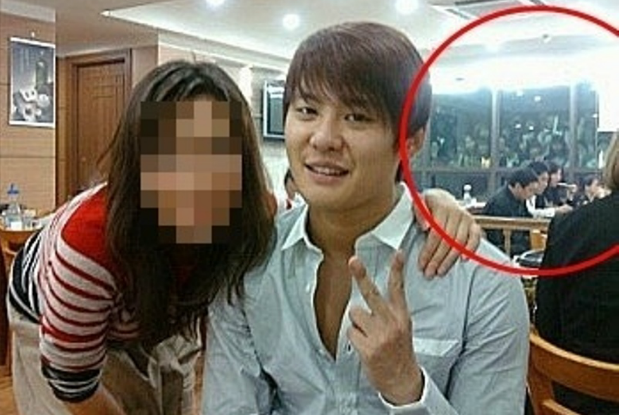
The pressure of fan expectations is perhaps most visible in the policing of an idol’s romantic life. In August 2013, SHINee’s Jonghyun was photographed at a movie theater with a female acquaintance. In many entertainment markets, such an event would be considered mundane; however, in the context of K-pop, it triggered an immediate wave of speculation and criticism. Despite the lack of evidence of a romantic relationship, the backlash was significant enough to prompt a formal response from the artist himself.
Jonghyun took to Twitter to issue an apology that many observers found both heartbreaking and unnecessary. He stated, “My stories are appearing a lot on community sites. If I tell you just the facts, I went to the movies with my friends, and they’re just my friends, not celebrities. I hope no one gets hurt by this. I found out because my friend sent me a picture. I’m happy that there’s many people around me who care for me like this. It’s late, go to sleep. There must be a lot of people who are taking breaths of relief, I’m sorry. Even though it’s not something I should be sorry about, I’m sorry.”
The phrase "even though it’s not something I should be sorry about" underscores the internal conflict many idols face. They are aware of their right to a private life, yet they are tethered to a business model that markets them as "available" to their fans. This apology was not for a moral failing, but for the perceived breach of a parasocial contract that demands total transparency and emotional exclusivity.
Institutionalized Exclusion: The "Only 13" Movement and Super Junior
The influence of fanbases is not limited to the digital harassment of individuals; it can also dictate the very composition of a group. One of the most enduring and controversial examples of fan interference is the "Only 13" movement associated with the group Super Junior. Since 2008, a vocal segment of the fanbase has campaigned against the inclusion of Henry Lau and Zhou Mi as official members of the main group.

In July 2013, the issue resurfaced when Eunhyuk, a senior member of Super Junior, made a public statement clarifying that Henry and Zhou Mi were members of the sub-unit Super Junior-M, rather than the core group. This statement followed intense demands from "Only 13" supporters to "clearly define the boundaries" between official members and guest members. This exclusion is rooted in a historical protest where fans purchased shares in SM Entertainment to block the addition of new members, viewing any change to the original lineup as a betrayal of the group’s identity.
The result is a professional environment where Henry and Zhou Mi—talented performers in their own right—are treated as perpetual outsiders by the very people who claim to support the brand. This dynamic illustrates how fan entitlement can manifest as institutionalized bullying, sanctioned by the silence or strategic compliance of management companies.
Physical Safety and the Chaos of Airport Culture
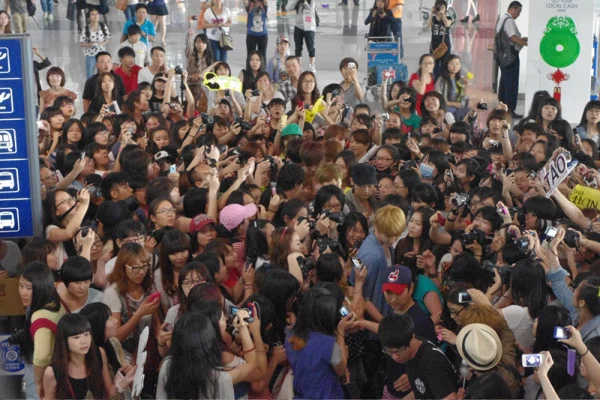
Beyond the digital and structural issues lies a physical danger: the lack of security and decorum at international airports. As K-pop groups like EXO and SHINee travel for global tours, they are frequently met by hundreds, sometimes thousands, of fans who swarm the arrivals terminal. These "stampedes" often result in fans and artists being pushed, stepped on, or physically harassed.
Despite the recurring nature of these incidents, entertainment companies have been slow to implement rigorous security protocols. In many cases, artists are left to navigate these crowds with minimal protection, leading to instances of physical injury and trauma. Some artists have used their social media platforms to plead for space, yet the industry at large continues to treat these dangerous environments as a byproduct of popularity rather than a safety failure. The refusal to reprimand fans for such behavior reinforces the idea that the "customer" is entitled to physical proximity, regardless of the artist’s safety or comfort.

The Economic Engine of Fan Entitlement
To understand why these behaviors persist, one must examine the economic structure of the K-pop industry. The "customer is always right" philosophy is taken to an extreme because the financial success of an idol is directly tied to the "stanning" culture. Fans do not just consume music; they buy multiple copies of the same album to boost chart rankings, purchase expensive "merch," and fund massive advertising billboards for an idol’s birthday.
This high level of financial investment creates a sense of ownership. When a fan spends thousands of dollars on a group, they often feel they have purchased the right to dictate the idol’s behavior, dating life, and group membership. Entertainment companies, fearing the loss of these "power spenders," often choose to mollify the vocal minority rather than defend the personal rights of their artists. This pandering creates a "poisonous" environment where bad behavior is essentially rewarded with attention or compliance.
Analysis of Implications and the Need for Reform
The current state of K-pop fandom presents a significant risk to the long-term sustainability of the industry. The psychological toll on idols is immense, as they are forced to live under constant surveillance and adhere to impossible standards of perfection. The normalization of digital harassment and physical swarming not only damages the reputation of the industry internationally but also creates a culture of fear among the performers.
There are three primary areas where reform is necessary:

- Corporate Accountability: Management companies must prioritize the mental and physical health of their artists over short-term financial gains. This includes investing in better security, taking legal action against malicious commenters, and refusing to issue apologies for an artist’s personal life.
- Internal Fan Regulation: Mature segments of the fanbase must take a proactive role in policing their own communities. While fans are capable of organizing for charity, they must also organize to condemn harassment and promote healthy boundaries.
- Redefining the Idol Image: The industry needs to move away from marketing idols as "virtual partners" and instead emphasize their roles as professional artists. By reducing the emphasis on parasocial availability, the industry can begin to dismantle the "ownership" mindset that fuels toxic behavior.
Conclusion
The evolution of K-pop from a domestic genre to a global phenomenon has brought both unprecedented success and unprecedented challenges. While the passion of fans is the engine that drives the industry, it is clear that without established boundaries, that same passion can become destructive. The cases of Krystal, Jonghyun, Henry, and Zhou Mi are not isolated incidents but symptoms of a systemic issue where the human rights of the artist are often secondary to the demands of the consumer. For the industry to mature, it must find a way to foster support without sacrificing the dignity and safety of those who make the music possible. The question remains: will the industry leaders take a stand, or will the cycle of blind negativity continue to go unchecked?